
Best Solo Builds in Baldur’s Gate 3: Class and Subclass Guide
Master the Art of Adventuring Alone with These Powerful Character Builds

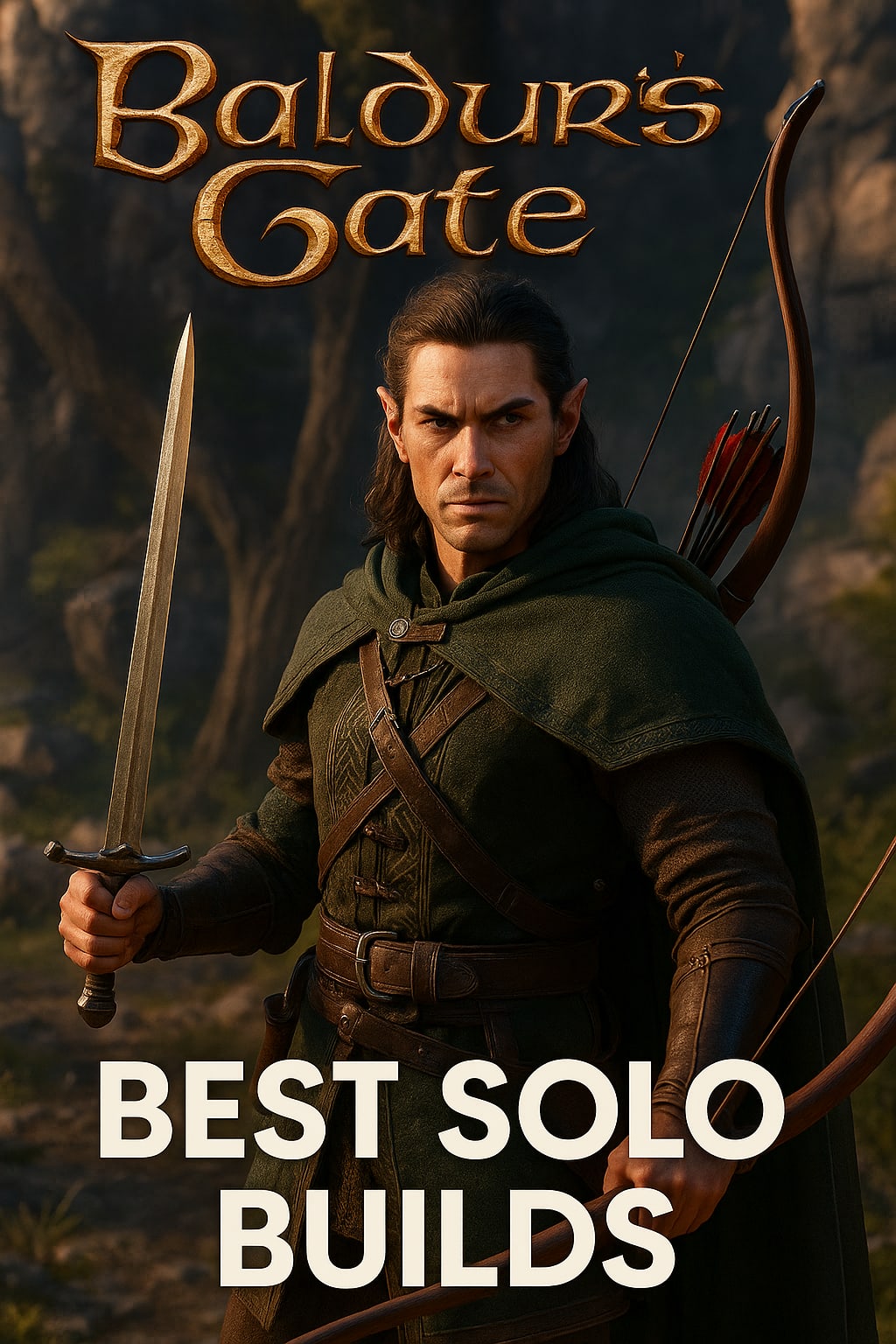
Venturing alone through the perilous world of Baldur’s Gate 3 is no small feat. Without companions to watch your back, heal your wounds, or trigger team-based synergies, you’ll need a build that can stand firm in combat, solve puzzles, and survive the game’s brutal encounters.
The right solo build isn't just about power; it's about versatility, self-sufficiency, and strategic depth.
In this guide, we’ll break down the best solo builds for each playstyle, explain why certain classes thrive when played alone, and how to optimize them for a successful solo journey through Faerûn.
What Makes a Great Solo Build in Baldur’s Gate 3?
Solo play changes everything. Without teammates, you must become your own tank, DPS, crowd controller, and sometimes even a skill monkey.
A good solo build will:
- Handle multiple enemies without assistance
- Sustain through long fights without needing a healer
- Bypass or solve puzzles, traps, and skill challenges
- Open dialogue options to avoid combat altogether
- Use stealth, summons, or movement creatively to gain an advantage
With these traits in mind, let’s explore the top solo builds in Baldur’s Gate 3.
1. Gloom Stalker Ranger / Rogue Thief Multiclass
Build Concept: The Invisible Assassin
Race: Wood Elf or Half-Elf
Starting Class: Ranger (Gloom Stalker)
Multiclassing: 5 levels in Gloom Stalker, then Rogue 3+ for Thief
This build is all about stealth, speed, and striking first. Gloom Stalker gives you an extra attack in the first round and advantage in dark areas. As a solo player, that’s golden. Surprise attacks are frequent and deadly.
When you mix in Rogue's Thief subclass, you gain an extra bonus action per turn. That opens up a variety of tactics, more attacks with dual wielding, more movement, or more chances to hide.
Why It Works Solo:
- Can scout, sneak, and eliminate targets before combat begins
- Avoids fights through stealth or clever positioning
- Dual wielding + bonus action = high burst damage
- Can disarm traps and pick locks
Weakness: Less effective in drawn-out battles without healing, so use hit-and-run tactics.
2. Oathbreaker Paladin / Warlock Multiclass
Build Concept: The Dark Avenger
Race: Half-Orc or Zariel Tiefling
Starting Class: Paladin (Oath of Devotion, then break your oath)
Multiclassing: Paladin 5 / Warlock (Fiend or Great Old One) 5+
This powerhouse combines the burst of Divine Smite with the eldritch flexibility of Warlock. Breaking your paladin oath turns you into an Oathbreaker, granting strong necrotic spells and an undead-themed aura. Warlock's short-rest spell slots pair beautifully with Smite, letting you fuel devastating crits consistently.
Why It Works Solo:
- High burst damage with critical smites
- Short-rest economy keeps you powered without long rests
- Heavy armor + Lay on Hands = survivability
- Warlock invocations (like Devil’s Sight) open creative tactics
Weakness: Requires careful alignment of spell slots and melee. Early game can feel mana-starved.
3. Sorcerer (Draconic Bloodline or Storm Sorcery)
Build Concept: Arcane God
Race: Drow or High Elf
Subclass: Draconic Bloodline (for defense) or Storm Sorcery (for mobility)
Sorcerers are glass cannons, but solo, they shine with the right setup. Metamagic makes your spells flexible and overwhelming.
Draconic Sorcerers gain bonus HP and unarmored AC, making them more durable than expected. Storm Sorcerers, meanwhile, can reposition with ease after casting, keeping enemies at bay.
Why It Works Solo:
- Incredible damage and crowd control
- Metamagic lets you twin or extend spells for value
- Fly, Misty Step, and Mirror Image offer mobility and safety
- Versatile spell list for any situation
Weakness: Low HP. If you’re caught, you’re vulnerable, positioning is everything.
4. Cleric (Light or Tempest Domain)
Build Concept: Divine Nuker with Self-Heals
Race: Gold Dwarf or Human
Subclass: Light Domain (for damage) or Tempest Domain (for burst and CC)
Clerics are often seen as support, but in Baldur’s Gate 3, they’re frontline casters who can crush enemies while keeping themselves alive. Light Domain offers searing AoE spells and blinding abilities.
Tempest Domain, on the other hand, unleashes thunder and lightning with terrifying force.
Both have the ability to wear armor, heal mid-combat, and resist many status effects, perfect for going solo.
Why It Works Solo:
- High survivability with medium/heavy armor and shield
- Self-sufficient healing and condition removal
- Radiance of the Dawn and Destructive Wrath are deadly tools
- Access to utility and support spells
Weakness: Can run out of spell slots quickly without long rests. Manage your resources carefully.
5. Wizard (Abjuration or Evocation)
Build Concept: Arcane Mastermind
Race: High Elf or Githyanki
Subclass: Abjuration (for survivability) or Evocation (for pure magic damage)
Wizards have perhaps the broadest toolset in the game. As a solo adventurer, this means answers to every problem.
Abjuration wizards generate arcane wards that absorb damage, key to survival. Evocation wizards sculpt spells around themselves, allowing for brutal AoE without self-harm.
With scrolls, a huge spellbook, and the ability to cast rituals, the wizard is unmatched in utility.
Why It Works Solo:
- Strong control over the battlefield
- Durable with Arcane Ward
- Spellbook flexibility is unmatched
- Can summon, charm, or fly out of trouble
Weakness: Paper-thin defenses without planning. Early game can be dangerous.
6. Druid (Moon Circle)
Build Concept: Shapeshifting Tank
Race: Wood Elf or Half-Orc
Subclass: Circle of the Moon
Circle of the Moon Druids are survival machines. They can Wild Shape into powerful forms as a bonus action, soak up damage, and regenerate by shifting again. This build shines in solo play because it’s self-healing, hard to kill, and capable of dealing with almost any situation.
Why It Works Solo:
- Infinite tanking with Wild Shape uses
- Can handle enemies, traps, and dialogue challenges
- Spellcasting utility when not in beast form
- High mobility and flexibility
Weakness: Limited ranged damage and crowd control compared to other casters.
Which Build Is Right for You?
The best solo build in Baldur’s Gate 3 depends on how you enjoy playing the game. If you prefer stealth and ambush, the Gloom Stalker/Rogue combo will feel like a cheat code.
Want to walk into battle and explode enemies with thunder? The Tempest Cleric or Sorcerer might be your pick.
Prefer utility and survival over raw power? A Wizard or a Druid will serve you well.
Soloing is about more than stats, it’s about being creative, using every resource, and mastering the game’s systems. With the right build and mindset, you won’t just survive alone in Baldur’s Gate 3, you’ll thrive.
Pro Tips for Solo Players:
- Abuse stealth and high ground mechanics
- Always carry utility items like scrolls and potions
- Rest strategically—don’t wait until you’re empty
- Explore dialogue options that avoid unnecessary fights
- Use summons or familiars to manipulate enemy AI
With these builds and tips, you’re ready to conquer Faerûn on your own terms. No companions, no backup, just you and your will to survive.
About the Creator
Richard Bailey
I am currently working on expanding my writing topics and exploring different areas and topics of writing. I have a personal history with a very severe form of treatment-resistant major depressive disorder.
Keep reading
More stories from Richard Bailey and writers in Gamers and other communities.
Royal Kingdom Beginner's Guide: Tips to Build Your Empire Faster
If you're just getting started with Royal Kingdom, you're stepping into a world full of possibilities, rich lands to conquer, thriving cities to build, and powerful alliances to form. But without the right strategies, you’ll find yourself struggling against resource shortages, slow growth, and rival empires.
By Richard Bailey9 months ago in Gamers
Slay the Spire 2 Review: A Worthy Sequel That Builds on a Legendary Roguelike
If you’re a fan of deck-building roguelikes, chances are you’ve already heard about Slay the Spire 2. The sequel to the beloved Slay the Spire has been one of the most anticipated strategy games in recent years, especially among players who love card-based combat systems mixed with roguelike progression.
By Bella Anderson4 days ago in Gamers
Assassin’s Creed Odyssey Will Make You Live the Greatest Adventure in Ancient Greece
Few games capture history and adventure with the scope and depth of Assassin’s Creed Odyssey. Developed by Ubisoft Quebec and published by Ubisoft, the game brings players into a richly detailed recreation of Ancient Greece on Xbox. It blends exploration, combat, and narrative choice to create an experience that feels both epic and personal.
By Lukáš Hrdlička7 days ago in Gamers



Comments
There are no comments for this story
Be the first to respond and start the conversation.