
Beijing Condemns the Demolition of a Monument Honoring the Chinese Community in Panama
A Diplomatic Flashpoint That Highlights History, Identity, and Geopolitical Tensions

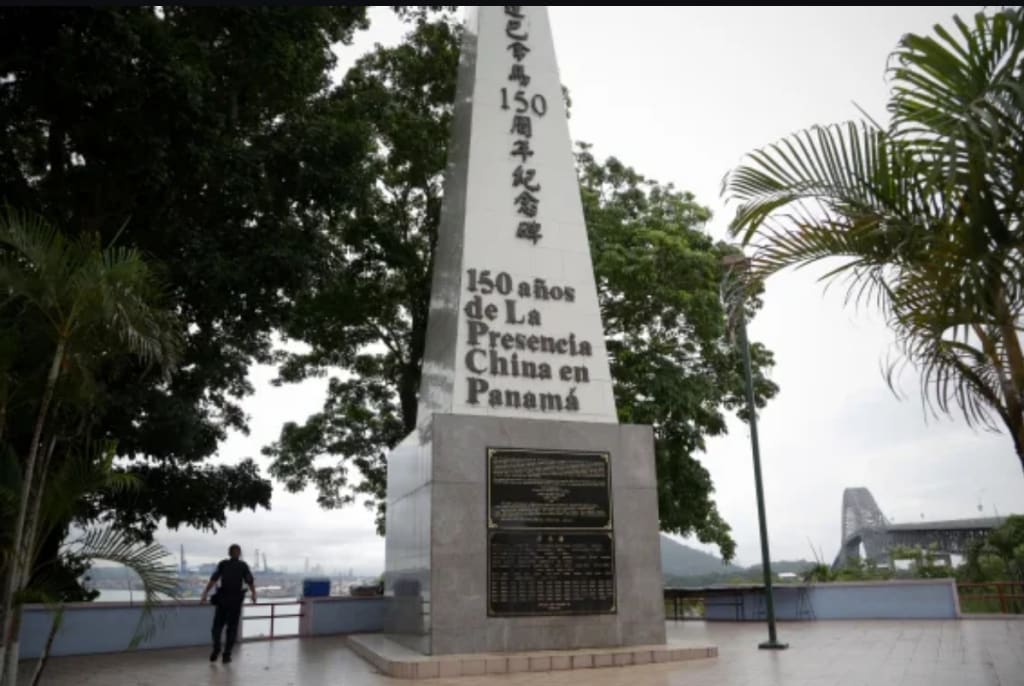
In late December 2025, a quiet corner of Panama became the epicenter of an unexpected diplomatic dispute after a monument honoring the century‑long presence of the Chinese community was demolished by local authorities — igniting strong reactions from Beijing, protests from Panamanians, and deep conversations about heritage, respect, and international friendship. �
AP News
The structure, located in the Arraiján district near the Panama Canal, was originally erected in 2004 to commemorate 150 years of Chinese contributions in Panama — a legacy that includes the labor of Chinese workers on the railroad and the world‑renowned canal itself. Designed with traditional Chinese architectural elements like a ceremonial arch, curved tiles, and stone lions, the monument stood as both a symbolic and physical testament to generations of Chinese immigrants and their impact on the country. �
AP News
But overnight, large excavators moved in. By daybreak, the monument had been reduced to rubble, leaving behind only two broken stone lions and an uproar that would extend well beyond Panama’s borders. �
AP News
An Outcry From Beijing
The Chinese government reacted swiftly and strongly. Through its foreign ministry spokesperson, China expressed serious dissatisfaction and lodged formal protests with the Panamanian government, labeling the demolition as a “seriously egregious” act that gravely hurt the feelings of the Chinese community in Panama and undermined the broader friendship between the two nations. �
The Independent +1
At a daily press briefing, Chinese officials emphasized that the monument was more than stone and tile — it represented the historical sacrifices of Chinese workers, some of whom lost their lives in the treacherous conditions of 19th‑century construction projects like the Twin Ocean Railway and the Panama Canal. Its unexpected removal, they argued, was a symbolic erasure of that history. �
en.chinadiplomacy.org.cn
The embassy also pointed out that Chinese community leaders had previously expressed interest in participating in renovation efforts and had sought dialogue before the demolition — a claim that highlights missed opportunities for cooperation and communication. �
The Independent
Panama’s Government Responds
The backlash wasn’t limited to foreign capitals. Panamanian President José Raúl Mulino publicly condemned the demolition and made it clear that the decision was not sanctioned by the national government but rather carried out by municipal authorities, specifically the Arraiján mayor’s office. He described the act as “irrational” and “unforgivable,” pledging to rebuild the monument and initiate an immediate investigation into what happened. �
The Independent
According to local officials, the structure was torn down because of supposed structural risks and public safety concerns — a justification that did not explain why the demolition occurred at night or why residents of the area were not involved in prior discussions. �
AOL
The president also reiterated Panama’s respect for the Chinese community, which has been an integral part of Panama’s multicultural fabric for more than a century. Many members of that community were deeply hurt by the incident, seeing it as a disregard for their historical presence and contributions. �
AP News
Local and Global Reactions
The demolition ignited protest activity at the former monument site, with members of the Chinese community and sympathetic Panamanians demonstrating against what they called an act of disrespect and historical erasure. Some local businesses even closed temporarily in solidarity. �
AOL
Tour guides and residents also voiced their shock. One Panamanian, recalling touring visitors to the monument only days before, described the loss as a “cruel act,” especially given the shared history of labor and cultural integration that connected China and Panama. �
AOL
Meanwhile, Chinese diaspora organizations and overseas Chinese communities across Latin America and beyond expressed solidarity and urged authorities to preserve historical memory. They emphasized that the monument was not only a local landmark but a symbol of multicultural heritage — one that transcends national borders and celebrates human stories of migration, work, and community building. �
Global Times
The Geopolitical Backdrop
This incident has unfolded against a broader backdrop of shifting geopolitical currents in the region. In recent years, China’s influence in Latin America has increased through trade, infrastructure investments, and cultural exchange — a trend that has occasionally sparked pushback from other global powers seeking influence in the Americas. �
Yahoo
The demolition occurred amid heightened rhetoric around the Panama Canal, a strategic trade artery that has become a focal point in debates about national sovereignty, foreign investment, and geopolitical competition. While Panama insists on its independence and rejects assertions that it is controlled by external powers, the symbolism of removing a China‑related monument — especially without consultation — fed into narratives of diplomatic friction and strategic recalibration. �
The Washington Post
What’s Next?
In the wake of the demolition, Panama’s federal government has committed to reconstructing the monument at its original site and to investigating the decisions of local officials. Chinese authorities have urged Panama to correct the actions and mitigate the negative impact created by the incident. �
en.chinadiplomacy.org.cn
The controversy also serves as a reminder of how monuments and memorials are not just static sculptures — they are vessels of collective memory, identity, and respect between communities and nations. Their preservation or destruction can reverberate far beyond their physical footprints, shaping diplomatic relations and domestic discourse alike.
As this story continues to unfold, the world will be watching how Panama – and the international community – navigate the sensitive intersection of historical recognition, cultural respect, and geopolitical balance.
About the Creator
Muhammad Hassan
Muhammad Hassan | Content writer with 2 years of experience crafting engaging articles on world news, current affairs, and trending topics. I simplify complex stories to keep readers informed and connected.
Keep reading
More stories from Muhammad Hassan and writers in Gamers and other communities.
A Nation in Mourning: Nine People, Including Five Children, Stabbed to Death in Suriname
In the early hours of Sunday, December 28, 2025, a quiet residential area in Richelieu, on the outskirts of Paramaribo, Suriname, was rocked by one of the most harrowing acts of violence in recent memory. Nine people, including five children, were stabbed to death in what authorities are calling a mass stabbing attack that has left an entire nation grieving and searching for answers. �
By Muhammad Hassan21 days ago in The Swamp
The Gym Where Iron Transformed Lives
The gym was hidden between a bakery and a closed-down bookstore, its faded sign barely visible from the street. The windows were dusty, the paint on the walls chipped, and the metal door creaked every time someone pushed it open. To most people, it looked like a forgotten place. But for those who stepped inside, it was a space where lives quietly transformed.
By The best writer 5 days ago in Gamers
U4gm Why Ranked Play in Call of Duty: Black Ops 7 Is the Ultimate Test of Skill
Call of Duty: Black Ops 7 isn’t just another fast-paced shooter—it’s a test of skill, strategy, and teamwork. For casual players, Quick Play delivers fun and chaos, but for those who want to prove themselves in the competitive arena, Ranked Play is the real deal. This mode isn’t just about racking up kills; it’s about outsmarting your opponents, controlling the map, and working seamlessly with your team.
By Dangyc Ding7 days ago in Gamers


Comments
There are no comments for this story
Be the first to respond and start the conversation.