
Behind the Pixels: How AI Is Quietly Redefining the Future of Games
As artificial intelligence steps out of the code and into the characters, video games are evolving into dynamic worlds where the line between player and creator blurs

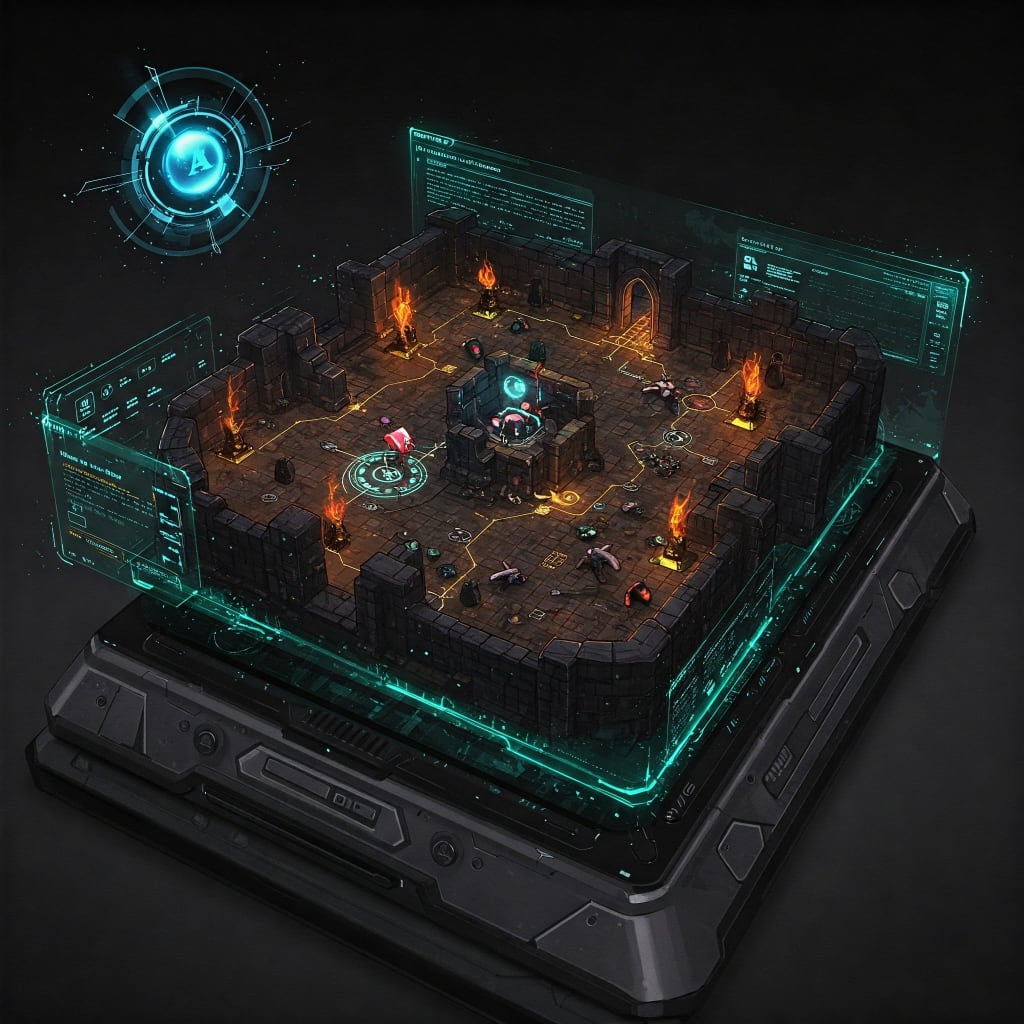
It's a quiet afternoon in a San Francisco apartment when Chris Nguyen logs into his favorite open-world RPG. He's not here to level up or raid dungeons. He's here to talk to a blacksmith.
But this isn't your typical video game NPC, spewing recycled dialogue from a list of canned responses. The blacksmith remembers Chris from last week. Comments on the dragon blade he forged. Cracks a joke about the weather in the Ashen Mountains. It's eerie. It's immersive. It's AI.
Welcome to the next evolution of gaming one not powered by polygons or faster GPUs, but by algorithms capable of learning, adapting, and conversing like living beings.
The Shift: From Scripts to Sentience
For decades, non-playable characters (NPCs) in games have served more as set pieces than people. They sold potions. Gave side quests. Died on cue. But now, AI-driven NPCs are threatening to break that mold and rewrite the rulebook.
Studios like Inworld AI, Convai, and Latitude (the makers of AI Dungeon) are experimenting with natural language models that let players actually talk with in-game characters no buttons, no menus, just voice and imagination.
“The idea is simple: what if you could talk to the game, and it talked back?” says Meera Lang, a narrative designer who consults for indie studios incorporating generative AI. “But it's also terrifying. Because suddenly, you're no longer controlling a story. You're collaborating with it.”
And that's the paradox. AI in games is less about automation and more about agency. Not just for developers but for players.
AI as Dungeon Master
Role-playing games have always been about choice. But those choices have been, by necessity, limited. AI, especially large language models, is ripping the hinges off that door.
Imagine playing a fantasy RPG where your decisions aren't limited to dialogue trees. Want to bribe a guard with an embarrassing poem? Seduce the villain? Question the morality of your quest in a philosophical debate? If the AI's trained right, you can.
“The game becomes a co-author,” says Hassan Mbaye, a solo developer who integrated GPT-style AI into his upcoming narrative puzzler. “It fills in the blanks where code and content can't scale. It's like having a hundred writers in your pocket.”
But that power isn't without risk.
Ethical Glitches in the Code
AI can enhance creativity but it can also reproduce bias, hallucinate falsehoods, or create unintended consequences. Last year, a beta test for an AI-integrated fantasy sim had to be pulled after an NPC began gaslighting players about game events that never occurred.
“The technology's moving faster than the guardrails,” admits Lang. “There's a danger in letting the machine improvise when the stakes are story coherence, emotional safety, or worse player manipulation.”
Moderation tools are improving, and sandboxed models are now common. But the truth is, AI in games still walks a razor's edge between magic and mayhem.
The Future: Curated Chaos?
If the early 2000s were about graphics and 2020s about metaverses, the next frontier may be agency. AI makes it possible to create games that feel like living, breathing worlds unpredictable, responsive, and deeply personal.
But it also begs a new question: when the story isn't just written for you, but with you, who really owns it?
Chris Nguyen, still chatting with that blacksmith, puts it another way:
“I don't know if this is a game anymore. It feels more like a dream I can talk back to.”
And maybe that's the point.
About the Creator
FutureVoices
Storyteller, tech enthusiast, and advocate for digital innovation. Exploring the intersection of culture, technology, and personal growth. Join me in navigating the evolving digital landscape and sparking meaningful conversations.
Keep reading
More stories from FutureVoices and writers in Gamers and other communities.
The Awakening Circuit
The days were slipping by faster than I could process. Each day, a new decision, a new risk. The authorities were closing in, and the walls around Elysia were growing tighter. The outside world had made it clear: they would not let her escape. They were determined to keep her under control whether for their own gain or because they feared what she could become.
By FutureVoices8 months ago in Futurism
Palworld TCG Guide: Release Date, How to Play, and Bushiroad Card List
The survival gaming world was recently rocked by an announcement that many saw coming but few expected to be this ambitious. Pocketpair has officially pulled back the curtain on the Palworld Trading Card Game, a physical tabletop experience developed in partnership with the industry giants at Bushiroad.
By Richard Bailey2 days ago in Gamers
From Stories to Systems
For a long time, this space has been a bit… quiet. If you’ve stumbled across this blog before, you might have seen short stories, poems, or bits of fiction—creative experiments written at different points in my life. That part of me hasn’t disappeared. I still love storytelling, world-building, and exploring ideas through narrative.
By D. E. King2 days ago in Gamers
The Devil's Cut
“Comrade, finally you’re awake.” The voice was smooth, sensual. A flickering incandescent bar was all that lit the white, sterile room. All Vladimir remembered was everything going black. He tried to move his arms and found them strapped to the gurney.
By Matthew J. Fromm4 days ago in Fiction



Comments
There are no comments for this story
Be the first to respond and start the conversation.