
Batman: Arkham Asylum — Madness
Madness, Mastery, and the Making of a Legend

In Loving Memory of Kevin Conroy, the True Voice of the Dark Knight
There are countless heroes in pop culture — symbols of justice, courage, and hope. Yet, for many of us, one stands above the rest. Not because he can fly, shoot lasers, or wield godlike power, but because he’s human. He bleeds, he breaks, he fights — and still he stands. That hero is Batman.
For more than eight decades, Batman has evolved from pulp detective to global icon. He’s been drawn, written, voiced, and performed by countless talents — but few have embodied the role with as much gravitas and heart as Kevin Conroy. His voice was the Batman for a generation, and nowhere does that legacy echo louder than in Batman: Arkham Asylum.
The Dark Knight Rises — in Gaming Form
Released in 2009 by Rocksteady Studios, Batman: Arkham Asylum wasn’t just another superhero tie-in. It was a revolution. Before it, superhero games were hit-or-miss at best — more marketing tie-ins than masterpieces. But when Arkham Asylum arrived, it felt different. It was different.
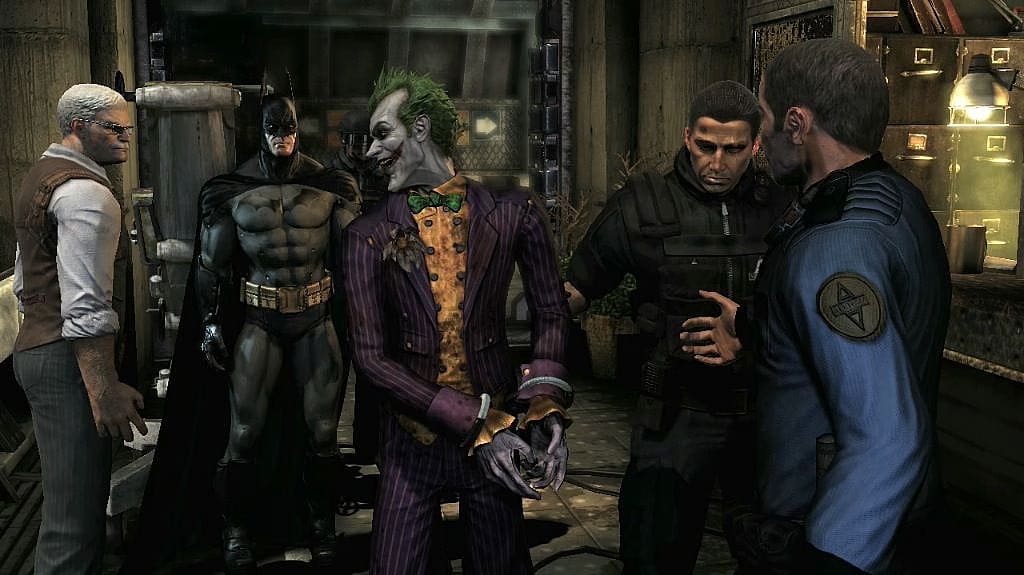
From the opening sequence — Batman delivering the Joker back to the titular asylum — the game wastes no time reminding you who’s in charge. Or at least, who thinks he’s in charge. Within minutes, the Joker turns the tables, seizing control of the facility and unleashing Gotham’s most dangerous villains. What follows is a single, harrowing night in the madhouse — and one of the most finely crafted superhero stories ever told.
Building the Bat
Rocksteady, a relatively unknown British studio at the time, took on the monumental task of capturing Batman in his truest form. No cheesy one-liners. No sidekicks. No city-wide destruction. Just the World’s Greatest Detective trapped on an island filled with his worst nightmares.
To do this, they teamed up with DC veteran Paul Dini, who had already proven his storytelling prowess on Batman: The Animated Series. Dini’s fingerprints are all over the game’s script — sharp dialogue, layered characterization, and a psychological depth rarely seen in superhero media.
The visual style drew inspiration from the gritty gothic tones of the comics, while the atmosphere borrowed from horror and noir. Everything about the Asylum — from its twisted hallways to its eerie PA announcements — felt alive, breathing madness into every corridor.
The Game That Made You Feel Like Batman
It’s almost impossible to talk about Arkham Asylum without mentioning its combat system — a smooth, rhythmic dance of strikes, counters, and gadgets that became the gold standard for action games to follow. Rocksteady’s “Freeflow” combat made every punch feel like Batman’s — precise, efficient, and powerful.
But Batman isn’t just a brawler. He’s a detective. The game’s investigative sequences — using detective vision to track clues, fingerprints, or structural weaknesses — made you think like the Dark Knight, not just fight like him.
Then there were the stealth segments — crawling through vents, lurking in shadows, taking down thugs one by one. It was predatory, tense, and empowering. You weren’t just playing as Batman; you were Batman.
A Cast Worthy of Gotham
One of Arkham Asylum’s greatest triumphs lies in its voice cast. Mark Hamill’s Joker — maniacal, theatrical, and unpredictable — is the perfect foil to Kevin Conroy’s stoic, gravel-toned Batman. Their chemistry is electric, built on years of shared history from the animated series.
Every taunt from the Joker feels personal. Every line from Batman carries weight. It’s a duel of ideology as much as it is of strength — order versus chaos, control versus insanity.
The supporting cast — Harley Quinn, Scarecrow, Killer Croc, Poison Ivy, and even the Riddler’s unseen challenges — add color and texture to this dark canvas. Each villain’s section feels like a mini psychological case study, peeling back another layer of Batman’s psyche.
Flaws in the Armor
As polished as Arkham Asylum is, it isn’t without its cracks. Some of the boss fights, while visually grand, boil down to simple pattern recognition. The final battle, in particular, leans more toward spectacle than strategy.
The Riddler challenges — while clever — can sometimes feel more like padding than purpose. And, of course, it’s hard to ignore the oddity that Batman seems to find his gadgets instead of just bringing them along. You’d think the world’s greatest detective would’ve come prepared for anything — but hey, video games need progression somehow.
Fear and the Mind of the Bat
If there’s one aspect of Arkham Asylum that deserves special praise, it’s the Scarecrow sequences. These moments bend reality, breaking the fourth wall in subtle, unnerving ways. The camera twists, the world fractures, and Batman’s fears become your own.
It’s psychological storytelling at its best — moments that stay with you long after the credits roll. For a game about a man confronting madness, these sections capture that descent perfectly.
The Legacy Lives On
Batman: Arkham Asylum didn’t just redefine what a superhero game could be — it redefined what a licensed game could achieve. It inspired a generation of developers, led to an entire series (Arkham City, Arkham Knight, and beyond), and set a benchmark that few have matched.
But more than that, it stands as a tribute to the enduring power of the character — and to Kevin Conroy, whose voice continues to echo in every shadow of Gotham.
“I am vengeance. I am the night. I am Batman.”
That line hits harder now than ever.
In Conclusion...
Even after all these years, Batman: Arkham Asylum remains a masterclass in atmosphere, storytelling, and character. It’s not just a great Batman game — it’s a great game, period.
It reminds us that heroes don’t need superpowers to be extraordinary. Sometimes, all it takes is a mission, a mask, and an unbreakable will.
Rest easy, Kevin Conroy. The night — and Gotham — are in good hands.
About the Creator
Keep reading
More stories from Games Tale and writers in Gamers and other communities.
Batman: Arkham Asylum 2.0
There are countless superheroes in the world of entertainment. I mean, we’ve got a whole multiverse of them now (thanks, Marvel). For decades, audiences have been captivated by the likes of Spider-Man, Superman, Iron Man, and the Flash. But out of all the heroes who’ve graced comic pages, TV screens, and theaters, I don’t think any have left a mark quite like Batman.
By Games Tale2 months ago in Gamers
Unstoppable F2P Decks: How to Win in Rush Royale Without Spending Gems
In the ever-evolving arena of Rush Royale, the divide between whale accounts and free-to-play (F2P) enthusiasts often feels like a canyon. Most players assume that without a stash of purple gems or a platinum credit card, hitting the high leagues is a pipe dream. This is a misconception. Success in this game is not just about the rarity of your cards but the synergy of your deck and the efficiency of your resource management.
By Richard Bailey5 days ago in Gamers
U4gm Diablo IV Season 11: Secrets, Uber Gates, and the Cost of Power
Diablo IV Season 11 is not just about overt seasonal mechanics or climbing leaderboards. Beneath the surface lies a layer of secret challenges, designed for players who thrive on exploration, risk, and discovery. From Uber Lesser Evil Gates to hidden rewards tucked away in the world, these encounters test mastery, strategy, and patience. They aren’t explained in tutorials—they’re meant to be earned, not handed out.
By Dangyc Ding4 days ago in Gamers


Comments
There are no comments for this story
Be the first to respond and start the conversation.