
Basic Guide for Sequels
Let's make it clear before it gets ouf of hand


Let's talk about sequels. Sequels are something we really like because if you want lime, take two sand. It's a straightforward concept: we loved the first part, so, so why not more? This is where they come in, and they are responsible for giving us more of what we want in better or worse ways.
The saying goes that the second parts were never good, and it may be true in some cases. A well-finished story doesn't need more plot unless its creators are capable of going much further. Depending on how good or bad a studio or company is at designing a sequel, be it a movie or video game sequel, so will its success. Looking at the long history of consumer products, these can even be classified.
Classic sequels
Standard sequel
If an original story seemed good in execution and narrative, it is normal that we want more of what made us have a good time, and this is where a standard sequel comes in. In these, it is possible that some characters obey certain physical laws, age, or the stories they lived in the original instalment will change them for better or worse in this next one. It is a continuation in essence, with the good of repetition and the bad of repetition.
Examples: the Halo saga, DOOM Eternal, the Back to the Future movies, or Dragon Ball Z and Dragon Ball GT.
Next-Gen sequel
If the classic sequel started where the first one left off or a couple of months or years later, a next-gen sequel continues in the same universe, but much more time has passed and those who were the main characters of the first one, now become mentors or secondary characters of the second one. In this type of sequel, it is more the case of making references to the previous one and you can see the consequences of the actions taken in the first one.
Examples of this are Mass Effect Andromeda with Mass Effect 3, Batman: Beyond with Batman (animated series), Borderlands 2 with Borderlands 1 or JoJo's Bizarre Adventure: Battle Tendency with JoJo's Bizarre Adventure: Phantom Blood.
Prequel
Even if in order of release it comes out after the original work, a prequel deals with a story from the past that expands on the universe and also helps to give a backstory to some important characters.
The mere fact of a sequel already induces you to the small spoiler that if you know that some main character appears, due to script issues, nothing bad will happen to them and they will have a plot armour more powerful than Azazoth.
Prequels nowadays we have many: Monsters University (Monsters S.A.), The Hobbit (The Lord of the Rings), Puss in Boots (Shrek), Final Fantasy VII: Crisis Core (Final Fantasy VII), Halo: Reach (Halo saga), Psycho-Pass: Case.2 First Guardian (Psycho-Pass), Re:ZERO - The Frozen Bond (Re:ZERO) or No Game No Life: Zero (No Game No Life).
Spin-off
What in a novel is usually called a digression or in Japanese Gaiden, today is called a spin-off and is characterized by the story of a character or group of characters that we already know but were not the main character group and therefore have gained enough popularity to have their own show or entire instalment just for them. Unlike an interquel, the story of how this character(s) came to be or their separate history does not directly affect the plot or even form part of it (if they come from another dimension, or a different place, for example).
Many of the shows or even video games we know today have had more or less interesting spin-offs, some as relevant as it was Adventure Time with Random! Cartoons, the Gwent game with The Witcher 3 or the NieR saga with Drakengard.
Revival
Unlike a remake or a reboot (which are explained below), a revival does not intend to reinvent anything, this being, above all, more common in series. The fact that it is called a revival refers to the fact that the story that seemed to have ended or that the fans did not see that it could continue in any other way, did, usually sometime later, or simply come back to life after it was cancelled.
Some Revivals: Adventure Time: Distant Lands (I didn't even know it existed), Futurama from 2010 to 2013 since its cancellation in 2002, The Power Puff Girls Z or in the case of video games, NieR Automata with respect to NieR Replicant, Devil May Cry 5 with respect to Devil May Cry 4 or the revival of Fallout 3 after Fallout 76 got a shock.
If the concept is not yet clear, the idea is to bring something from the past back, either in the form of a remake, a sequel, a sequel or in the form of badges.
Reinventions
Reboot
This, along with the following terms is becoming quite popular because kids who grew up with the movies, series and video games of their childhood now want to consume the same content again to relive how it felt when your brain was still secreting serotonin but now with a visual upgrade. This phenomenon is interesting because although there have always been reboots, remakes and remasters, it seems that now it is the only thing that exists, or that occupies half of the consumer market along with the rest of the original ideas.
The main idea is that the entire franchise or instalments are rebooted from the beginning, retaining, eliminating or changing some characters as well as elements of the story to modernize it or adapt it to a different audience than at the time. This affects the continuity of the rest of the sagas and generally implies that the sequels of the original will no longer have that canon value and will become an apocryphal version of the videogame or movie in question.
We already have many reboots, among them DOOM (2016), Tomb Raider (2013), what they tried to do with DMC: Devil May Cry (in which Dante had brown hair), the Evangelion Rebuild (taken with tweezers) or Mad Max: Road Rage.
Remake
According to Wikipedia, a Remake is a "new version of an existing work". I could stay there, but the difference between a Reboot and a Remake would not be clear.
Where the difference lies, at least for me, is that while a reboot remakes the entire franchise and removes elements at will, a remake seeks greater fidelity to a work in question. As its name suggests, it is done again, which implies following a very similar plot (maybe adapted a little) and keeping the same cast but using new development and production technologies.
Where it is most abundant is in the video game industry, having as an example the remakes of Resident Evil, Resident Evil 2, Resident Evil 3 and Resident Evil 4. Not only Capcom is dedicated to reviving old works, Half-Life Black Mesa is also a good example of how a good game can be revived.
In cinema, the remake phenomenon is a bit of a weird experience because what is usually done is taking an instalment and adapting it to live-action (with actors), or the other way around: it is completely animated. We have cases like Cinderella from 2015 or The Karate Kid from 2010, which makes me think that the remake phenomenon is more of a revisioning or versioning in the film industry than anything else.
As a final idea, the remake in most cases will be understood as a visual, narrative and sensory improvement of the original and will introduce concepts beyond "doing it again", in a literal sense.
Remaster
A remaster is not a sequel to the original, nor is it a continuation of the story, but for educational purposes, it serves to explain some strange things that are happening in the industry.
In simple terms, a remaster is an improved edition of the original work adapted to the screens or devices we use today. This involves, for example, adapting video games and movies from 4:3 to 16:9 format, or introducing Stereo sound when the original was Mono at best. The most generous remasterings will include deleted content, but will never cease to be an enhancement of the original story.
Ramake
It could be included in what I call "ramake" those works that in principle were going to be a simple remastering but they got out of hand and wanted to give more power to what was good at the time. You can tell when it is a ramake when there are unnecessary cuts or a different order. In video games, there are mechanics that did not exist before or everything is redone from scratch but only at a technical level.
A recent example of this is CRISIS CORE -FINAL FANTASY VII- REUNION which has new modelling, improved particles and nicer visuals but also has a combat system that goes beyond the original or has mechanics like the enemy limit bar that you can empty. With everything they had done, it didn't cost them much to do a remake.
I don't see it wrong to make a remaster with a lot of improvements, but when it gets out of hand sometimes you have to accept that the idea has gone out of hand. I can't help but feel that to do a ramake, it feels more organic to just finish the job and do a remake faithful to the original.
Strange sequels
Interquel or Midquel
Doesn't it sometimes happen that too many years have passed between one instalment and another and things have been left out or unexplained, or there have been characters that have undergone many changes? Well, don't worry. In an Interquel or Midquel, they will explain everything unconnected, and as the release date is after the sequel but chronologically it happens before, they can fill in the plot holes you need.
There are some cases where it is justified, especially if from a marketing point of view some character is interesting but their story is so transcendent that more than a spin-off, their actions affect the original plot so much that it is necessary to understand the lore.
The most famous interquel in the video game world is Borderlands: The Pre-Sequel.
Requel
Requels are something that abounds lately, as they are a fusion of sequel and reboot, hence the name (reboot ⇒ re- + -quel ⇐ sequel). For the audience, it's kind of weird, because you're basically rebooting a franchise but somehow the actions that were taken in the original instalment have to do with the reboot, or some characters suffer the consequences of their "previous self".
It's a bit of a strange concept because it seems like everything has to tend more and more towards multiversal moves where there's some grandiloquent cheap philosophy behind it. Not everything has to end up in a multiverse (or that they cut the crap and we accept the multiverse in all consumer products), and adding a philosophical undertone that reminds you that "your actions have consequences even if the world resets" may be fine in some works, in others, it's out of context.
I want to believe that Evangelion Rebuilds are a sequel to the original anime. Other works like Matrix Resurrections make it clearer and play with the meta, while Final Fantasy VII Remake was sold as a remake (redundancy aside) but it's more of a requel than anything else. Nomura, you bastard, what did it cost you to say it was a reinvention and that's it? Still, as it's a somewhat recent term some people confuse it with a next-gen sequel.
Serial Universe
This type of sequel is characterized more by sharing a common universe or a common theme. None of the main characters has anything to do with each other, and there may be some references to each other or even cameos, but rarely do they have anything to do with each other. What differentiates a serial universe is that, unlike a sequel, it is not continuous or the events that are exposed are not a consequence of the previous one, which would leave Drakengard and NieR out of this category.
There are many examples in the video game industry: the Final Fantasy saga reflects this well (with its own universes having sequential sequels), as well as Monster Hunter or Call of Duty.
Video game exclusives
In the video game industry, there are a few terms that, although not directly related to a sequel, are useful to know in order to distinguish them from a remake or a remaster.
Port
A port is simply an export from one platform to another. If for example, a game was successful on PS4, it is possible for them to port it to PC or Switch. In the handheld era, it was not uncommon to see Xbox 360 or PS3 games have ports to Nintendo DS or PSP.
Demake
A demake is usually a fan-made work that seeks to remake the original idea but with a much more retro finish, using obsolete techniques and outdated graphics. It is a way to worship nostalgia through kitsch and also recreate the idea that a video game was not good just because it has good graphics.
Spiritual successor
They are also called spiritual sequels, and their name comes from the fact that a "new" videogame incorporates elements of gameplay and aesthetics (or artistic design) of previous sagas that were similar. It does not build on the main work but many elements are going to be similar or the same, it deals with similar themes and the style is very similar, as well as the experience it wants to convey.
There are several reasons for the existence of such spiritual sequels, maybe the rights have been bought by another company and the original creators can not make more instalments of the same IP (Intellectual Property), or there have been conflicts between developers and the original group has been dissolved.
To understand it even better, there are several cases that illustrate it as the garbage that has been The Callisto Protocol with respect to Dead Space, the BioShock saga with respect to System Shock or Bayonetta with Devil May Cry.
Final conclusions
After a serious top article, I think we're getting a little in over our heads with so many sequel types, but that also means we have a long history of fictional works and we're able to know, to some extent what we like to consume and how.
For me, the best sequels have been Batman Beyond, Monster Hunter: World and even if I hate that it's a slot machine, the sort of Spiritual Sequel / Serial Universe / Multiverse that is Genshin Impact with Honkai Impact 3rd.
About the Creator
Lyxelle
Hey, I'm a consecrated gaymer and I write mainly about politics and the state of the industry.
My pronouns are she/they/fae
Keep reading
More stories from writers in Gamers and other communities.
u4gm What Sigil of Power Does in Path of Exile 2
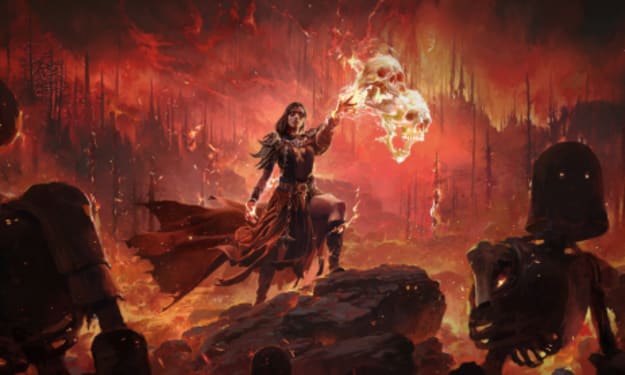
As Path of Exile 2 characters advance deeper into mid- and endgame content, raw stat upgrades lose much of their impact. At that stage, real damage gains usually come from mechanics that scale multiplicatively or interact directly with core resources like mana. For spell-based builds, one of the most efficient yet frequently underestimated tools is Sigil of Power.
By Asik Gxbx Hdjdh4 days ago in Gamers
Mastering the Pocket Exhaustion Debuff in Rush Royale Co-Op
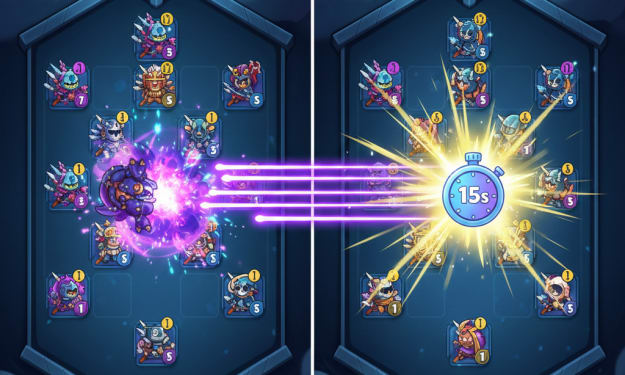
The landscape of Rush Royale co-op has shifted dramatically with the rework of the Pocket Exhaustion enchantment. If you have spent any time in the higher dungeons recently, you likely noticed strange projectiles flying across the board.
By Richard Bailey3 days ago in Gamers
So You Decided To Become a Nurse Practitioner:
So you decided to become an "Advanced Practice" nurse. Congratulations!... is what I would say if this was a good idea. Grad school? In this economy? What were you thinking? Likely it was something along the lines of either 1) “I've seen these other chucklefucks do it— Why can't I?” or even 2) “I've got a nice career, I should shake it up. I miss feeling like I have no clue what I'm doing.”
By Sandor Szabo2 days ago in Fiction


Comments
There are no comments for this story
Be the first to respond and start the conversation.