
As Someone Who’s Only Played Hollow Knight, Is Silksong Better or Worse? A Player’s Perspective
Hollow Knight: Silksong Reviews


If you’ve only played Hollow Knight and you’re staring down the hype tornado that is Silksong, it’s natural to wonder: Is the sequel actually going to be better? Or should I temper my expectations before I hit “buy” the second it releases?
And let’s be honest—you’ve already admitted you’re buying it regardless. Same here. But curiosity is part of the fun, especially with a game that has lived in the collective imagination of the fandom for years. Without making claims about features that haven’t been confirmed, we can talk about what Team Cherry has shown, what’s known, and what expectations reasonably look like for someone who’s only played the original.
So let’s explore whether Silksong is likely to feel like a leveled-up version of Hollow Knight, or whether it could land differently depending on what you loved about the first game.
The Hollow Knight Experience Sets a High Bar
If Hollow Knight was your entry point into the world of punishing-but-fair Metroidvanias, you’ve tasted the magic that sets Team Cherry apart: elegant combat, atmospheric storytelling, layered exploration, and the emotional gut punches hiding between gentle violin notes. The game feels handcrafted in a way most modern titles don’t even attempt.
This creates a unique challenge for Silksong: how do you follow a masterpiece without being overshadowed by it?
For players who’ve only played the original, the biggest question is whether Silksong will recreate that initial awe—or attempt something entirely different.
Silksong Isn’t Just “More Hollow Knight”—and That’s a Good Thing
One of the main reasons Silksong is hard to compare directly to Hollow Knight is that it’s not just a reskin, sequel, or expansion. It was originally envisioned as downloadable content, but the project became so ambitious that it evolved into a standalone title.
What that means for players:
1. Hornet changes the gameplay rhythm
Hornet is fast. Fast in a way the Knight never was. She leaps, flips, parries, lashes—her movements are acrobatic instead of stoic. Instead of spells, she crafts tools. Instead of healing slowly and vulnerably, she can recover quickly, but in limited bursts.
This alone makes Silksong feel less like a direct sequel and more like a re-imagining through a different combat philosophy. If you enjoyed the deliberate, weighty precision of Hollow Knight, Hornet’s style may feel like switching from a longsword to dual daggers.
Not better. Not worse. Just different—and that difference is intentional.
2. The Kingdom of Pharloom is built with verticality in mind
Where Hallownest felt ancient, rotting, and hollowed-out (pun intended), Pharloom feels alive, ornate, and towering. Early footage shows environments that stretch upward, with platforms, ropes, ladders, and architectural complexity meant to showcase Hornet’s movement abilities.
If you loved Hollow Knight for its melancholic emptiness, Pharloom may hit differently. If you wished the original had more variety and spectacle, Silksong might surpass it for you.
Difficulty: Harder? Easier? Both?
Team Cherry has suggested that Hornet’s agility means the game can demand more from players earlier on. But because she begins with more mobility tools than the Knight ever had at the start, the challenge curve may feel smoother.
For players whose only experience is Hollow Knight, here’s what to expect:
Boss fights may be faster and more aggressive
Platforming challenges will likely be more complex
Hornet’s healing system is less forgiving for panic moments
Movement options give you more escape routes
This dynamic creates a different flavor of difficulty—not necessarily “harder,” but definitely “faster.”
If Hollow Knight was a strategic duel, Silksong may be a dance.
Tone and Atmosphere: A Shift in Vibe
One of the most defining elements of Hollow Knight is its somberness. Hallownest is a kingdom long past its prime, and you feel that decay everywhere.
Silksong, on the other hand, looks vibrant—still dangerous, still mysterious, but more alive. Its palette is warmer, its environments more varied, its enemies more expressive. Hornet herself is a more vocal, emotional protagonist than the silent Knight.
For some players, that shift could feel like a breath of fresh air. For others, it might lack the lonely beauty that made Hollow Knight resonate.
It’s not about being better or worse. It’s about tone—and which tone you connect with.
Will Silksong Live Up to the Hype?
Here’s the truth most players won’t say out loud: hype is a double-edged Nail.
Many sequels fall under the weight of expectation because players imagine a game more perfect than developers can possibly deliver. Team Cherry’s silence over the years—intentional or not—has deepened this effect. So the real question isn’t whether Silksong will be “better or worse,” but whether you’re ready for a different experience from the same creators.
If you go into Silksong expecting another Hollow Knight, you might end up comparing every shade, every room layout, every story beat.
But if you treat Silksong as its own creature—alive, agile, and sharp as a thread—you’ll probably find yourself falling in love all over again.
So… Is Silksong Better or Worse?
If you’ve only played Hollow Knight, here’s the most honest way to frame it:
If what you loved most was the atmosphere, exploration, and mystery, Silksong may feel like a fresh, expanded evolution of what made the first game magic.
If what you loved most was the precise, heavy combat style of the Knight, Silksong may feel faster and looser—exciting, but not necessarily “better.”
If you’re open to a different rhythm, a new kingdom, and a protagonist with her own identity, Silksong has every chance to surpass the original in your eyes.
But no matter where you fall, it’s safe to say this:
Silksong isn’t trying to be better than Hollow Knight.
It’s trying to be Silksong—a sister, not a clone.
And for most fans, that alone makes it worth the wait.
About the Creator
Keep reading
More stories from Games Mode On and writers in Gamers and other communities.
The Most Likely Locations for Forza Horizon 6: Predictions & Rumors
With Forza Horizon 5 setting the bar high by delivering a vibrant and diverse map of Mexico, speculation is already buzzing about where Forza Horizon 6 might take players next. From scenic landscapes to urban playgrounds, fans are dreaming about the ultimate racing locations. Here’s a breakdown of the most likely contenders based on leaks, rumors, and fan predictions.
By Games Mode On2 months ago in Gamers
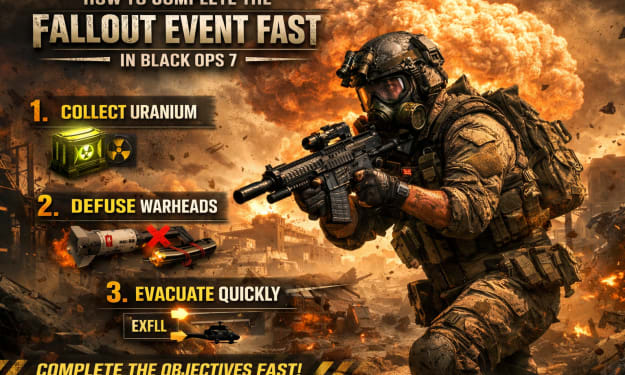
U4gm How to Complete the Fallout Event Fast in Black Ops 7
Call of Duty: Black Ops 7’s latest update has injected the wasteland straight into your favorite shooter. The Fallout crossover event brings themed modes, unique cosmetics, and a fully loaded Event Pass inspired by the iconic post-apocalyptic universe. For players who want to finish the event efficiently, planning your approach is just as important as racking up kills—especially if you’re diving into BO7 Bot Lobbies to accelerate challenges.
By Billo Nalia day ago in Gamers



Comments
There are no comments for this story
Be the first to respond and start the conversation.