
Announcing The GeForce RTX 5060 Desktop Family: DLSS 4
Announcing The GeForce RTX 5060 Desktop Family: DLSS 4 Multi Frame Generation, Neural Rendering & Blackwell Innovations For Every Gamer, Starting At $299; Plus RTX 5060 Laptops Available In May
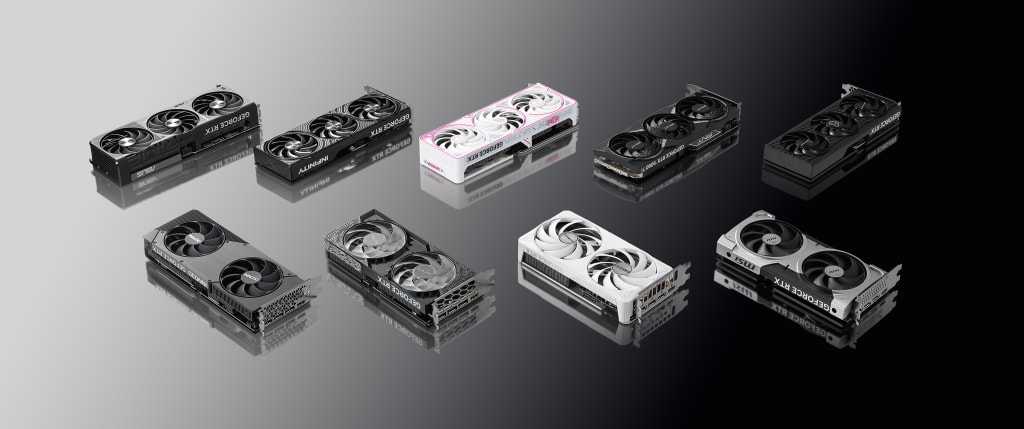
In a significant advancement for mainstream PC gaming, NVIDIA has officially introduced the GeForce RTX 5060 desktop GPU family, widely expanding access to next-gen AI-powered performance and rendering capabilities. This lineup features groundbreaking innovations such as DLSS 4 with Multi-Frame Generation, neural rendering enhancements, and numerous architectural upgrades from the new Blackwell GPU architecture, promising to redefine expectations for a $299 graphics card.
In addition to the desktop release, NVIDIA confirmed that laptops equipped with RTX 5060 GPUs will start shipping in May, making next-gen gaming portable and accessible.
Mainstream Introduction of Multi-Frame Generation in DLSS 4
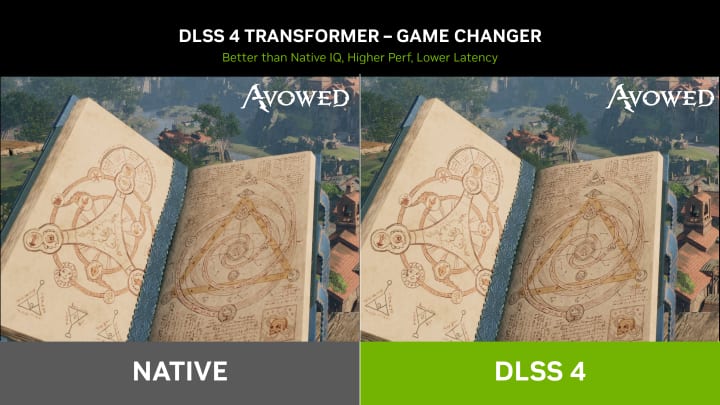
One of the standout innovations in the RTX 5060 lineup is the integration of DLSS 4, the latest iteration of NVIDIA’s Deep Learning Super Sampling technology. While DLSS 3 introduced Frame Generation, DLSS 4 takes it further with Multi-Frame Generation (MFG). Unlike previous versions that generated a single intermediate frame between rendered images, DLSS 4 can intelligently create multiple intermediate frames by predicting object motion and lighting changes across a sequence of frames. This improvement results in smoother motion, higher frame rates, and lower latency, even during graphically intensive scenes.
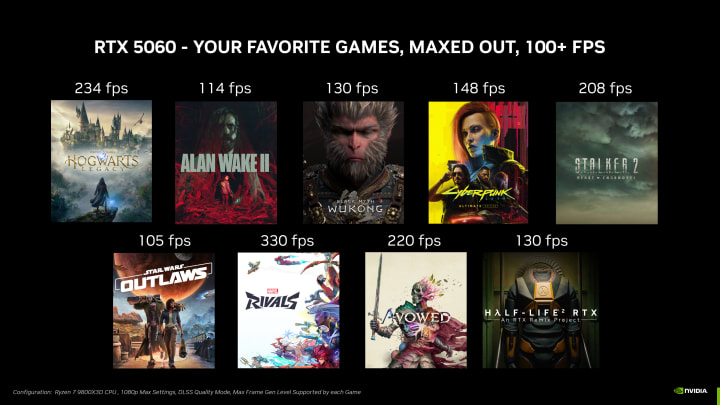
For gamers, this translates to smooth 1080p and 1440p gameplay at ultra settings—even in titles that historically challenged older graphics cards.
Neural Rendering: The AI Evolution of Graphics
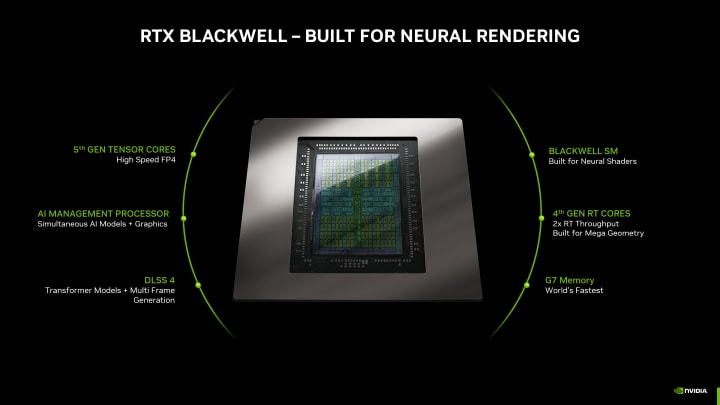
The RTX 5060 is the first mid-range card to feature neural rendering at scale, enhancing performance using DLSS 4. Built on the advancements of the Blackwell architecture, the RTX 5060 family includes dedicated neural cores that assist in real-time upscaling, texture reconstruction, ambient occlusion, and lighting.
This technology allows developers to offload a significant amount of graphical processing to AI algorithms, resulting in more realistic environments, richer character animations, and faster rendering pipelines. Additionally, combined with new SDKs in NVIDIA’s development ecosystem, neural rendering paves the way for creative workflows—such as AI-enhanced video editing, image upscaling, and even generative AI-based texture creation.
Blackwell Architecture: High-Efficiency, High-Performance
The RTX 5060 is built on NVIDIA's eagerly awaited Blackwell GPU architecture, designed to optimize both AI-powered workloads and gaming. Key features of Blackwell in the RTX 5060 include:
- A 4nm process node that outperforms previous generations in terms of performance per watt.
- Next-gen RT Cores that improve ray tracing throughput by up to 30%.
- Neural Rendering Cores specifically designed for inference tasks like DLSS, RTX Video, and generative media.
- Dynamic Shader Scheduling, enabling on-the-fly redistribution of workloads for smoother performance.
These advancements mean that the mid-range GPU delivers exceptional performance, rivaling the power of last-gen high-end cards while consuming significantly less energy.
RTX 5060 Desktop Models and Specifications
At launch, the RTX 5060 family comprises three desktop variants:
- GeForce RTX 5060 8GB ($299):** Targeted at 1080p gamers, this base model offers up to 2.5 times the performance of the RTX 3060 in DLSS 4-supported titles.
- GeForce RTX 5060 Ti 12GB ($399):** Ideal for 1440p gamers seeking more future-proofing, this model has additional CUDA cores, VRAM, and thermal headroom.
- GeForce RTX 5060 Ti 16GB ($449):** A dream for content creators, this card is optimized for multitasking, AI workflows, and modded gaming experiences.
All models come with PCIe Gen 5 compatibility, AV1 encoding support, and third-gen RTX Video enhancements for AI upscaling of streaming content.
RTX 5060 Laptops Arriving in May
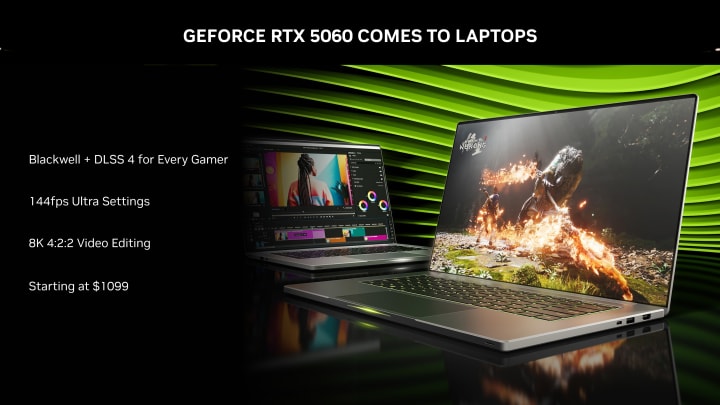
NVIDIA also announced that laptops featuring mobile RTX 5060 GPUs will be available from major OEMs starting in May 2025. These devices will bring DLSS 4, improved ray tracing, and neural rendering to thin-and-light gaming laptops, providing desktop-level experiences on the go.
Laptops from ASUS, MSI, Acer, Lenovo, and HP with RTX 5060 mobile variants paired with 14th Gen Intel or Ryzen 8000-series CPUs are expected, with starting prices rumored to be around $1,099, making them an attractive option for students, creators, and gamers alike.
The Competitive Landscape
NVIDIA's RTX 5060 is well-positioned to dominate the mid-range market, especially with AMD's RDNA 4 GPUs expected later this year and Intel's discrete graphics push with Battlemage. Its combination of performance, efficiency, and AI innovation strikes a balance that could appeal to both budget-conscious gamers and performance seekers. By delivering high-end features like DLSS 4 and neural rendering in the $299 tier, NVIDIA continues its strategy of democratizing powerful gaming technology, ensuring that every gamer has access to the future of graphics, regardless of budget.
Conclusion: Next-Gen for Everyone
The GeForce RTX 5060 isn’t just another refresh; it represents a significant leap in what mid-range GPUs can achieve.
About the Creator
Keep reading
More stories from Naveed Hasan and writers in Gamers and other communities.
Mortgage Rates Fall as Markets Calm Down
Mortgage Rates Fall as Markets Stabilize, Providing Relief for Homebuyers In a positive development for prospective homebuyers, mortgage rates have declined as financial markets show signs of stabilization. This decline comes after weeks of volatility driven by economic uncertainties that left many potential buyers feeling apprehensive about entering the market. According to Freddie Mac, the average U.S. 30-year fixed mortgage rate has decreased to 6.62%, marking the third consecutive week of declines. This is a significant shift that can reshape the outlook for buyers and sellers alike, particularly as we approach the bustling spring homebuying season.
By Naveed Hasan11 months ago in Journal
A More Human Vocal
When we launched Vocal nearly a decade ago, the world was a very different place. LLMs did not exist, and stories were created one at a time by people sitting down to write, revise, and share something personal. Many of our assumptions about publishing, trust, and participation were built for a world where effort and output were inseparable.
By Justin @ Vocal7 days ago in Resources




Comments
There are no comments for this story
Be the first to respond and start the conversation.