
Android USB stick format (How to) – Easy Guide for Beginners
Learn Android USB stick format (how to) with this simple step‑by‑step guide. Discover methods, tools, and tips to format USB sticks on Android devices quickly and safely.


Android USB stick format (how to) is a common question for people who use their phones or tablets to manage files. Many users want to know how to erase, reset, or prepare a USB stick so it works properly with Android. Because USB sticks are used for storing photos, videos, documents, and even apps, formatting them correctly is very important.
In this guide, you will learn everything about formatting a USB stick on Android, explained in simple words that even a 5th‑grade student can understand.
Why You Need an Android USB Stick Format
- To remove all files safely
- To fix errors or corrupted data
- To prepare the USB stick for new use
- To change the file system (like FAT32, exFAT, NTFS)
- To make the USB stick compatible with Android phones, tablets, and even smart TVs
Because formatting erases everything, you should always back up your files before starting.
Understanding USB Stick File Systems
When you learn android usb stick format (how to), you must also understand file systems. A file system is the way data is organized on the USB stick.
- FAT32 – Works with most Android devices, Windows, and macOS. Best for small files.
- exFAT – Supports larger files (over 4GB). Great for movies or big apps.
- NTFS – Common in Windows PCs but not always supported by Android.
- EXT4 – Used in Linux systems, sometimes supported by Android.
Because Android usually supports FAT32 and exFAT, these are the best choices for most users.
Tools Needed for Android USB stick format
- OTG Cable or Adapter – Lets you connect the USB stick to your Android phone.
- File Manager App – Many Android phones have built‑in file managers.
- Third‑Party Apps – Apps like “USB OTG File Manager” or “StickMount” can help.
- PC or Laptop (Optional) – If Android cannot format directly, you can use a computer.
Step‑by‑Step Guide: Android USB Stick Format
Step 1: Connect the USB Stick
Use an OTG cable to connect your USB stick to your Android phone. Because most modern phones support OTG, this step is usually easy.
Step 2: Open File Manager
Go to your phone’s file manager. You will see the USB stick listed under “Storage.”
Step 3: Choose Format Option
Tap the USB stick name. Then, look for “Format” or “Erase.” Because different phones have different menus, the wording may change.
Step 4: Select File System
Choose FAT32 or exFAT. Because FAT32 works everywhere, it is the safest choice. However, if you need large files, exFAT is better.
Step 5: Confirm Formatting
Tap “OK” or “Confirm.” The USB stick will be erased and prepared for new use.
Android USB Stick Format: Using Third‑Party Apps
Sometimes, your phone may not have a built‑in format option. In that case, you can use apps.
- ES File Explorer – Offers format and erase options.
- Paragon File System App – Helps with NTFS and exFAT support.
- StickMount – Mounts and formats USB sticks easily.
Because these apps are available on Google Play Store, you can download them safely.
Android USB Stick Format: Using a Computer
If your Android phone cannot format the USB stick, you can use a computer.
- Connect the USB stick to your PC.
- Open “This PC” or “My Computer.”
- Right‑click the USB stick and choose “Format.”
- Select FAT32 or exFAT.
- Click “Start.”
After formatting, reconnect the USB stick to your Android device.
Common Problems in Android USB Stick Format
- USB Stick Not Detected – Check if your phone supports OTG.
- Format Option Missing – Use a third‑party app.
- File System Error – Try formatting on a computer.
- Data Loss – Always back up before formatting.
Because these problems are common, knowing solutions will save you time.
Tips for Safe Android USB Stick Format
- Always back up files before formatting.
- Use FAT32 for universal support.
- Use exFAT for large files.
- Avoid NTFS unless you only use Windows.
- Do not remove the USB stick during formatting.
Advanced Android USB Stick Format
Some advanced users want to partition USB sticks or use special tools.
- MiniTool Partition Wizard – Works on PC.
- AOMEI Partition Assistant – Helps with multiple partitions.
- Linux Tools – For EXT4 formatting.
Because Android is flexible, you can use these advanced methods if you need more control.
Real‑World Uses of Android USB Stick Format
- Students use USB sticks to store assignments.
- Photographers use them for pictures.
- Gamers use them for game files.
- Businesses use them for presentations.
Because USB sticks are portable, formatting them correctly makes life easier.
Conclusion
Android USB stick format (how to) is a simple but powerful skill. By learning how to format a USB stick, you can fix problems, prepare for new use, and make sure your files are safe. Whether you use your phone directly, a third‑party app, or a computer, the process is easy if you follow the steps.
Always remember to back up your data, choose the right file system, and confirm before formatting. With this guide, you now have the knowledge to handle USB sticks on Android confidently.
FAQ: Android USB Stick Format
Q1: Does formatting delete all files? Yes, formatting erases everything. Always back up first.
Q2: Which file system should I choose? FAT32 for universal support, exFAT for large files.
Q3: Can I format without a computer? Yes, most Android phones can format directly with OTG.
Q4: Why is my USB stick not detected? Your phone may not support OTG, or the USB stick may be damaged.
Q5: Can I recover files after formatting? Sometimes, recovery tools can help, but success is not guaranteed.
About the Creator
Perfect Tech Views
Welcome to Perfect Tech Views—your go-to source for clear, unbiased, and insightful tech knowledge. Whether you're a pro, a beginner, or just exploring gadgets, we've got you covered with expert guidance!
Keep reading
More stories from Perfect Tech Views and writers in Gamers and other communities.
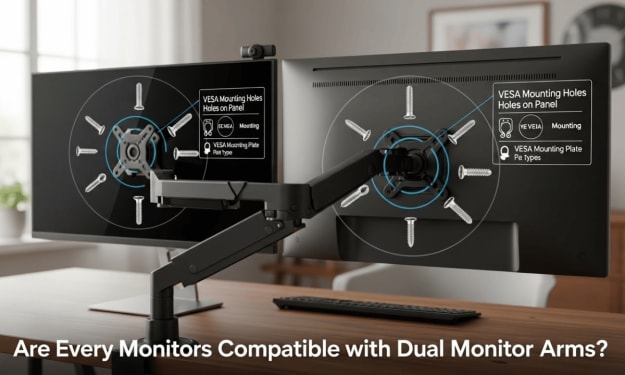
Are Every Monitors Compatible with Dual Monitor Arms? (Complete Guide)
Quick Answer Are every monitors compatible with dual monitor arms? No, not every monitor is compatible. Most modern monitors support dual monitor arms if they have a standard VESA mount and fall within the weight and size limits of the arm. However, some monitors—especially older models, ultra-thin designs, or all-in-one PCs—may not fit.
By Perfect Tech Views3 months ago in Gamers
‘I Belong to Saudi Arabia’ – Ronaldo Committed to Al-Nassr
Football icon Cristiano Ronaldo has declared his long-term commitment to Al‑Nassr, stating, “I belong to Saudi Arabia,” in a powerful affirmation of loyalty that signals his intention to continue shaping the future of football in the kingdom. Speaking after a decisive league victory, Ronaldo addressed growing speculation about a possible return to Europe or a move to another global league. Instead, the five-time Ballon d’Or winner made it clear that his focus remains firmly with Al-Nassr and the Saudi football project he has helped elevate onto the world stage. “I feel at home here,” Ronaldo said. “This club gave me trust, and Saudi Arabia gave me a new challenge. I belong to Saudi Arabia now, and I want to build something special with Al-Nassr.” A New Chapter of Legacy Since arriving in Riyadh, Ronaldo has transformed not only Al-Nassr’s profile but also the international perception of the Saudi Pro League. His presence has attracted worldwide media attention, new sponsorships, and a wave of elite players who followed him into the league. Club officials credit Ronaldo with raising professional standards both on and off the pitch. Training intensity, fan engagement, and commercial visibility have all increased significantly since his signing. “Cristiano changed everything,” said an Al-Nassr executive. “He didn’t come here to retire. He came to compete and to lead.” Ronaldo has continued to deliver on the field, scoring consistently and guiding younger teammates through his relentless discipline and experience. More Than Football Ronaldo’s statement goes beyond sporting commitment. He has repeatedly praised Saudi Arabia’s culture, hospitality, and ambition to grow football as part of its wider national development plans. In interviews, he has spoken positively about life in Riyadh, describing it as safe, welcoming, and family-oriented. His children now attend school in the city, and he has become a familiar public figure beyond the stadium. “People here respect me and my family,” Ronaldo said. “That matters more than trophies.” His message aligns with Saudi Arabia’s broader strategy to position itself as a major destination for global sport, hosting high-profile football matches, boxing events, and motorsport competitions. Silencing Transfer Rumors Recent months saw rumors linking Ronaldo to clubs in Europe and North America, with speculation that he might seek one last Champions League run. His declaration effectively shuts down those stories, at least for the foreseeable future. Football analysts believe Ronaldo’s commitment offers stability to Al-Nassr and strengthens the Saudi league’s credibility. “Ronaldo staying sends a message to the football world,” said sports analyst Marco Silva. “It shows that Saudi football is not a temporary stop but a serious long-term project.” Mentor and Leader Inside the dressing room, Ronaldo has taken on a mentorship role, particularly with young Saudi players. Coaches say his influence is visible in their professionalism and confidence. One teammate noted, “He pushes everyone. If you arrive late, he notices. If you train badly, he challenges you. He makes us better.” This leadership has helped Al-Nassr remain competitive domestically and in regional tournaments, even as expectations continue to rise. Looking to the Future Ronaldo has hinted that his future plans may extend beyond playing. He has expressed interest in football development and possible ambassadorial roles within Saudi sports structures once his career ends. “I want to help grow football here,” he said. “Not only for today, but for the next generation.” For Al-Nassr supporters, his commitment brings renewed optimism. Fans filled the stadium chanting his name after the match, waving banners that read, “Our legend, our future.” A Defining Statement Ronaldo’s declaration, “I belong to Saudi Arabia,” marks a defining moment in his late-career journey. Once seen as a controversial move, his transfer to Al-Nassr now appears central to his evolving legacy — not just as a footballer, but as a global sporting figure shaping new frontiers. As the season continues, Ronaldo’s message is clear: his story with Al-Nassr is far from over.
By Fiaz Ahmed 5 days ago in Gamers
FC 26: King of the Knockouts Unleashed – Meta Evolutions and SBC Hits & Misses
The latest King of the Knockouts promo has officially landed in FC 26, bringing a massive wave of live cards, legendary Icons, and a game-changing "Double Gold" Evolution system. While the community is buzzing over 12-million-coin pulls like Ultimate Dynasty Hamm, the tactical meta is shifting toward specific SBCs and high-value Evolution paths. Here is the full breakdown of the February 14th content and how to optimize your squad.
By hasan zidana day ago in Gamers



Comments