
All Confirmed Historical Figures in Assassin’s Creed Shadows – Who’s Real and Who’s Fiction?
Discover Which Characters in Assassin’s Creed Shadows Are Based on Real History—and Which Ones Are Pure Fiction

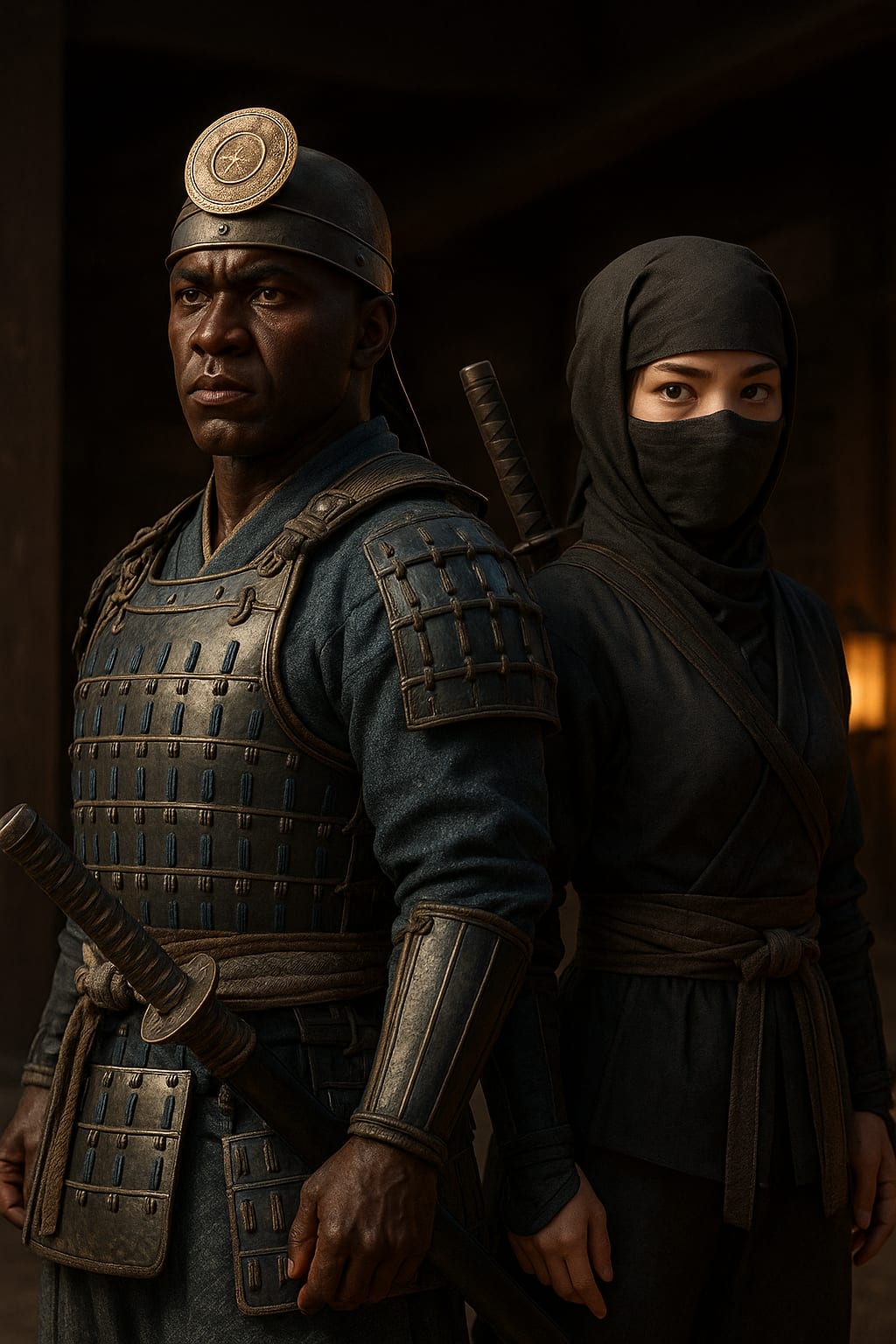
Ubisoft’s Assassin’s Creed Shadows dives deep into Japan’s Sengoku period, a time of relentless conflict, shifting alliances, and towering personalities.
True to the franchise's roots, Shadows blends fiction with fact, anchoring its sprawling narrative in real-world history. But as with every Assassin’s Creed title, the lines between the documented and the dramatized blur—leaving fans to ask: who actually lived, and who was shaped purely by Ubisoft’s imagination?
In this guide, we explore all the confirmed historical figures in Assassin’s Creed Shadows, breaking down who’s based on real events, who’s fictional, and where the two intersect.
Yasuke – The Real African Samurai
Yasuke is one of the most captivating historical figures ever introduced in Assassin’s Creed. He wasn’t just real—he was legendary. A man of African origin (likely from Mozambique), Yasuke arrived in Japan in 1579 alongside Jesuit missionaries. His appearance caused a stir; stories say his skin was scrubbed to see if the color would come off, as most Japanese had never seen a Black man.
He soon came under the service of Oda Nobunaga, one of the most powerful daimyo of the time. Nobunaga was so impressed by Yasuke’s strength and stature that he made him a samurai—one of the very few non-Japanese to hold the title. Yasuke’s historical record is thin but potent, which gives Ubisoft creative room to build his story while keeping it grounded in documented fact.
In Assassin’s Creed Shadows, Yasuke is portrayed as a warrior driven by duty and honor, caught between worlds and loyalties. Ubisoft has expanded his role with fictionalized encounters, but his core story is rooted in truth.
Verdict: Real historical figure, dramatized with fictional elements.
Naoe – Daughter of a Shinobi, Product of Fiction
Naoe is the other protagonist of Assassin’s Creed Shadows, but unlike Yasuke, she’s entirely fictional. She’s the daughter of Fujibayashi Nagato, a historical figure associated with the Iga-ryū school of ninjutsu. While her father’s legacy is real—at least within the murky borders of shinobi history—Naoe herself doesn’t appear in any historical records.
Her character is a narrative invention meant to give players a stealth-centric experience that contrasts Yasuke’s direct, samurai-based combat. Naoe’s journey is shaped by revenge and political conflict, intertwining with real-world events and figures, but her identity is Ubisoft’s creation.
Verdict: Fictional character inspired by real historical context.
Oda Nobunaga – The Ambitious Unifier
Oda Nobunaga needs no embellishment. A ruthless strategist and visionary warlord, he played a pivotal role in the unification of Japan during the late 1500s. Known for his brutal tactics and love for Western technology—including firearms and foreign culture—Nobunaga defied traditional samurai values in pursuit of power.
Yasuke’s story is tied intimately with Nobunaga’s, and Ubisoft uses this historical relationship to ground Shadows in real events. Nobunaga’s campaigns, his modernization of warfare, and his controversial alliances will likely form a backbone of the game’s main narrative arc.
However, while Nobunaga’s presence is historically documented, the ways in which he’s portrayed—his personality, his decisions, his relationship with the Assassins and Templars—are filtered through Ubisoft’s creative lens.
Verdict: Real historical figure with fictionalized depth.
Toyotomi Hideyoshi – The Power-Hungry Successor
Toyotomi Hideyoshi appears briefly in Assassin’s Creed Shadows, and although not confirmed as a central figure yet, his influence during this era was immense. Following Nobunaga’s death, Hideyoshi rose from humble beginnings to become the second "great unifier" of Japan. He solidified many of Nobunaga’s conquests and implemented strict policies, including the sword hunt, which disarmed the population and reasserted samurai control.
Hideyoshi’s policies and personality make him a likely candidate for inclusion as an antagonist or uneasy ally, depending on how the game’s narrative develops. He wasn’t as open to foreigners as Nobunaga, and this could create tension with Yasuke’s background.
Verdict: Real historical figure, likely dramatized within the narrative.
Akechi Mitsuhide – The Betrayer
Another figure linked to Nobunaga’s fate is Akechi Mitsuhide, the general who betrayed and ultimately led to Nobunaga’s death at Honnō-ji Temple. Mitsuhide’s motivations are debated by historians—some say jealousy, others political rivalry. Assassin’s Creed thrives in these gray areas.
If Shadows includes the infamous Honnō-ji incident, Mitsuhide may play a pivotal role as a villain, rival, or perhaps something more complex. His betrayal fits perfectly into the franchise’s theme of secret societies manipulating world events.
Verdict: Real historical figure, with likely narrative exaggeration.
Fujibayashi Nagato – Shinobi Master of Legend
This shinobi leader is mentioned in the game as Naoe’s father, and he’s based on a real person tied to Iga’s legendary ninja clans. Fujibayashi Nagato is believed to have been a senior figure in the Iga-ryū school, which passed down codified techniques of espionage, sabotage, and assassination.
Not much is definitively known about him, making him a perfect choice for Assassin’s Creed’s signature blend of myth and fact. While Ubisoft invents his familial connection to Naoe, his existence and association with the shinobi world are historically plausible.
Verdict: Real figure from shinobi lore, embellished for narrative depth.
Other Potential Historical Figures (Yet to be Confirmed)
While not officially confirmed, several other historical personalities might appear based on the setting:
Tokugawa Ieyasu: The final unifier of Japan, whose rise began during this era.
Jesuit Missionaries: Figures like Alessandro Valignano, who traveled with Yasuke, could add religious and ideological tension.
Date Masamune or Takeda Shingen: Iconic daimyo whose timelines overlap with Nobunaga’s campaigns.
Their inclusion would depend on how far the game’s timeline stretches and whether Ubisoft leans more into military politics or covert shadow wars.
Fictional Additions – The Templar and Assassin Twist
As always, the hidden conflict between Assassins and Templars will anchor the overarching story. Expect many side characters—informants, enemies, and allies—to be purely fictional. Ubisoft often crafts entire factions, villages, and leaders around its core conflict, using history as a launchpad rather than a rulebook.
These invented characters serve to enhance gameplay, add intrigue, and fill in the gaps between real events. The fiction, in this sense, doesn’t detract—it enriches.
Assassin’s Creed Shadows walks the fine line between truth and storytelling, as the series always has. Yasuke and Nobunaga ground the tale in documented history, while characters like Naoe and the shadowy factions bring the signature flair of historical fiction.
Whether you're playing to uncover lost truths or simply to immerse yourself in the deadly dance of swords and stealth, knowing which faces come from fact makes the experience all the more compelling.
As more character reveals and developer insights surface ahead of release, this blend of real and imagined will likely deepen. But for now, players can look forward to stepping into a world where every sword slash and whispered alliance echoes across time.
About the Creator
Richard Bailey
I am currently working on expanding my writing topics and exploring different areas and topics of writing. I have a personal history with a very severe form of treatment-resistant major depressive disorder.
Keep reading
More stories from Richard Bailey and writers in Gamers and other communities.
Rsvsr Rare Drops, Big Rewards: How the Sunder Charm Refreshes Diablo II: Resurrected Endgame
Blizzard’s Reign of the Warlock expansion for Diablo II: Resurrected has breathed new life into a game beloved by fans for decades. Among the many additions, one item has captured the imagination of players more than any other: the Sunder Charm.
By Billo Nali6 days ago in Gamers
Rsvsr Hello Kitty Partners Event Brings Fun and Rewards to Monopoly GO
Monopoly GO keeps surprising players with fun, limited-time events, and the Hello Kitty Partners event is one of its most exciting yet. Combining cooperative gameplay, leaderboard competitions, and time-limited boosts, this event gives players a reason to roll the dice more strategically than ever.
By Billo Nali6 days ago in Gamers



Comments
There are no comments for this story
Be the first to respond and start the conversation.