
5 Things To Consider When Buying A Pool Table
You'll be spending hundreds of dollars on a pool table, so you should know what you're getting into before making a purchase. Read our tips on buying a pool table!
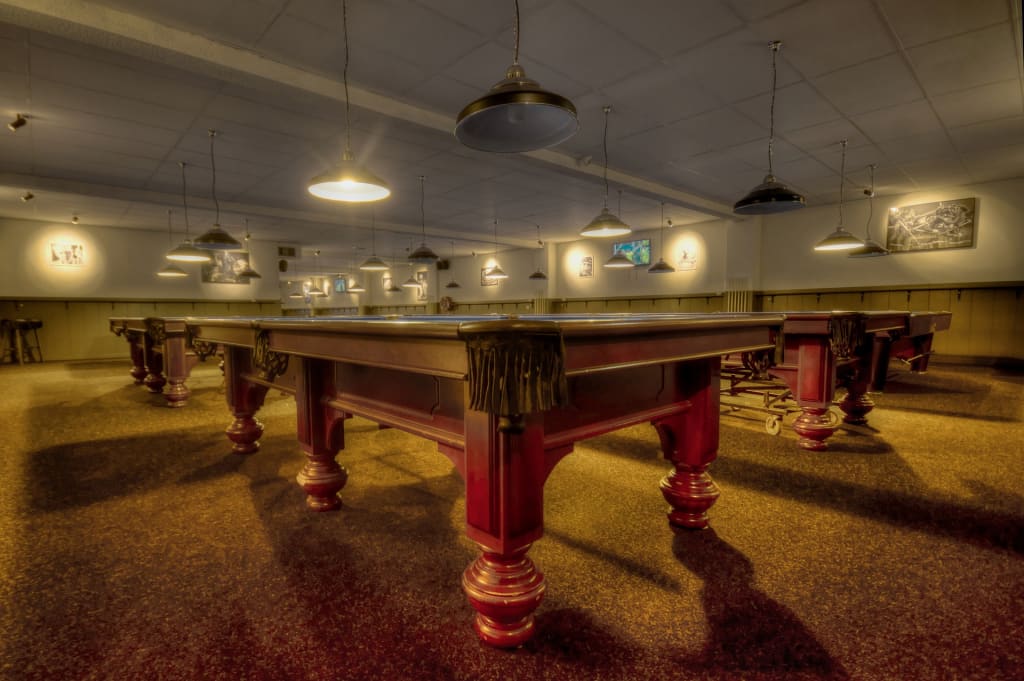
If you're ready to get a pool table for your home, you may be surprised at all the options and things you should consider moving forward. There's plenty to consider, from the types of pool tables to sizes and what kind of maintenance your table will need after buying it. There is a Logan pool table for sale, which works when you focus on buying it. This pool table buying guide will explain everything you need to consider to make the best decision.
How to buy a pool table?
Buying a pool table can be a challenging task. Many factors go into it, making it difficult to know if you are making the right decision. For example, size, style, brand, and table quality are all valuable characteristics to consider in this purchase. Table price concerning your budget is another crucial element to consider. To ensure that you buy the correct item, it is recommended that you shop at a location with experts in the field that can guide you to the right table.
Essential things to consider when buying a pool table
There are lots of things to consider before buying a pool table, but the five most common points to consider are as follows:
Slates
Make sure the table's play surface is genuine, authentic slate, not a particle board or MDF play surface. Particle boards and other play surface pool tables have little stability in a room. These tables can bounce around while balls move from their place. If a pool table does not have a genuine slate surface, you can guarantee that the overall quality of the table is lacking. These tables are also susceptible to warpage and other damage. One-inch thick slate is the best, and ¾-inch thickness is the minimum.
Legs
The cabinet of a pool table holds 90% of the overall weight, which means strong legs must support this amount. Players taking shots, lean, or sitting against the pool table adds even more stress. There are two types of legs: post or "perfect" legs and two-piece or "industry standard" legs. The post legs are considered "perfect" because they are made from solid pieces of wood, from slate down to the feet. They are reliable and will prevent a lowering of the gameplay experience as time progresses.
There are two types of two-piece or "industry standard" legs; these leg systems attach the legs to the cabinet with anchor systems and avoid a solid leg. The first type is the single anchor system which uses a single nut and bolt combination; this system will loosen over time and affect the playing experience. The second type is the quad anchor system, which offers four nut and bolt combinations, and is the more secure of the two types of two-piece legs.
Frame
The slate of a pool table is only as good as the wood frame since a lack of support can cause the slate to sag, crack and become uneven. A high-quality pool table will offer a slate framed with wood glued to the bottom, along with cross beams that add support. On this page, you will find a review of three types of frames below.
The type of frame beams needed depends on the size of the slate. Pool tables that offer 3/4" slate can get away with utilizing two cross beams. But larger slates, such as 1" and up, should use quad-beam construction that offers two cross beams and two long beams. Just remember with a more extensive slate, more framing is required, and ask about the number of beams below the slate.
Installation
Professional installation from a certified billiard specialty installer for your pool table is crucial. These professional installers will know exactly how to set up your table without damaging it. To attempt to install it yourself or use a non-billiard specialty service could spell disaster. If you are lucky enough to avoid damage, there can still be play surface issues and improper felt-cushion placement.
Cushions
The cushions or rails of a pool table are customarily made from synthetic materials or natural gum or gum blends. The synthetic options routinely rely on clay filler to form the rails; this clay will dry out, lose its bounce and become a "dead rail." But rails or cushions with the standard K-66 profile use natural gum materials; these rails provide a predictable bounce that will last as long as you own the table. We recommend natural gum rails over synthetic rails. An in-depth review of rails and cushions can be found below.
Playing accessories
While the pool table itself is probably the most crucial aspect that will determine the playing experience of the games, the playing equipment is quite essential. Here's a quick rundown of billiard equipment and accessories:
Pool cues, cue sticks, or billiard cues
They are tapered pieces of wood used to strike the billiard balls. While historically, cues offered strictly wood, today, modern versions feature natural maple and synthetic materials such as fiberglass, graphite, and carbon fiber. They range in size from 48" to 58" long and can weigh between 17 and 22 ounces.
Bridge sticks
They are used when the pool player cannot reach their desired shot without lying on the pool table. Many games require players to keep at least one foot on the ground during shots; bridge sticks allow players to place the shooting cue on the bridge to hit their shot accurately. Bridge sticks typically offer a tapered wood shaft with a brass bridge head.
Billiard balls
They are the balls used to play pool, billiards, and other cue sports. A standard billiard ball set includes 15 numbered balls, sometimes divided into stripes and solids, and one white or clear cue ball. Color, size, and diameter can vary depending on the cue sport and location.
Pool ball rack
They have framed pieces of wood used to set the billiard balls at the beginning of the play. The 15-ball "triangle" rack is the most common, offering a pattern of 1-2-3-4-5. These racks typically require the eight ball to be placed in the center of the third row, with the #1 ball at the triangle's apex (the front corner). These triangle racks can play pool, snooker, eight-ball, and other games. Another type of pool ball rack is the nine-ball "diamond" rack with a pattern of 1-2-3-2-1, which is used to play nine balls.
Other accessories
It includes table brushes, rail brushes, training balls, cue repair kits, cue chalk, chalk holders, talcum powder, tally ball shakers, tally balls, table covers, pool cue cases, wall racks, and much more. These accessories help to maintain your pool table.
Conclusion
Pool tables have various manufacturers' features, sizes, materials, finishes, and felt colors, so any new pool table will match an existing game room, basement, or other empty areas. Having trouble finding a pool table to fit your indoor space? There are seven-foot pool tables, eight-foot pool tables, and even nine-foot pool tables; purchase what you like. And this equipment is to keep you playing with pool chalk, racks, cues, table covers, and much more found in our billiard accessories. This article helps to professional you in buying a pool table.
About the Creator
Keep reading
More stories from allenjames and writers in Gamers and other communities.
10 Pool Table Games Everyone is Playing
It might be a good idea to play 8-ball and 9-ball if you have purchased a pool table from an online game room store. Most pool players are familiar with standard pool games like 8-ball and 9-ball, but you can also sharpen your skills by trying a new game. Here are ten pool table games to try out with your friends! You could find a new favorite!
By allenjames3 years ago in Gamers
The Rise of Online Gaming Communities: How Players, Creators, and Collaboration Shape Digital Culture
Over the last decade, online gaming has grown far beyond a simple form of entertainment. What once existed as a niche hobby for a small group of enthusiasts has evolved into a vast, interconnected digital culture. Today, online gaming is a global ecosystem that connects players, creators, and communities, all contributing to an environment where interaction, storytelling, and creativity define the experience. Gaming has become more than a pastime—it’s a space where social connections are built, ideas are shared, and digital culture is shaped.
By Hawaiian Malia7 days ago in Gamers
From Battle Royale to a Global Digital Platform
When Fortnite first gained popularity, it was known mainly as a fast-paced battle royale game. Over time, however, Fortnite evolved into something much broader. Today, it functions as a global digital platform that blends gaming, creativity, social interaction, and live entertainment. This shift did not happen through hype or exaggeration, but through steady development and changing player behavior.
By Games Mode On3 days ago in Gamers



Comments
There are no comments for this story
Be the first to respond and start the conversation.