
5 Easy Dungeon Master Tricks to Keep Players Engaged (Without Relying on Combat)
Simple Storytelling Tricks Every Dungeon Master Can Use to Keep D&D Players Hooked — Without Relying on Combat

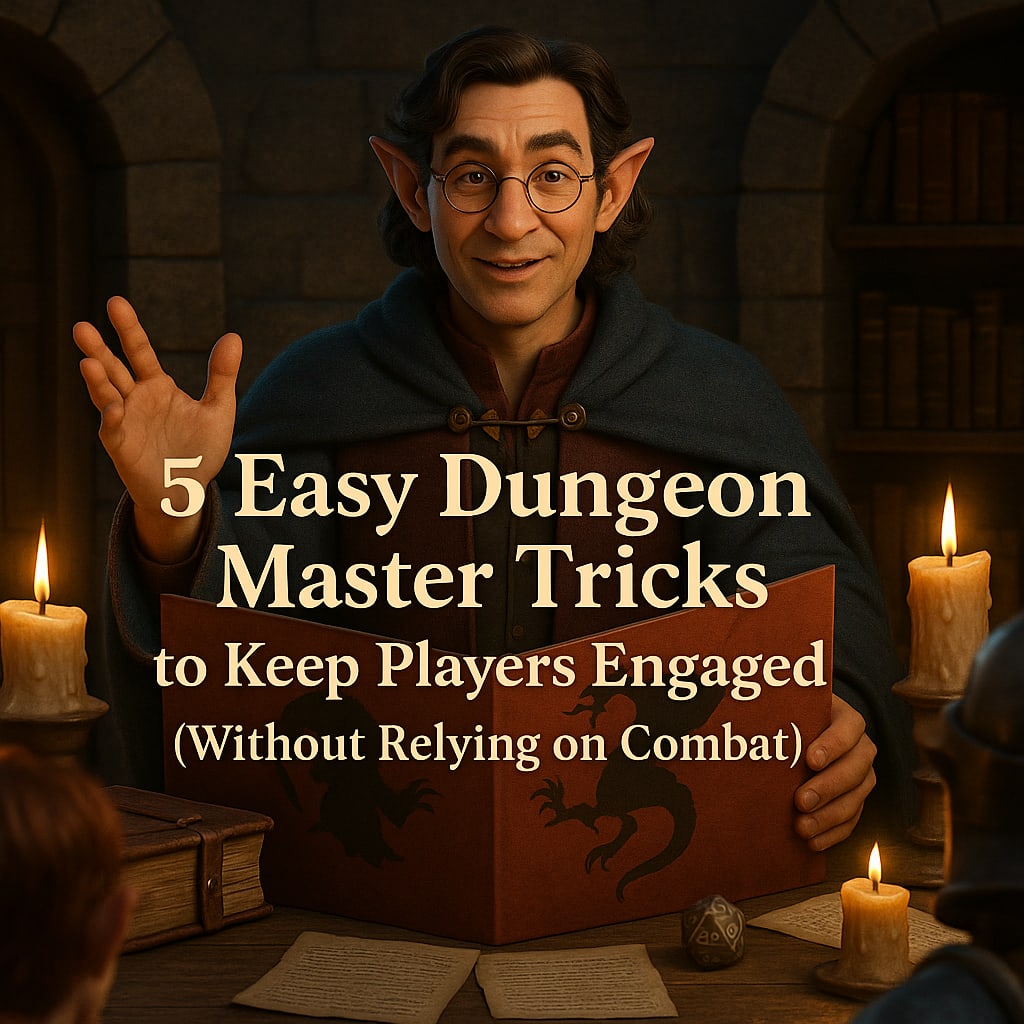
As a Dungeon Master, nothing’s worse than seeing your players check their phones mid-session. You’ve prepped the perfect dungeon, mapped every corridor, and statted out the boss... but somehow, their attention drifts. Sound familiar?
If you’re a new or struggling DM, you’re not alone. “How do I keep my players engaged?” is one of the most searched questions in the D&D community. And here’s the twist: it’s not always about epic battles or flashy spells.
In fact, the secret sauce to player engagement lies in storytelling — not sword-swinging.
Why Focus on Storytelling Over Combat?
Don’t get us wrong — combat is a blast. But when every session becomes a grind of initiative rolls and hit points, things start to feel stale. That’s why today’s tips focus on narrative-driven techniques that deepen immersion and spark player creativity.
Here are 5 easy Dungeon Master tricks that lean into storytelling and help keep your players hooked from session to session.
1. Use Character Backstories as Plot Fuel
Why It Works:
Nothing pulls a player in like seeing their story become the story. Weave elements from their backstories into your main plot or side quests — a lost sibling, a family heirloom, or a nemesis from the past.
This turns passive players into proactive ones, hungry to uncover more.
Quick Trick:
Before Session 1, ask each player to give you one “secret” their character has never told anyone. Save these for a dramatic reveal mid-campaign.
2. Master the "Cutscene Cliffhanger"
Why It Works:
Ending a session on a cinematic, story-rich cliffhanger is one of the easiest ways to make sure everyone comes back next week excited.
Think of it like a Netflix episode — cut just as the villain reveals their true identity or the cursed artifact pulses in someone’s bag.
Quick Trick:
Write one sentence ahead of time that could serve as a dramatic final line for your session. Deliver it just before wrapping up for maximum tension.
3. Make NPCs Memorable with One Unique Trait
Why It Works:
Players remember quirky, well-defined NPCs far more than generic quest-givers. A stuttering librarian who knows ancient secrets? A goblin with a passion for opera? Gold.
These characters add flavor, build immersion, and give players a reason to invest in the world.
Quick Trick:
Use the “one weird thing” rule — every important NPC should have one standout quirk: a catchphrase, a phobia, or an odd habit.
4. Let Players Narrate Successes
Why It Works:
Every player wants their moment to shine. When a player rolls a critical hit, don’t just say “You deal 20 damage.” Instead, hand them the mic:
“Tell us how your character finishes this enemy off in style.”
This puts them in the storyteller’s seat and gives them ownership over epic moments.
Quick Trick:
Start with big successes like crits or clever plans. As your group gets comfortable, invite them to describe smaller moments, too — like intimidation checks or stealth scenes.
5. Use Secrets and Rumors to Seed Curiosity
Why It Works:
Nothing piques interest like a good mystery. Plant secrets, rumors, and half-truths throughout the world. Let players choose what to investigate — and watch them lean in.
You don’t need full backstories for each secret. A single line of intrigue (“Why does the mayor keep whispering to his mirror?”) is enough to hook attention.
Quick Trick:
Prepare a “Rumor Table” with 5-10 strange things NPCs might say or strange sights they could witness. Drop one per session to build long-term engagement.
You Don’t Need to Be Matt Mercer
You don’t need to be a voice actor or write a Tolkien-length campaign bible. The most effective DM tricks are often the simplest — using your players’ stories, creating fun NPCs, and crafting moments they’ll remember.
Start with just one of these techniques next session. Test it out, see how your players respond, and build from there.
About the Creator
Richard Bailey
I am currently working on expanding my writing topics and exploring different areas and topics of writing. I have a personal history with a very severe form of treatment-resistant major depressive disorder.
Keep reading
More stories from Richard Bailey and writers in Gamers and other communities.
How to Start a D&D Campaign from Scratch (For Busy DMs)
Starting a Campaign Doesn’t Have to Take Forever Launching a Dungeons & Dragons campaign can feel like preparing for a one-person Broadway show. World-building, story arcs, character hooks, maps, NPCs—it's easy to get overwhelmed, especially if you’re a busy Dungeon Master juggling work, life, and maybe a few other hobbies.
By Richard Bailey10 months ago in Gamers
Early Life: From the Streets of Madeira to Stardom
Cristiano Ronaldo: From Madeira to Football Immortality Cristiano Ronaldo dos Santos Aveiro is a name that has become synonymous with determination, ambition, and sporting excellence. Rising from humble beginnings on the Portuguese island of Madeira, Ronaldo transformed himself into one of the greatest football players in history and a global icon followed by hundreds of millions of fans. His story is not only about talent, but about discipline, resilience, and an unstoppable desire to improve.
By abdo storiesa day ago in Gamers


Comments
There are no comments for this story
Be the first to respond and start the conversation.