
According to Professor Elizabeth Hartney, psychologist, professor and Director of the Center for Health Leadership and Research at Royal Roads University, Canada, problem gambling is any gambling behavior that disrupts one's life. The three common types of gambler are the professional gambler, the social gambler, and the problem gambler. The problem gamblers who are not often found rely on skills instead of luck to make money. Social gamblers take gambling as a recreational activity and cling to control over the time, money and energy they use on gambling. While they gamble for fun, the cost of gambling for them is entertainment. The problem gamblers are the reverse of social gamblers, instead of them controlling gambling, gambling controls them. Their actions involve continuous involvement in gambling activities in spite of negative consequences, they don't have to be completely out of control. If you are obsessed with gambling and spending more time and money on it, or gambling despite the bad consequences, you have a gambling problem. If you are addicted to gambling, you are a problem gambler. Signs of addiction to gambling include the following, feeling the urge to be secretive about gambling, feeling a high or thrill from betting, using gambling to avoid difficulties, gambling without money and accruing debts, relatives and friends concerned about one's gambling, continuous gambling after the consequences, and additional behavior or mood disorder. Source: https://www.verywellmind.com/types-of-gambler-22513
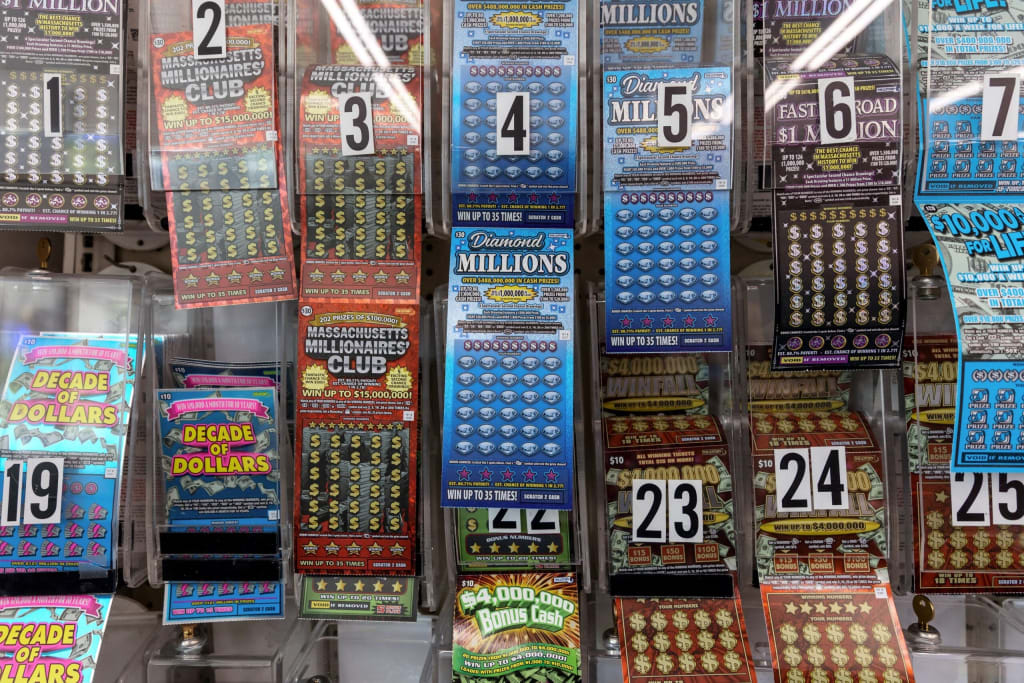
I buy scratch tickets. I have bought them at different places such as grocery stores, convenient stores and gas stations. Many times I spend more than $40 on scratch tickets and some dealers and customers notice it. I look like a problem gambler to them. Does that make me a problem gambler? I tell them something that I tell you. 4 years ago I started this strategy I currently use. I take just $40 out of my weekly after-tax pay to buy scratch tickets. I choose at random the day of the week and place (unlike most buyers) to buy scratch tickets and buy a mixture of different tickets with different prices. Let the number of dollars I win be 100n + m, where n is any integer from 0 to infinity and m is any integer from 0 to 99. From this, n represents any digit or set of digits before the last two digits of the amount I win. 100n is the number of dollars I deposit into my secondary savings account whereas the rest, I add to next week's $40 (I spend (40 + m) dollars). For example if I win $503, I deposit $500 into the account and next week, I spend $43. If I win $89, I spend $129 next week. If I win $200, all of it goes into the account. The extra money I spend comes from my winnings. The higher n is, the more I deposit money into the account. The higher m is, the bigger my chances of winning at least a 5-figure sum. It is only once in this system that I have failed to win something (n=0 and m=0) so the following week I spent just $40. I usually win something and the total amount varies. I still may not have won a 5-figure amount from a single scratch ticket which some people have but I accumulate more and more money in my account. People tell me that it is a smart way to gamble. This looks like professional gambling to me. It's like a side gig. I control gambling, gambling doesn't control me. This is a good strategy to try.
Feel free to leave comments, like the article and follow me. Thanks for reading.
About the Creator
Chibuzo Nwachuku
I am a freelancer who likes to write thought-inducing articles and using common-sense.
Keep reading
More stories from Chibuzo Nwachuku and writers in Gamers and other communities.
All the Information You Should be Aware of Regarding ChatGPT-4
Barely four months have passed since OpenAI, an artificial intelligence company, unleashed ChatGPT, which, without overstating its significance, has altered the world irrevocably. In a mere 15 weeks, it has stimulated apocalyptic forecasts for the worldwide job market, disrupted education systems, and attracted millions of users, from prominent banks to application developers.
By Chibuzo Nwachuku3 years ago in Education
Rsvsr Master Monopoly GO: Daily Strategies for Maximum Rewards
Monopoly GO takes the classic board game to a whole new level, combining strategy, chance, and real-time events with a wealth of rewards. Whether you’re a casual player or a competitive strategist, understanding daily events and planning your gameplay is essential to maximize progress and earn more dice, cash, and rare items.
By Billo Nalia day ago in Gamers




Comments
There are no comments for this story
Be the first to respond and start the conversation.