
Workplace Safety Tips
Best Safety in the Workplace Tips

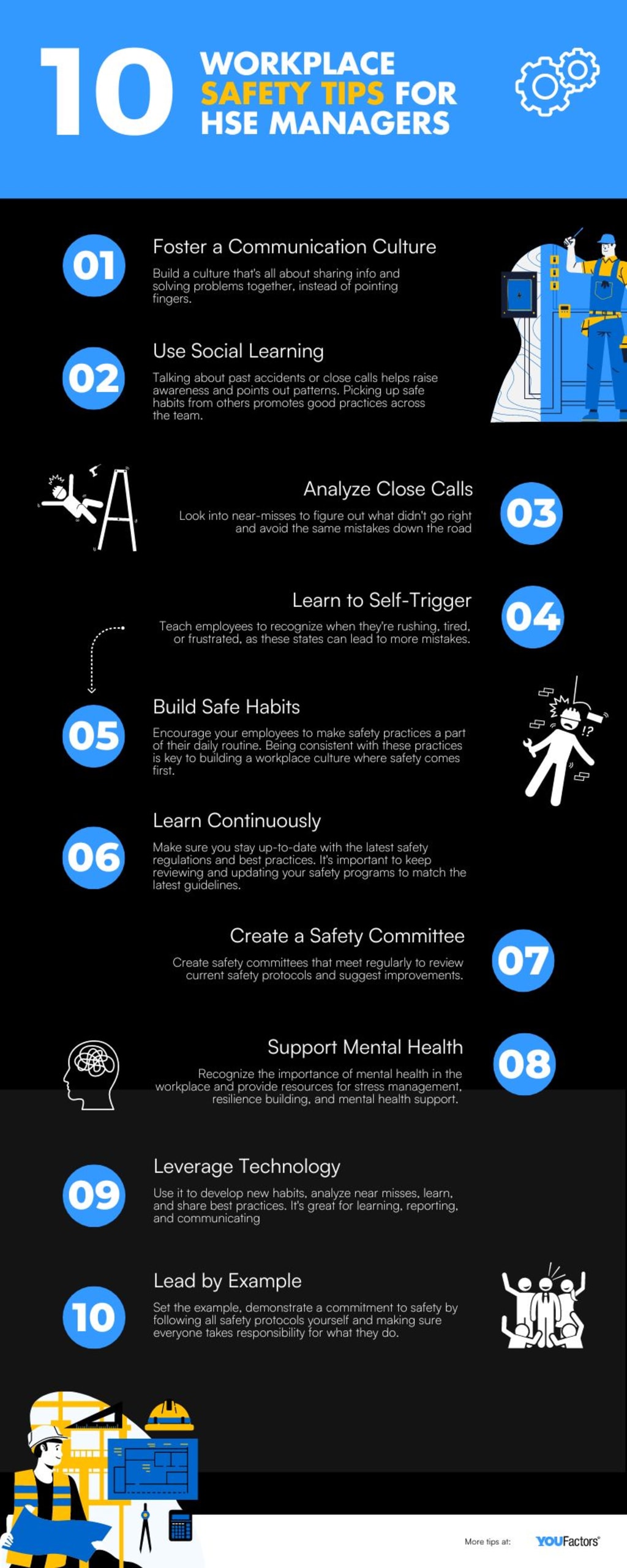
Health, Safety, and Environmental (HSE) managers play a crucial role in ensuring a safe and healthy workplace. Their responsibilities go beyond merely complying with regulations; they aim to create a culture of safety that minimizes risks and promotes well-being. Below are key workplace safety tips for HSE managers to maintain a safe working environment.
1. Conduct Comprehensive Risk Assessments
The first step in managing workplace safety is understanding the risks. Conduct thorough risk assessments for every department, task, and process. This helps in identifying potential hazards and setting control measures in place. Prioritize high-risk areas and ensure that any identified hazards are promptly addressed. Regularly review and update these assessments, especially when changes in the work environment occur, such as new equipment, processes, or materials.
2. Develop and Implement Safety Policies
HSE managers should establish clear safety policies that outline procedures, responsibilities, and expectations for employees. These policies must align with local and national regulations, as well as the specific risks associated with the workplace. Safety policies should be accessible to all employees and regularly reviewed to stay relevant to changing circumstances.
3. Provide Regular Safety Training
Training is one of the most effective ways to promote workplace safety. Employees need to be trained on safe work practices, the proper use of equipment, emergency procedures, and how to report hazards. HSE managers should organize regular safety training sessions and ensure that new employees receive proper onboarding regarding safety policies. Consider holding refresher courses and offering specialized training for tasks that involve higher risks, such as operating machinery or handling hazardous materials.
4. Encourage a Safety-First Culture
Building a strong safety culture is essential. HSE managers should encourage employees to adopt a safety-first mindset, where they are proactive in identifying and addressing hazards. Empower workers to report safety concerns without fear of retaliation and foster open communication about safety issues. Regularly recognize and reward safe behaviors to reinforce the importance of safety throughout the organization.
5. Ensure Proper Use of Personal Protective Equipment (PPE)
The use of Personal Protective Equipment (PPE) is vital in mitigating risks, especially in environments with physical, chemical, or biological hazards. HSE managers must ensure that appropriate PPE is available and employees are trained on its correct use. Conduct regular inspections to ensure PPE is in good condition, properly fitted, and being used consistently.
6. Regular Inspections and Audits
Frequent inspections and audits help identify unsafe practices, hazards, and areas for improvement. HSE managers should schedule routine inspections of equipment, workspaces, and processes to ensure they comply with safety standards. Address any issues found during these inspections promptly and keep records to track recurring problems or hazards.
7. Prepare for Emergencies
Every workplace should be prepared for emergencies such as fires, chemical spills, or medical incidents. HSE managers must establish clear emergency procedures, ensure employees are familiar with these procedures, and regularly practice emergency drills. Equip the workplace with proper emergency equipment such as fire extinguishers, first-aid kits, and eye-wash stations, and ensure they are easily accessible and well-maintained.
8. Monitor Employee Health
Employee health and safety go hand-in-hand. Regular health checks can help prevent workplace injuries and reduce absenteeism due to illness. Implement wellness programs that promote healthy lifestyles and monitor workplace ergonomics to minimize the risk of musculoskeletal disorders. HSE managers should also be aware of mental health issues and provide support resources such as employee assistance programs.
9. Stay Informed on Regulations and Best Practices
HSE managers must stay up-to-date with the latest safety regulations, industry best practices, and emerging risks. Attend safety seminars, engage with industry associations, and subscribe to relevant publications to keep informed. Regularly review safety programs and practices to ensure they meet legal requirements and industry standards.
10. Promote Continuous Improvement
Safety management is not a one-time task; it requires continuous improvement. HSE managers should regularly evaluate their safety programs, gather feedback from employees, and implement improvements as needed. Conduct post-incident investigations to understand root causes and prevent future occurrences.
Conclusion
Workplace safety is a critical responsibility for HSE managers. By conducting risk assessments, implementing safety policies, providing training, and fostering a culture of safety, HSE managers can significantly reduce the likelihood of accidents and injuries. Regular inspections, proper use of PPE, emergency preparedness, and continuous improvement will ensure a safer, more productive workplace.
About the Creator
YOUFactors
The YOUFactors app gives you and your team the power to reduce human errors, enhancing personal safety and boosting productivity, both at work and home. It is your ultimate digital companion for safety and performance.
Keep reading
More stories from writers in FYI and other communities.
A Failed Artist, A Disillusioned Poet, An Underpaid Game Show Host
I took my son and niece to Gori, a small town in Georgia where Joseph Stalin was born. They talked me into visiting the Stalin's Museum, the largest in the post-Soviet space. I had resisted going there because I just can't stand the monster and know enough about him, or so I thought.
By Lana V Lynx29 days ago in FYI
Why Aircraft Components Are Built for Decades, Not Years
Modern aircraft are not designed with short lifespans in mind. Unlike consumer products that are replaced every few years, aircraft components are expected to remain safe, functional, and reliable for decades. This long-term approach is not accidental; it is the result of strict regulations, conservative engineering, and a safety culture that prioritizes endurance over convenience.
By Beckett Dowhan5 days ago in FYI




Comments
There are no comments for this story
Be the first to respond and start the conversation.