
William Sidney Mount Showed Mastery In Depiction Of The Human Body And Its Movement
William Sidney and his some of the great work in paintings. His mastery of showcasing human body and its movement

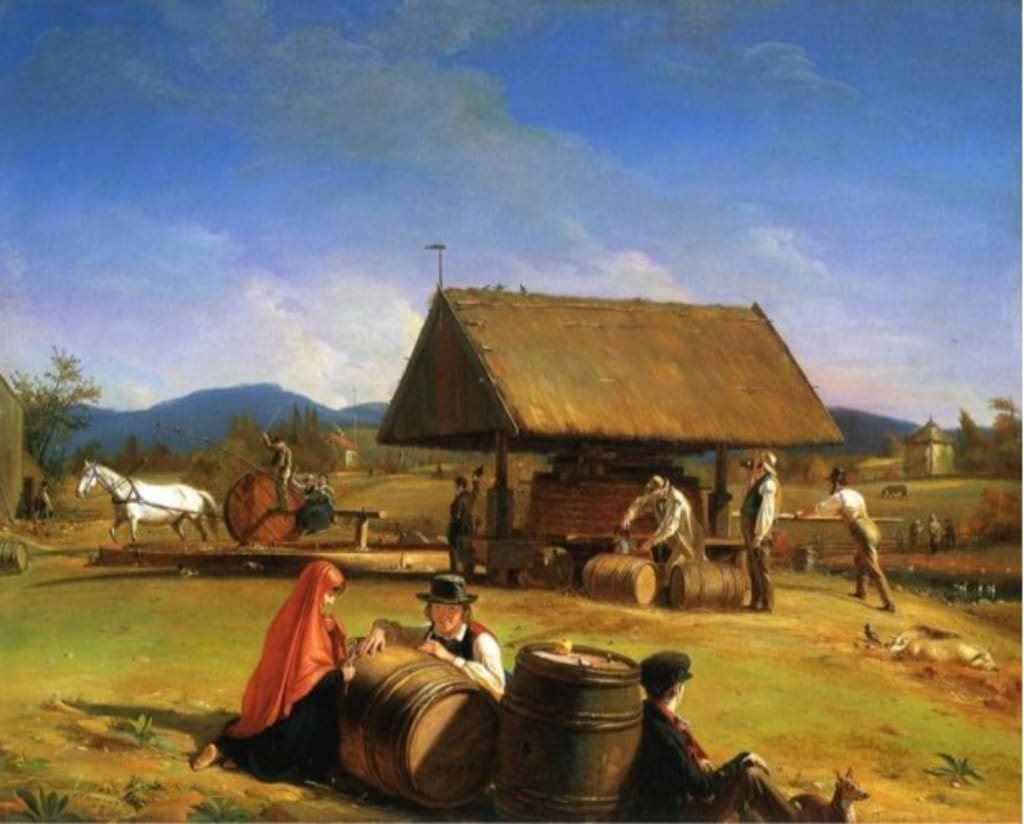
A true painter should have no home – but to wander in search of scenery and character – during Spring, Summer, and Autumn – some pictures to be finished on the spot, and others to be finished [in the studio] in the winter.
-William Sidney Mount

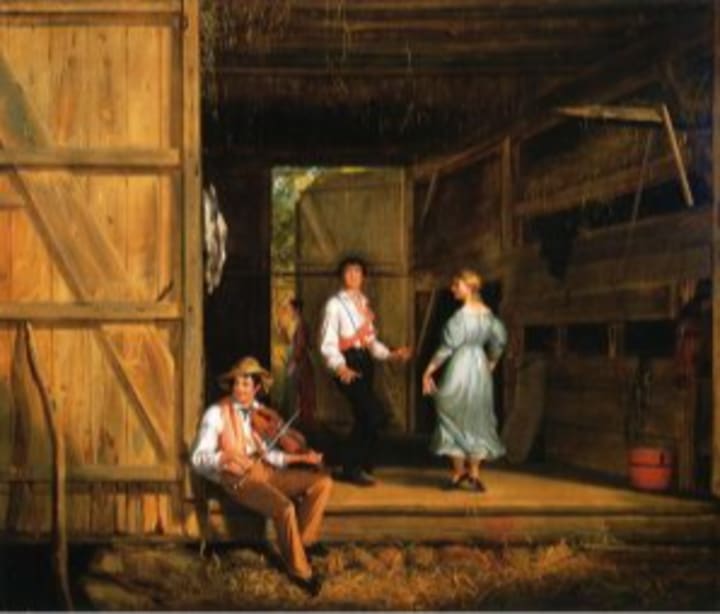
Mount is recognized as one of America’s greatest genre painters. In his portrayal of the human body and its mobility, he demonstrated his technical proficiency. He is credited with starting a tradition that persisted into the 20th century with his paintings. His psychologically perceptive and democratic handling of people in his lifelike portraits and narrative situations draw fascinating aesthetic comparisons to Stephen Foster’s musical compositions and Walt Whitman’s poetry. As a genre painter, he created a lot of scenes from everyday life that were expertly rendered with careful detail and tedious glazing. The “American-ness of the culture of the new country” was the main theme of his work.

The son of Thomas Shepard Mount and his wife Julia Hawkins, William Sidney Mount was born on November 26, 1807, in Long Island, New York. He worked until 1824 on the Stony Brook farm owned by his family. His older brother Henry Mount worked as an ornamental painter in New York City. He drew inspiration from the artist there and spent a significant amount of time as an apprentice. He received his education at the National Academy of Design in New York, where he was elevated to the rank of full academician in 1832. He had a reputation for exhibiting frequently at the academy during the ensuing 33 years. His paintings featured realistic scenes, comedy, and uniqueness.

Early on, Mount’s paintings tended to have literary and historical themes. The artist started creating genre paintings in 1829, which included portraits and scenes from daily life. The agricultural scenes painted by Mount quickly gained popularity both domestically and abroad. He was one of the most well-known artists in America by the middle of the nineteenth century, and he had more commissions than he could complete.
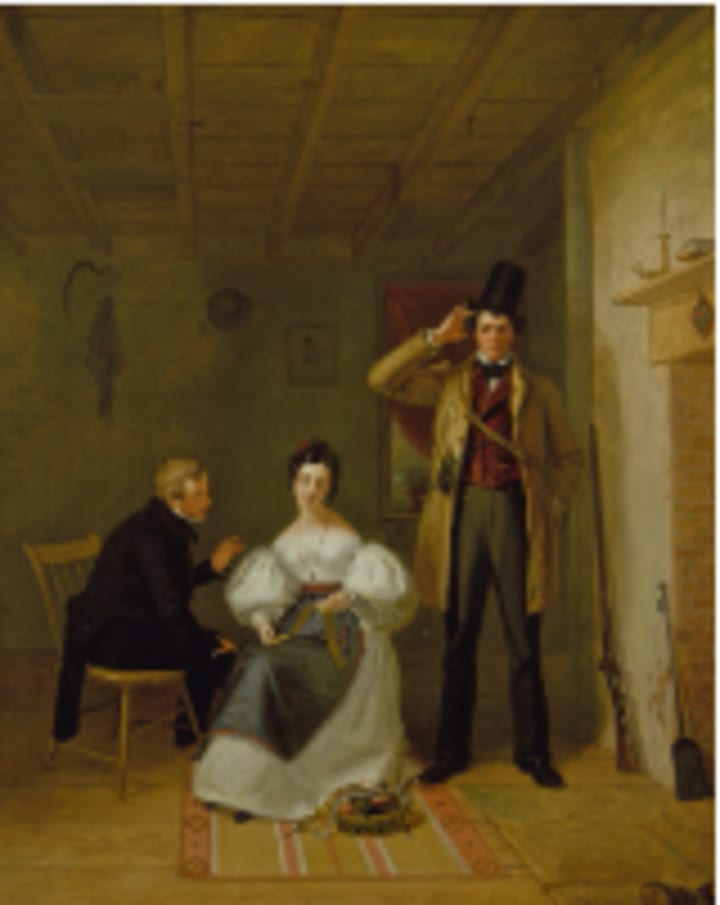
“The Sportsman’s Last Visit reveals nineteenth-century Americans’ growing awareness that there was a broadening difference in manners between urban and rural dwellers. As the nation’s larger cities became centers of increasing wealth and industry, city dwellers began to adopt an air of cultural superiority over their rural neighbours. Mount astutely contrasts the genteel elegance of the city gentleman to the clumsy awkwardness of the intruding rural suitor who is forced to abandon his claim to the lady” said David Cassedy & Gail Shrott about the painting ‘The Sportsman’s Last Visit’ in the book ‘William Sidney Mount’.

At a time when the United States was rapidly urbanizing and modernizing, Mount recorded contemporary images of rural life in America. Like many other areas of America, Mount’s childhood home on Long Island, which was previously pastoral and quiet in its pleasant isolation, was altered by the presence of increasing railroad networks. The ability to capture the remaining traces of the ancient Yankee culture in the New York countryside before the Yankee was gentrified and acclimated to the global needs of the nineteenth century was Mount’s area of expertise as an artist.
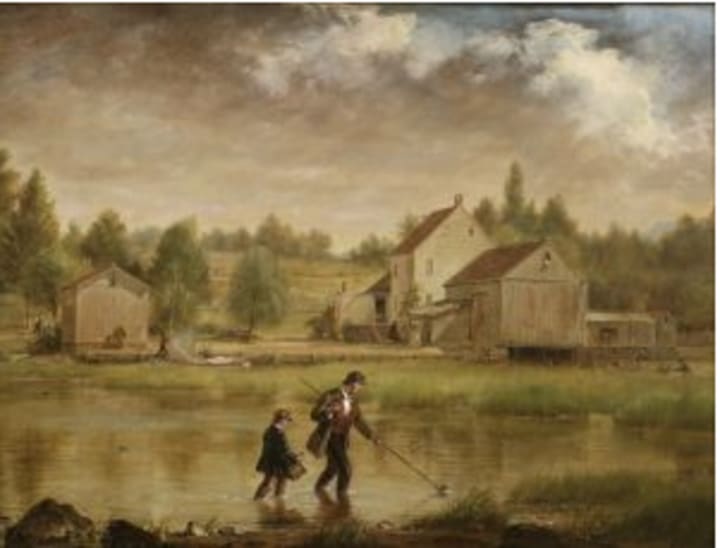
Among his subsequent works are Men Husking Corn, Walking the Crack, The Courtship, Sportsman’s Last Visit, Farmer’s Mooning, The Raffle, Bargaining for a Horse, Boys Trapping, Just in Time, Early Impressions are Lasting and Mutual Respect. Many of these were engraved and lithographed by Goupil and others in Europe. His portraits include those of James Rivington, Jeremiah Johnson, and General Francis B. Spinola. Mount was successful in depicting the humorous side of American rustic life, and he was one of the first American artists to make a study of negro physiognomy and character.
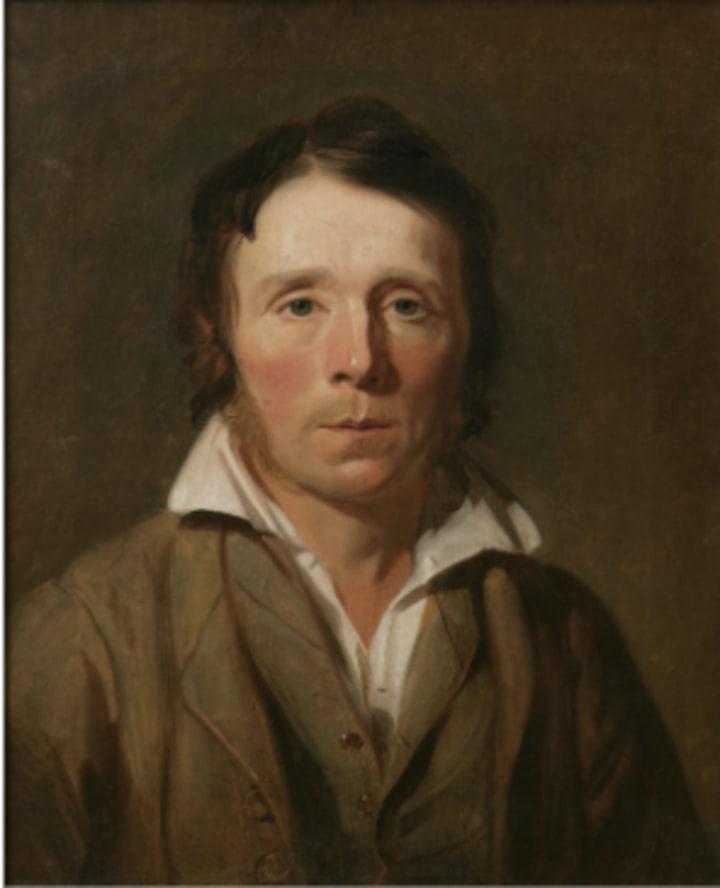
The majority of Mount’s sales came from his portraits, which typically lack the warmth and passion of his narrative paintings despite the appeal of his genre subjects. Even though he spent more than 30 years painting, he only produced 200 paintings in total. This is due to the fact that he created painting concepts very slowly, was meticulous about every detail, and occasionally took painting breaks for several months. Around 1860, Mount created a mobile studio and house that was pulled by horses. In his final years, he spent a lot of time in this unusual vehicle, but due to deteriorating health, he produced virtually little art. He passed away at Setauket on November 19, 1868.


For More News Regarding the Painting Read Now on: Art Newspaper
Article: William Sidney Mount Showed Mastery In Depiction Of The Human Body And Its Movement
About the Creator
Abir Pothi
abirpothi.com is India’s only digital art daily newspaper. It brings you news and updates about art, architecture and design from India and the world, tracks the trends
Keep reading
More stories from Abir Pothi and writers in FYI and other communities.
The Cosmic Significance of Indian Gods and their Vahanas
Introduction The mythology of Indian gods and their vahanas is a rich tapestry woven through with symbolism and spiritual depth. Just as divine mounts, these vehicles also signify the cosmic role that the deities play, who they are, and their abilities which reflect in their personalities. The idea of gods riding vahanas takes root in ancient texts like the Puranas and the Mahabharata, but over time has come to represent broader philosophical notions in Hindu cosmology.
By Abir Pothiabout a year ago in Fiction
A Failed Artist, A Disillusioned Poet, An Underpaid Game Show Host
I took my son and niece to Gori, a small town in Georgia where Joseph Stalin was born. They talked me into visiting the Stalin's Museum, the largest in the post-Soviet space. I had resisted going there because I just can't stand the monster and know enough about him, or so I thought.
By Lana V Lynx23 days ago in FYI


Comments
There are no comments for this story
Be the first to respond and start the conversation.