
Why Moon Dust Poses Challenges for NASA's Lunar Missions
What the Regolith?!
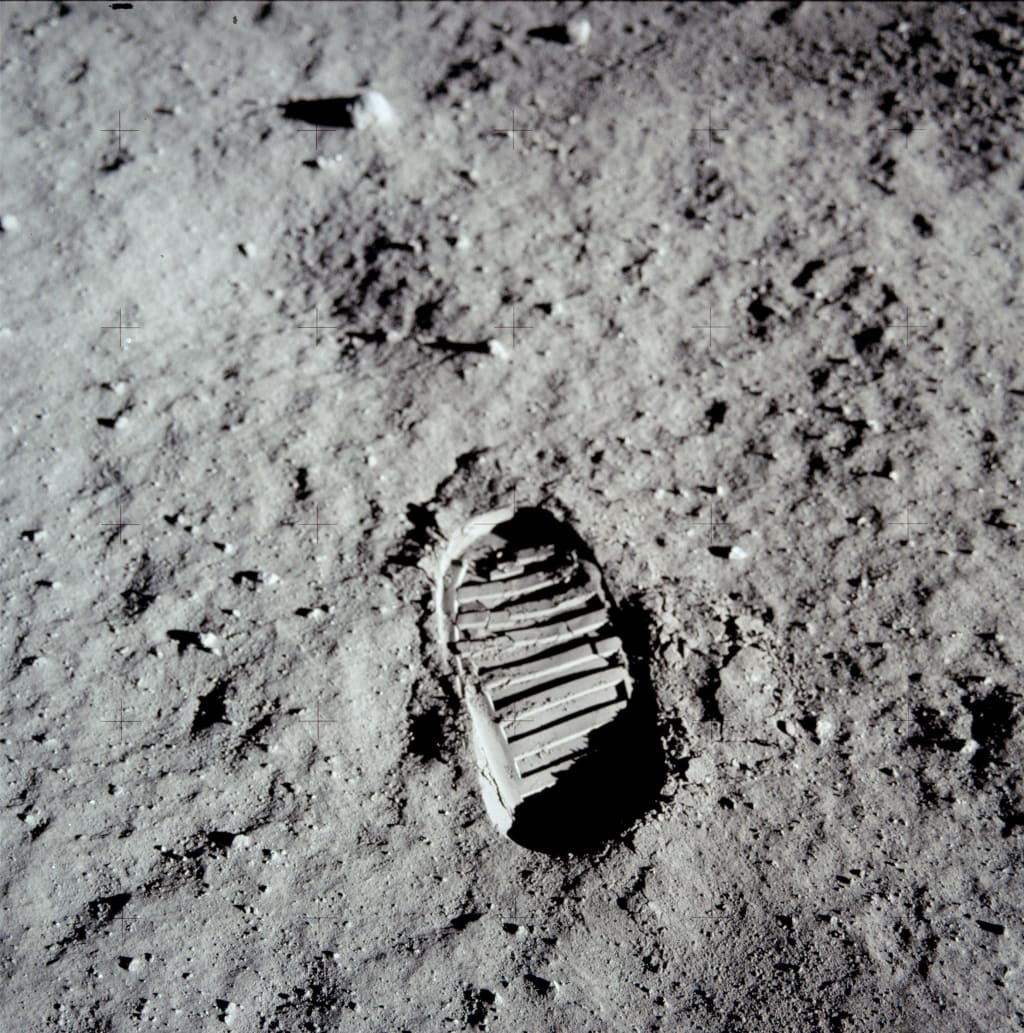
In the pursuit of space exploration, every detail matters. Even the seemingly mundane aspects, like the composition of moon dust, can have a profound impact on the success and safety of missions. As NASA sets its sights on revisiting the Moon and exploring beyond, a peculiar challenge has emerged—moon dust, or lunar regolith.
Lunar regolith is not your typical soil. This strange, unpredictable, and even hazardous substance has become a central concern for space agencies like NASA. The differences between Earth's soil and lunar regolith are substantial, and understanding these distinctions has led to the development of simulated moon soil, or lunar regolith simulant.
In a simulated lunar landing, a Lunar Lander descends onto the moon's surface. The critical factor here is the behavior of the lunar regolith upon landing. While the simulation might be basic, it underscores the importance of comprehending how moon dust interacts with equipment and spacecraft.
The reality is that the lunar regolith presents unique challenges due to the moon's distinctive environment. Unlike Earth, the moon lacks a substantial atmosphere, which means that meteorites have pummeled its surface into an amalgamation of sharp particles and fine dust over time. This jagged landscape remains unchanged, and without weathering processes like wind and rain, the moon's surface retains its rugged and dusty nature. Meteor impacts also melt the soil, creating glassy fragments called agglutinates. Moreover, the solar wind constantly bombards the lunar regolith, inducing chemical transformations in its minerals. This results in a truly alien material that behaves unpredictably and poses risks to equipment and human health.
During the Apollo missions, this unique lunar regolith posed significant problems. It interfered with instrument readings, caused damage to spacesuits, clogged machinery, irritated astronauts' eyes, and even affected their respiratory systems. To address these challenges, NASA turned to a creative solution: creating a simulated lunar regolith on Earth. By replicating the moon's surface conditions as closely as possible, scientists could prepare equipment and study its interactions with lunar dust before deployment.
This endeavor led to the establishment of a niche industry producing lunar regolith simulants. These synthetic materials help researchers and engineers avoid potential catastrophic encounters with actual moon dust. As NASA embarks on new lunar missions like Artemis and other nations plan their lunar endeavors, the demand for these simulants has surged.
Exolith Lab is a key player in this industry, supplying NASA with simulated lunar regolith. Their process begins with the fundamental question: Which part of the moon's surface are they simulating? The moon's surface is divided into lighter highlands and darker mare regions, each with distinct mineral compositions.
To create a lunar regolith simulant, various materials are sourced, including anorthosite, basalt, ilmenite, pyroxene, and olivine. These raw materials are processed, sometimes from boulders, through crushing and sieving to achieve the desired jagged texture. Mixing these components in precise ratios mirrors the baking process—following a recipe until the simulant is uniform.
Simulants are invaluable tools for a wide array of experiments and tests. Researchers use them to study methods for digging into the lunar surface, navigating rovers across it, cultivating plants in it, and even extracting oxygen from it. While no single simulant can perfectly replicate all aspects of lunar regolith, they can closely mimic individual features, aiding in specific research goals.
One critical challenge posed by lunar regolith is the effect of rocket engine exhaust. When a rocket lands on the moon, its exhaust expels high-speed regolith particles. Due to the moon's low gravity and lack of atmosphere, these particles can travel vast distances, potentially causing damage to equipment and other objects on the surface. Instances from the Apollo missions highlight this issue, such as the sandblasting effect on the Surveyor 3 spacecraft, located relatively far from the Apollo 12 landing site.
As humanity's lunar ambitions intensify, the risks posed by regolith plumes become more significant. Damage from these plumes can jeopardize missions, result in substantial costs, and even spark geopolitical tensions between nations. To mitigate these challenges, experts are exploring various solutions, such as standardized landing zones and utilizing natural features like hills and valleys for protection.
Lunar regolith simulants play a vital role in these efforts. NASA is actively researching regolith-based construction materials and refining our understanding of how regolith behaves in different scenarios. While considerable work remains, the growing recognition of these challenges is a promising step forward.
Looking beyond the Moon, simulant research extends to other celestial bodies. Mars, for instance, presents its own unique regolith challenges. This work creates a virtuous cycle, driving research both on Earth and in space, propelling exploration and discovery.
As humanity prepares to venture deeper into space, the lessons learned from simulating moon-dust interactions will prove invaluable. These simulated lunar regolith samples illuminate the complexity of space environments and inspire innovative solutions that will pave the way for safer, more successful space exploration endeavors.
About the Creator
A Failed Artist, A Disillusioned Poet, An Underpaid Game Show Host
I took my son and niece to Gori, a small town in Georgia where Joseph Stalin was born. They talked me into visiting the Stalin's Museum, the largest in the post-Soviet space. I had resisted going there because I just can't stand the monster and know enough about him, or so I thought.
By Lana V Lynx26 days ago in FYI
A Love Forboding
The chipped stone slope caused unbearable footing. I slid, skirting on my heels. I cast my shield, relinquishing my guard to stay upright. Left with my double-edge and a prayer to the maker, I skated toward my objective. The earthly stubble gave way to solid ground. I found myself restored, a trail of dust in my wake.
By James U. Rizzia day ago in Fiction




Comments
There are no comments for this story
Be the first to respond and start the conversation.