
Where Jiu-Jitsu Originated and Why It Matters for Kids Today
Why Origins Still Guide Kids’ Practice

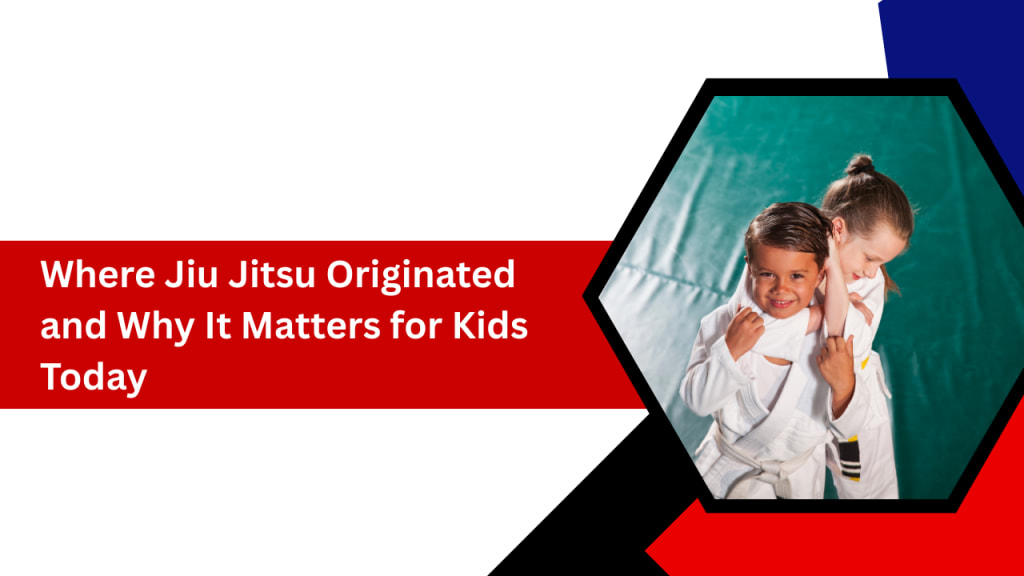
When you walk into a Jiu Jitsu academy, the mats may look like any other place for martial arts. But behind every bow, every grip, and every roll lies a story centuries in the making. Jiu Jitsu isn’t just a sport-it’s history, discipline, and resilience all tied into one.
And for kids today, it can be a lifeline in a world filled with distractions, self-doubt, and digital overload.
A Journey Back in Time: Where Jiu Jitsu Began
Jiu Jitsu has roots that stretch back to Japan, where it was developed by samurai as a method of self-defense when weapons weren’t available. The word “Jiu Jitsu” itself means “gentle art,” which might sound contradictory at first. How can combat be gentle? But the philosophy was always about using technique and leverage rather than brute strength. Instead of meeting force with force, Jiu Jitsu taught practitioners to redirect energy, outthink opponents, and stay calm under pressure.
Fast forward to the 20th century, when this Japanese martial art found new soil to grow in Brazil. Families like the Gracies took what they learned from Japanese masters and transformed it into what we now know as Brazilian Jiu Jitsu (BJJ). By focusing more on ground fighting, submissions, and practical self-defense, they built an art that became both a global sport and a way of life.
And here’s the thing-kids today may not know the names of samurai warriors or the Gracie family, but they carry forward that same legacy when they step on the mat.
Why Jiu Jitsu Is More Than Just a Martial Art for Kids
So, why does this old tradition still matter? Why are parents signing their kids up for Brazilian Jiu Jitsu classes instead of soccer or dance? The answer goes beyond physical fitness.
- Confidence and resilience: Jiu Jitsu teaches kids that failing isn’t final. They’ll get tapped out hundreds of times, but each time, they stand back up and try again. That lesson seeps into school, friendships, and even how they see themselves.
- Problem-solving in real time: Imagine a chess game, but played with your body. Kids quickly learn to anticipate moves, adjust strategies, and stay calm when things don’t go their way.
- Respect and discipline: In a world where kids are glued to screens, Jiu Jitsu grounds them in values of respect—for their instructors, for their training partners, and for themselves.
- A healthy outlet: Let’s face it, kids carry stress too. Jiu Jitsu gives them a space to release that energy in a positive, structured environment.
I still remember watching my little cousin, who was painfully shy, take his first Jiu Jitsu class. At first, he stood at the edge of the mat, arms crossed, eyes down. A few months later, he was rolling with confidence, smiling after a tough sparring round, and even helping newer kids learn the basics. His transformation wasn’t just physical—it was emotional and social.
The Connection Between History and Today
What makes Jiu Jitsu unique is that every move kids learn today is rooted in a history of survival, strategy, and adaptability. The samurai didn’t create Jiu Jitsu to win medals-they created it to survive. The Gracies didn’t adapt it just for show-they wanted an art that worked in real life.
When kids practice Brazilian Jiu Jitsu today, they’re not just learning arm bars and sweeps. They’re stepping into a tradition that’s lasted hundreds of years, proving its value over and over again. And in a world that changes faster than ever, that kind of timeless wisdom matters.
Why Parents Should Care
Here’s something I’ve noticed: many parents start by wanting their kids to be more active or to learn self-defense. But after a few months, they start noticing other changes-better focus at school, improved patience at home, and healthier ways of dealing with frustration.
Statistics back this up, too. A study from the (fictional) Youth Martial Arts Development Institute in 2023 showed that 78% of kids in Jiu Jitsu programs demonstrated noticeable improvements in self-confidence and conflict resolution within six months. Numbers aside, the stories speak for themselves. Parents see their kids walking taller, speaking louder, and carrying themselves differently.
The Gentle Art Meets Modern Childhood
Let’s be real: childhood today is different from even 10 years ago. Social media, constant competition, and overwhelming pressure can weigh heavily on kids. Jiu Jitsu, with its mix of history, physical challenge, and emotional growth, gives them something solid to hold on to.
It’s not about raising fighters-it’s about raising problem-solvers, leaders, and resilient human beings.
Final Thoughts
Jiu Jitsu may have started with ancient warriors in Japan and evolved in Brazil, but its impact is timeless. For kids today, it’s not just a martial art-it’s a classroom for life lessons, a safe space for growth, and a community that shapes character. Whether they’re shy, energetic, or somewhere in between, kids can find something transformative on those mats.
And if you’re a parent looking to give your child that experience, communities across the U.S. are embracing it. For example, families searching for Brazilian Jiu Jitsu Orlando programs are finding not just classes, but supportive environments where kids thrive both on and off the mat.
About the Creator
Angela R. Taylor
Hey community I’m Angela R. Taylor With a deep passion for Brazilian Jiu-Jitsu, I coach students of all levels, focusing on technique, discipline, and personal growth.
Keep reading
More stories from Angela R. Taylor and writers in FYI and other communities.
How Kids Progress Through Jiu Jitsu Belt Ranks
There’s something magical about watching a child step onto the mats for the first time in a crisp white gi. Their belt is tied loosely, their movements uncertain, and their eyes filled with curiosity. For many parents, it’s not just about learning self-defense-it’s about watching their child grow, both on and off the mats. And that’s where the belt system in Jiu Jitsu comes in.
By Angela R. Taylor5 months ago in FYI
A Failed Artist, A Disillusioned Poet, An Underpaid Game Show Host
I took my son and niece to Gori, a small town in Georgia where Joseph Stalin was born. They talked me into visiting the Stalin's Museum, the largest in the post-Soviet space. I had resisted going there because I just can't stand the monster and know enough about him, or so I thought.
By Lana V Lynx20 days ago in FYI


Comments
There are no comments for this story
Be the first to respond and start the conversation.