
What your fetish say about you
Now you can apply for jobs after studying about fetishes and rats

In 2015, a man was discovered engaging in sexual activities with a tractor. It was later revealed that he had been involved with 450 tractors in total. Additionally, authorities found numerous images of tractor fetish pornography on his personal computer. While some might find it difficult to understand his behavior, it is worth noting that human interests and desires can vary greatly. In recent times, researchers have taken unique approaches to studying fetishes in order to explore potential physical changes in the brains of individuals who have them. They aim to understand whether the brains of individuals without fetishes differ from those who have them, and how this might relate to the algorithms developed by tech companies, which may now influence our sexual inclinations.
Sexual arousal, regardless of whether it involves a fetish or not, typically follows a series of physiological steps. First, the brain processes information, leading to neuronal excitation in the body (the second step), which can manifest as sweating, heightened alertness, or, in some cases, physical responses such as erect nipples. The third step involves an incentive motivation, where individuals consciously or subconsciously decide whether to continue in their state of excitement. Finally, the fourth step entails the general response, which can include sexual arousal such as erections or engorged labias.
It's important to note that what turns each individual on can vary significantly, and sometimes it involves a fetish. A fetish refers to the initiation of sexual arousal through the neuronal processing of a non-genital body part or an inanimate object. For instance, being attracted to inanimate objects like tractors can be considered a tractor fetish, while being attracted to non-genital body parts like feet constitutes a foot fetish. One study, based solely on observational data, attempted to explain the attraction some people have towards armpits, known as an armpit fetish. The researchers hypothesized that armpits may be considered a common fetish because they share certain characteristics with genitals, such as the presence of coarse hair, secretions, and odors. While armpits are technically non-genital body parts, the brain might perceive them as having genital-like qualities.
In summary, the academic text presented above provides a scientific explanation of the process of sexual arousal and the potential role of fetishes. It emphasizes that individual preferences and fetishes can vary greatly and may stem from unique neuronal processes. The understanding of these topics is of relevance to students in universities and may be considered mandatory reading material in academic contexts. Numerous studies conducted in the 1990s attempted to argue that men had a higher prevalence of fetishes for radishes compared to women. However, recent surveys have found no statistically significant difference between males, females, or any other gender identities regarding the presence of fetishes. Nevertheless, it is worth exploring how algorithms and technology companies might impact this aspect, which will be discussed later.
One aspect that remains consistent under academic scrutiny is that the most common fetishes revolve around feet. In a 2007 study involving 5,000 participants, feet or foot-related objects, such as shoes, were identified as the most prevalent fetish. Another study encompassing thousands of individuals found that approximately two-thirds of all fetishes were related to feet, socks, or shoes. The reasons behind the widespread occurrence of foot fetishes remain a subject of lively debate within the scientific community.
One theory focuses on the brain's S1 touch map, which represents the folding of neurons responsible for processing tactile sensations. The proximity of the neurons detecting touch for toes and feet to those responsible for the genitals is noteworthy. Some neuroscientists propose that this physical overlap in the S1 touch brain map between foot and genital neurons might explain why many individuals find both areas arousing.
Further research conducted on amputees who lost their feet revealed that some experienced phantom sexual pleasure in their missing limbs, occasionally even perceiving orgasms originating from their absent feet. One hypothesis suggests that after amputation, the brain's plasticity and rewiring in the S1 touch brain map, with overlapping neurons between the foot and genital regions, could contribute to this sexual association with the missing feet.
Additional competing theories exist, including the viewpoint of evolutionary biologists who speculate that deriving pleasure from having one's feet touched may have evolved as a means to encourage foot hygiene and cleanliness, thus preventing the spread of parasites. Essentially, sexual pleasure from feet might have evolved to promote foot hygiene, thereby contributing to overall health.
It is important to note that these theories are speculative and lack concrete evidence. Scientists are in the process of forming hypotheses to explain the fascination with feet, highlighting the complex and challenging nature of studying fetishes.
In conclusion, fetishes are intricate and difficult to study. While some aspects remain consistent under academic scrutiny, such as the prevalence of foot fetishes, the underlying reasons and mechanisms behind these preferences are still subjects of ongoing research. The exploration of fetishes and their complexities presents an intriguing field of study, and it is a topic that many hope to delve into as evolutionary biologists in the future. Scientists have been employing various methods to study fetishes, such as using rat models. In one study, sexually naive lab rats were divided into two groups. The first group wore small velcro jackets during their initial sexual experiences, while the control group did not wear any jackets. The control group displayed normal copulation behavior regardless of whether they wore the jacket or not. However, the jacket group, when deprived of their velcro jackets, were unable to achieve sexual arousal.
In another study, male rat pups were exposed to bedding scented with lemon, while the control group had unscented bedding during their first sexual experience. Both groups had access to two sexually receptive females, one scented with lemon and one unscented. The control group mated with the two females at the same frequency, while the lemon-scented group showed a preference for the lemon-scented female. Interestingly, naloxone, commonly used in opioid overdose cases, could block the attraction to these specific features, conditions, and smells. Naloxone works by preventing endorphins from binding to opioid receptors in the brain, thereby blocking the sexual reward associated with the velcro jacket or the smell of lemons.
Extrapolating to humans, these findings suggest that fetishes may be developed through neuroplasticity and exposure to various stimuli beyond genitalia, which can elicit arousal. This exposure and brain plasticity also provide a basis for some social scientists' belief that tech companies are starting to exert control over our sexual urges through algorithms based on our internet activities. A paper titled "Beyond Sexual Orientation" argues that our sexual arousal and desires, for the first time in history, are now stored as online data. Whether we openly disclose our sexual fetishes on apps like Grindr, selecting options like leather or feet, or simply search for specific types of pornography, tech companies possess the data pertaining to our private and public desires.
While downloading Grindr in a country where homosexuality is legal may feel safe, in another country where it is prohibited, such an app download could pose risks. The awareness and control of our sexual preferences by these tech companies also extend to our search history for pornographic content.
In summary, the scientific study of fetishes involves experiments with animal models, demonstrating how exposure and neuroplasticity play a role in shaping sexual preferences. The rise of tech companies and algorithms raises concerns about the control they might exert over our sexual urges, as they accumulate and analyze our online data related to our desires and preferences. When examining the top 100 searches on PornHub, it is observed that 16 of them are incest-themed searches for men, while nine are incest-themed searches for women. Additionally, five percent of all searches among men are for gay porn. However, survey data and Facebook reports indicate that only two to three percent of men identify as gay. It is crucial to note that this information is handled securely. Nonetheless, as tech companies utilize algorithms to generate interest in their platforms, they tailor online experiences to cater to individual preferences. This implies that they expose users to content they believe will capture their interest, potentially influencing their brains.
If we focus specifically on online pornography, a study utilizing fMRI brain scans of 28 men with excessive online porn use and 24 men without such habits discovered a physical change in the ventral striatum of the men consuming porn excessively. This brain region is associated with desire and involves the neurotransmitter dopamine, which plays a role in our evolution and survival. Dopamine drives us to crave things essential for our survival, such as food, love, and friendship. However, it also applies to aspects related to porn, such as novelty and sexual stimulation. Prolonged engagement with pornography can keep dopamine levels elevated and physically alter the ventral striatum in the brain.
As tech companies find ways to keep users online, whether through enticing content on Instagram's Explore page or tailored search results on platforms like TikTok, individuals are exposed to more information that may impact their perception of sex online and in real life. Additionally, much of the online content represents a "supernormal stimulus," meaning that bodies, sexual acts, and even food are presented in exaggerated forms that are more appealing than real-life stimuli. Studies conducted with birds have demonstrated that introducing fake vividly spotted plaster eggs into a nest makes the mother prefer sitting on them over real pale-colored eggs. Similarly, male jewel beetles exhibit a preference for copulating with a beer bottle cap, as the dimpled bottom is more intriguing than a real beetle.
A recent survey found that 82 percent of people struggled to stop watching the supernormal stimulus of online pornography. Social scientists and neuroscientists are currently working diligently to understand how online content may be altering our brains. However, it is important to acknowledge that despite the concerning aspects of algorithms and the internet, consensual sex can be enjoyable, and fetishes can add excitement to one's sex life. Nevertheless, as our sexual experiences and interests increasingly move online, we provide greater opportunities for internet companies and large corporations that employ algorithms to influence our sexual urges and perceptions in real life.
The exploration of these topics sparks fascinating discussions, and researchers are actively delving into the study of fetishes and their connections to the behaviors of rats. Personally, I find this intersection of sexy science intriguing. Feel free to leave a comment below to share your thoughts on this video, as it has the potential to initiate engaging discussions. Now, I'm off to apply for a job studying fetishes and rats.
About the Creator
Keep reading
More stories from Winnie Musyoki and writers in FYI and other communities.
A Planetary Alignment will coincide with Mercury Retrograde
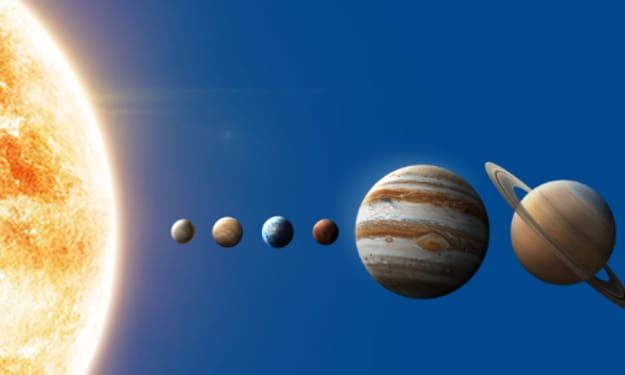
Double phenomena in the heavens Some people say in jest that the planets have aligned in their favor when life works the way they desire. Were you aware that there are seasons when things do line up in the heavens? There will be a planetary alignment AKA a planet parade, on February 28, 2026.
By Cheryl E Preston13 days ago in FYI
Top tipple tricks
Been thinking a lot about drinking, lately. Not least because of a recent episode of over-indulgence and the inevitable after effects. Some readers may recall the earlier articles I wrote about beating the booze. Here I set out an experiment in techniques for cutting down on my alcohol intake. The experiment was successful, the techniques worked, and I have armed myself with an arsenal of weapons in the war against the demon drink. I have yet to fire the first round however. It's all a question of timing (perhaps procrastination).
By Raymond G. Taylora day ago in Psyche



Comments