
What If Humans Suddenly Vanished?
A Peek into Nature's Comeback

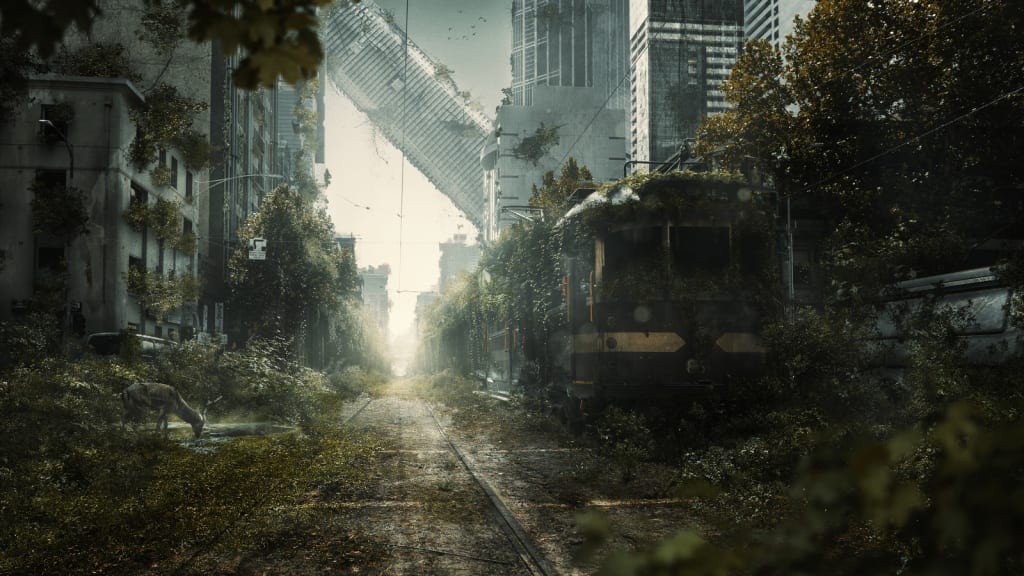
Imagine a world where people disappear, leaving only nature behind. This imaginative journey explores what might happen to our cities, the environment, and anything left by humans. Before we delve into this "what if" scenario, let's talk about something practical that might help you survive tough times: Bespoke Post. They send you cool stuff every month, like a knife, pen, or key ring, and you can use the code 'WHATIF20' for a 20% discount on your first box.
In the first week without humans, our pets would face challenges. They'd need to find food on their own. But there's a bigger problem—our world might become radioactive. Nuclear plants, needing constant care, would lose power, leading to a dangerous chain reaction. This could make the planet toxic for a really long time.
About a year later, nature would start to reclaim our roads. Moss and fungus would cover everything, and the roads would break apart. Winter would speed up the decay, and plants would grow in the cracks. Animals, free from human interference, would thrive, creating a new balance in nature.
Jumping ahead a few decades, our cities would look very different. Famous places like London's Trafalgar Square or New York City's skyscrapers would be surrounded by forests. Underground, old subway systems would turn into rivers, and buildings would start falling apart. Even though our modern structures would crumble, some ancient monuments might still stand, though barely recognizable.
About 500 years later, the forests would cover our old homes. Things we once used, like metal appliances, might still be in the ground. Mount Rushmore's faces and other ancient wonders would survive, but they'd be worn down by time.
In the end, everything left on Earth would be destroyed by the growing sun. Only a faint memory of what humans did would remain. But, out in space, the Voyager probes we sent might still be out there. Maybe some aliens could find them and learn that we once lived on Earth.
In wrapping up this speculative exploration of a world without humans, it's clear that nature possesses a remarkable ability to reclaim what was once ours. From the first week when our pets navigate a world without their human companions to the potential radioactivity that could reshape the planet, the scenario unfolds in fascinating ways.
As we fast-forward through the years, cities undergo significant transformations, and iconic landmarks become part of nature's canvas. The absence of human intervention allows wildlife to thrive, creating new balances in ecosystems.
Looking centuries into the future, the remnants of our existence would be subtly hidden beneath the growth of nature. The enduring faces of Mount Rushmore or the echoes of ancient wonders, though weathered, offer a testament to the impermanence of human achievements.
Yet, the ultimate conclusion paints a cosmic picture—Earth's eventual demise under the sun's expansion, erasing any remaining trace of our existence. And yet, in the vastness of space, the Voyager probes persist, carrying a silent message that, once upon a time, humans lived on Earth.
This imaginative journey prompts reflection on the resilience of nature and the transient nature of our impact. In the absence of humans, Earth evolves, reminding us of the delicate dance between humanity and the planet we call home.
Well, that's all folks! It's time for us to say goodbye. Thank you for being awesome! Drop your questions, comments, and likes and make this place lively and fun.
Stay curious and keep being amazing!
Goodbye for now, and until our next journey together!!
Image from Grunge
About the Creator
Digi Ben
Welcome to the world of insightful and engaging articles! Whether you're seeking in-depth analyses, practical guides, or entertaining narratives, my articles here are tailored to cater to diverse interests. Stay tuned!
A Planetary Alignment will coincide with Mercury Retrograde
Double phenomena in the heavens Some people say in jest that the planets have aligned in their favor when life works the way they desire. Were you aware that there are seasons when things do line up in the heavens? There will be a planetary alignment AKA a planet parade, on February 28, 2026.
By Cheryl E Preston6 days ago in FYI
Guide to MIL-SPEC Military Specification vs. Commercial Grade Aviation & NSN Parts
In the rapidly evolving landscape of 2026, the distinction between military and commercial aviation components has become a cornerstone of aerospace procurement. For procurement officers and maintenance engineers, the choice between Military Specifications (MIL-SPEC) and commercial-grade parts is rarely about quality alone; it is about the specific environmental stressors and operational envelopes the aircraft must endure. While both standards aim for flight safety, MIL-SPEC represents a rigorous framework designed by the Department of Defense to ensure survival in the most hostile conditions imaginable. Conversely, commercial-grade parts focus on efficiency, lifecycle cost, and safety within the predictable patterns of civil aviation.
By Beckett Dowhan15 minutes ago in FYI



Comments
There are no comments for this story
Be the first to respond and start the conversation.