
What happen to your SSN Number when you die?
Complete Details

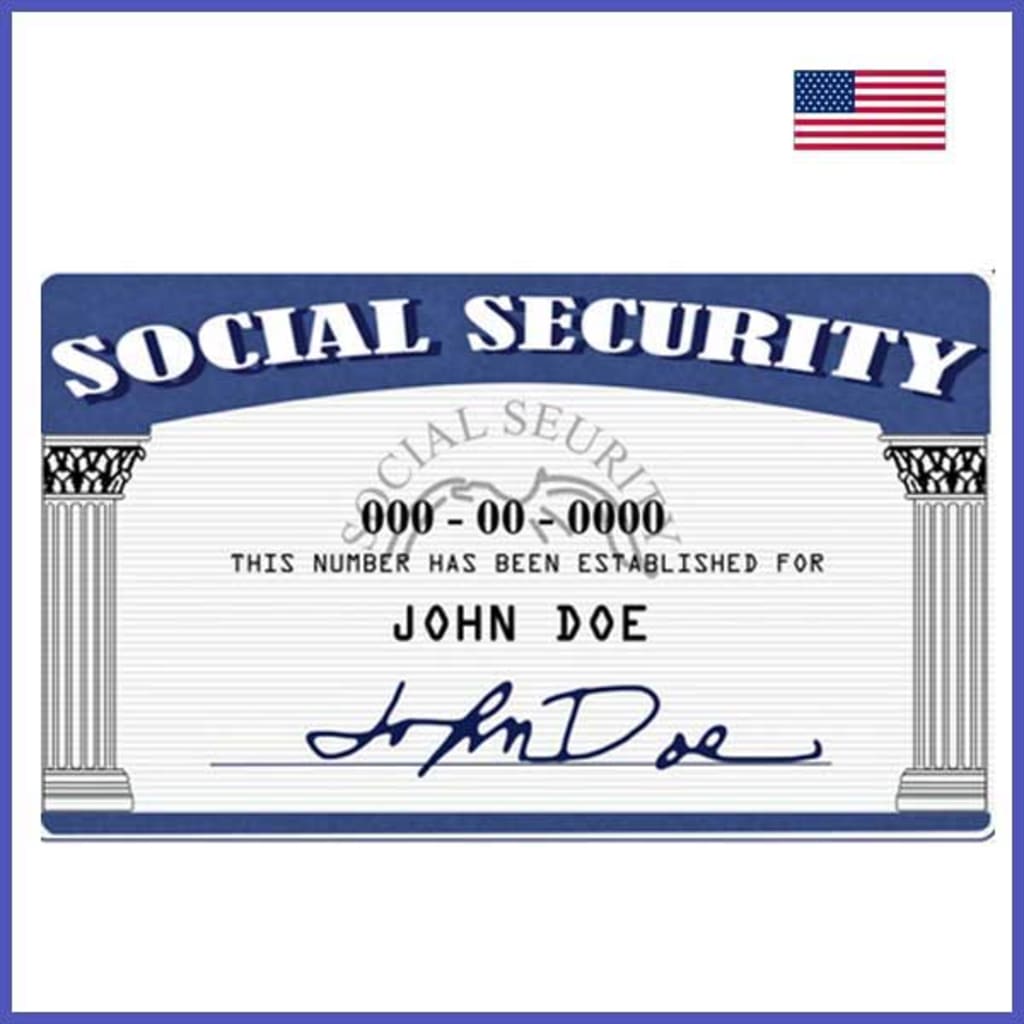
Since 1935, the Social Security Administration has been issuing numbers to permanent residents of the United States. Nine simple digits distinguish each American from his or her fellow residents.
Today, assigned randomly and never recycled, a social security number is as unique an identifier as your fingerprints. (Although, in the past, duplicates are known to have been issued accidentally.)
Early on, SSNs were issued through the states, and the first three digits designated the state where the person obtained the number; some states had more than one number, and this continued through 1972.
Beginning in 1973, the numbers and cards were issued centrally, from the Social Security Administration (SSA) in Baltimore, MD, with the first three digits being assigned based on the zip code included on the application.
Most people can verify that their number coincides with the place where they obtained their number here.
There is a general east to west pattern, although not perfect, in the assignment of the first three digits, with several exceptions.
For example, New Hampshire is 001-003, Maine is 004-007 and Hawaii is 575-576.
Places that fall even further out of the pattern include D.C. (575-576), Puerto Rico and the U.S. Virgin Islands (580-584, 596, 599), and Mississippi and Florida (both received 587-589 and 595 after they exhausted their initial assignments you can also check more details on SSNValidator).
The remaining digits of the social security number have little significance, other than as a unique identifier.
The second two digits were initially designed to be the holder’s date of birth, but this was quickly abandoned in place of using those as a group number to ensure the accuracy of the issuing process.
The last four digits are simply a serial number.
This all changed in June of 2011. In order to help protect the integrity of SSNs and to address the problem of insufficient new numbers in some states, the SSA stopped issuing numbers based on location in lieu of a system of “randomization” that included the following changes:
Eliminated the significance of the highest group number (a way of verifying a SSN)
Introduced previously unassigned area numbers
Ended any geographical significance of the first three digitsTo date, 450+ million SSNs have been issued, but with just under 1 billion possible number combinations.
There has never been a need to recycle numbers, and the SSA notes that it does “not reassign a Social Security number (SSN) after the number holder’s death.”
Of course, at some point the numbers will run out and some change will need made to keep up that policy, perhaps adding a digit.
But, for now, the answer to “What happens to your SSN when you die?” is absolutely nothing. It remains yours.
Want to gain some daily interesting knowledge? Today I Found Out offers a free daily newsletter to help you feed your brain.
In Details
From this data, an SSN trace—or SSN “validation,” as it is also called—generates a report listing any addresses, as well as any aliases, linked to the specific SSN provided by the applicant.
With a Social Security Number and home addresses, the research analyst can do three important things: first, identify additional information not disclosed by the individual;
Second, identify in what jurisdictions to perform criminal and civil court searches for any action naming the applicant, potentially uncovering issues relevant to the hiring decision; and third, possibly rule out other information uncovered further in the investigation.
Unfortunately, there is a robust trade in false identifies. Individuals who don’t have the right to work in the U.S. or have unfavorable backgrounds can and do obtain SSNs that belong to other people.
An SSN trace alone is usually insufficient to reveal if the SSN belongs to the applicant, unless it returns either no information or information that is completely different from other background information provided by the applicant. Either result is an immediate red flag.
If an SSN trace reveals residences different from those provided by the applicant, the research analyst can search the criminal and civil courts in those jurisdictions for any action naming the applicant, potentially uncovering issues relevant to the hiring decision.
To help determine if an applicant-provided SSN is not tied to that individual, a background screener can conduct what is known as a consent-based SSN verification, or CBSV.
During a CBSV, information linked to an SSN in the Social Security Administration’s records is compared to information provided by the applicant—such as date of birth, current address, name, and so forth—to determine if the information matches.
A signed form of consent from the applicant is required and can be requested at any time during the hiring process, though it does add to the cost of the screen.
However, a CBSV only confirms that the applicant-provided information is consistent with what the government has on file for the SSN; it does not verify employment eligibility.
As an employer, incorrectly assuming that a simple SSN trace is all that’s needed to verify an applicant’s right to work under United States law can lead you to hire an ineligible worker and expose you to civil and criminal penalties.
About the Creator
NIkhil Desk
I am Softwere Tester at Micro Software solution in US, I work with Java, Angular Js, Cake PHP , Python and other languages.
Keep reading
More stories from writers in FYI and other communities.
A Failed Artist, A Disillusioned Poet, An Underpaid Game Show Host
I took my son and niece to Gori, a small town in Georgia where Joseph Stalin was born. They talked me into visiting the Stalin's Museum, the largest in the post-Soviet space. I had resisted going there because I just can't stand the monster and know enough about him, or so I thought.
By Lana V Lynx20 days ago in FYI
Vitrectomy Surgery Explained: When It’s Recommended and What Patients Should Expect
Vitrectomy surgery is a type of eye surgery that involves the removal of the vitreous gel from the eye. The vitreous is the clear, gel-like substance that fills the center of the eye and helps it maintain its shape. This surgery is primarily recommended to treat a variety of retinal problems, and it plays a vital role in restoring vision for patients with specific eye conditions.
By Franklin Norton4 days ago in FYI




Comments
There are no comments for this story
Be the first to respond and start the conversation.