

Imagine meeting the love of your life during national clean-up day. You’ve got an empty bag in one hand, a garbage picker on the other, and your soul mate reaches to grab the same piece of trash you were reaching for.
"Whoops," they say, grinning flirtatiously.
You laugh, look into each other's eyes, and boom. Instant chemistry. Butterflies in your tummy — your eyes lit up — you two just hit it off, like peanut butter and jelly (unless you don’t like peanut butter and jelly.)
In a perfect world, eventually you fall madly in love, get married, have babies, and then live happily ever after. You found your person. “It was love at first sight,” you tell your kids and anybody who asks. How sweet.
Or maybe that’s not exactly how it happens. Maybe you forgot your garbage picker and they lend you theirs since they happen to have a glove. I don’t know. Anything could happen.
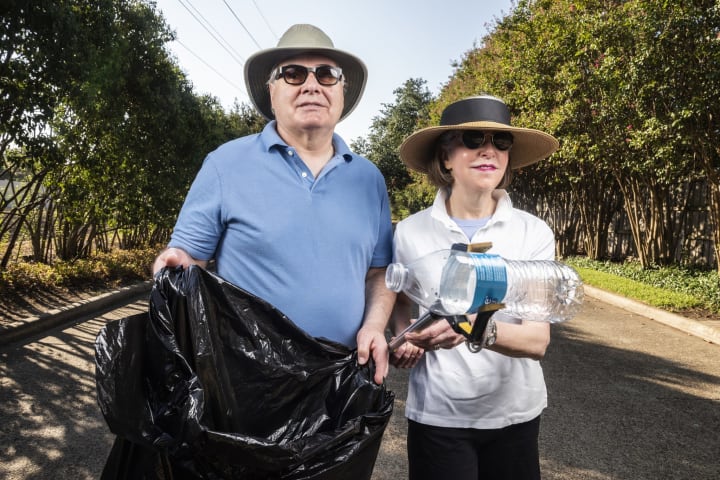
In America, however, that is not possible because America doesn’t have such a day. We, like the couple above, certainly have the freedom to clean the streets if we wanted, but we aren’t forced to. It isn’t a thing. On the continent of Africa in a country called Rwanda, it is.
In an effort to bring an end to plastic pollution, not only was plastic bags banned in 2008 but the president of Rwanda, Paul Kagame, mandated Umuganda, a national clean-up day that translates to “coming together in common purpose.”
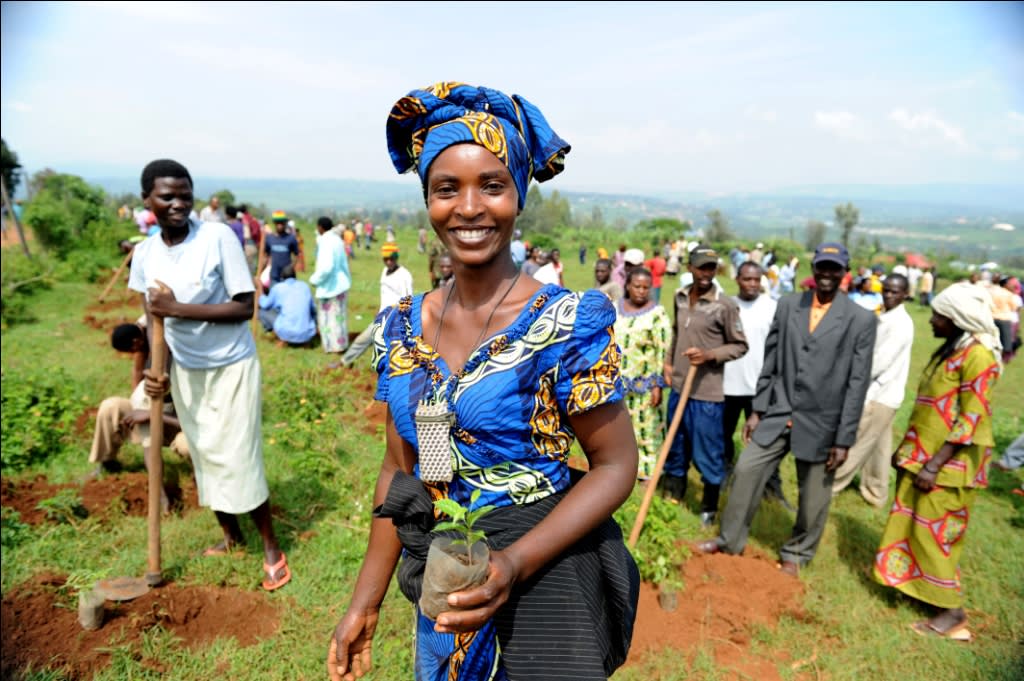
On the last Saturday of the month (called "umunsi w’umuganda") from 8 a.m. to 11 a.m., able-bodied citizens ages 18-65 are required by law to participate in helping maintain the integrity and cleanliness of their environment by doing things like picking up litter, building roads or planting vegetable gardens. Umuganda is strictly enforced and failure to cooperate may result in a fine unless for reasons like illness or child-care. In areas where it’s much harder to keep track of citizens, however, some are easily able to skip the ‘holiday.’
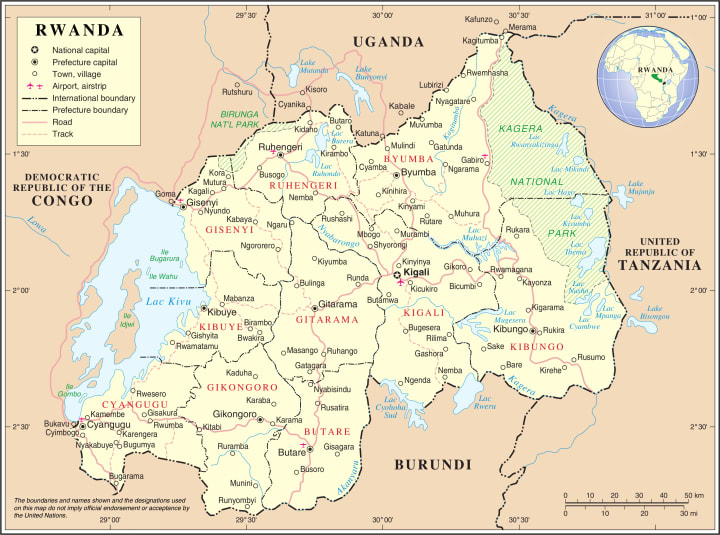
Located just under the equator to the left of Tanzania, Rwanda is one of Africa’s tiniest countries. It’s also been dubbed as the cleanest and safest country in Africa, even as one of the most densely populated.
Could Kagame's (sometimes referred to as the "benevolent dictator") strict policies have something to do with that? Probably.
Rwanda may rank 140th in GDP worldwide, but the country has improved significantly since the 1994 Rwandan genocide, turning the Kinyarwanda word 'Umuganda' (then associated with the urging of killing Tutsis and moderate Hutus) into something beneficial that protects the environment and increases the well-being of citizens. Most Rwandans believe the mandate is an overall good thing for them.
Focusing solely on Umuganda's positive effects, just maybe the world could learn something from Rwanda's Umuganda. Because we truly do have a massive and very serious plastic waste crisis, especially in developing countries where waste from Western countries are often shipped to.

Did you know that out of the 8 or so billion tons of plastic ever created in the world, only about 9 percent of it gets recycled? 12 percent gets incinerated (which can't be good for air quality) and the rest — 79 percent — are either thrown into the landfill or are mismanaged, ending up in the natural environment and in our oceans.
According to Ocean Conservancy, about 8 million metric tons of plastic enter the ocean every. single. year. That means that every single minute, practically one garbage truck full of plastic is dumped into the ocean. Imagine that.
To me, that is a frightening figure that will just keep growing unless drastic changes are made. There is literally no time to waste. All the other issues everyone argues about won't matter if Earth becomes uninhabitable due to our negligence. This crisis affects every being on the planet.
Talk about a real SOS.

At the bare minimum, every single person needs to be aware of this problem because too many people aren't.
FYI: people suck at recycling.
The United States, which ranks 3rd in most populous countries and 3rd in countries that generate the most waste, according to the EPA, only manages to recycle about 35 percent of what is recyclable. Canada, ranked the country that generates the most waste, according to The Government of Canada's website, only recycles about 9 percent of all their plastic waste. These numbers and rates are too low for such a critical issue. Think about it.
If you or anyone you know still use plastic, you're not alone. Plastics have invaded every part of our lives from the kitchen, bedroom, personal hygiene, to education and pretty much everywhere else. Worst yet, we've allowed them to.
It's not about perfection — going completely zero-waste might sound impossible right now — it's about making the everyday changes we can to reduce and eventually eliminate plastic in our lives, that is until there is a viable solution or alternative that isn't harmful to the environment. The science and proof are there — through bioaccumulation, ingesting plastic is harmful to the animals who mistake it for food and the humans who ingest the animals containing microplastics in their stomachs and tissues. Not exactly romantic.
I think of every single effort to use less plastic as equivalent to buying us time to solve the problem because let's be real, we need all the time we can get when it comes to this.
Stop for a moment and think of your version of a perfect world.
Given you aren't a psychopath, I assume the roads and rivers you envision aren't littered with plastic. For me, I picture beautiful innovative cities with both classical and futuristic architecture against a blue sky backdrop. When I breathe, I'm invigorated by the freshest air. Clearly what I see in the future would require a solution to the impending plastic pollution catastrophe in the real world. Now. And so, I've come to realize, I have to do something about it.
Glancing around my place and auditing my belongings, I notice plastic everywhere. I think: do I have to give up my favorite almond butter? What about my favorite moisturizer? My mascara?
Maybe. Maybe not. Recycling facilities and technology are improving every day and will continue to, but it hasn't been able to keep up with plastic consumption overall. So, to do my part, amongst other things, I resolved to take recycling more seriously as a start. That means I need to be rinsing jars and things before I put them into my recycling bin and getting educated on what is recyclable and what is not. It means that if I buy anything packaged in plastic film, like slices of bread, for example, I don't just toss it in the trash. Instead, I make sure it's clean of debris and hold on to it until I can go to a store nearby that participates in plastic bag drop-off recycling programs such as Target, HEB, Safeway, Walmart, Randalls, Lowe's, and more. To find one near you, click here.
I've also already begun to phase out dependence on single-use plastic, like water bottles, plastic bags, cosmetic products, so on. I will probably make mistakes, but I'll learn. I've taken notes of which restaurants and shops use either biodegradable or recycled to-go containers and packaging and I'm always on the lookout for beauty and cleaning products from companies that understand the role they play when it comes to the issue. My personal goal is to be near, if not completely, zero-waste within a couple of years. I also realize that I need to become somewhat of an activist, spreading the word wherever I can.

Those things I mentioned are things I've determined I can do. You might be on a different timeline or budget, which is completely fine. As long as people are aware of the problem and the people and organizations from a wide array of fields who are actively working on solutions for it, like dominoes falling, the system and all its cogs will adjust automatically. There is hope.
And yeah, it might mean subsidies or more stringent laws and regulations as well as added fees for businesses and consumers who fail to comply, such as in Rwanda. Increased plastic prices for both producers and customers plus a firm initiative to introduce alternatives immediately, while inconvenient, are necessary. It's been shown that charging 5 to 10 cents per plastic bag, for instance, significantly changed people's behavior, prompting them to either forgo it completely or bring their own reusable one. It's changed mine.
The sooner we have a workable resolution in all areas whether it be through education or a scientific breakthrough (like mass applications of the plastic-eating fungi Pestalotiopis microspore), the brighter our collective future looks.
If you ask me, in an ideal world and society, I would totally be down for an hour or two of incentivized and mandatory community service, such as Umuganda. Given, of course, government officials aren't exempt. Besides, I'm on my phone scrolling or getting seduced by ads way more than I need to be. I think it would a great way to build relationships and meet new people, all while getting a workout and taking care of the environment. Who knows, I could meet my soul mate doing that.
About the Creator
Elle Kim
Writing and books are my safe places. The adventure books I’ve read as a young girl are still my favorite!
A Failed Artist, A Disillusioned Poet, An Underpaid Game Show Host
I took my son and niece to Gori, a small town in Georgia where Joseph Stalin was born. They talked me into visiting the Stalin's Museum, the largest in the post-Soviet space. I had resisted going there because I just can't stand the monster and know enough about him, or so I thought.
By Lana V Lynx9 days ago in FYI


Comments
There are no comments for this story
Be the first to respond and start the conversation.