
Toyota is Cooking up New Engine in Their Garage that Will Destroy the Entire EV Industry.
The new hydrogen combustion engine

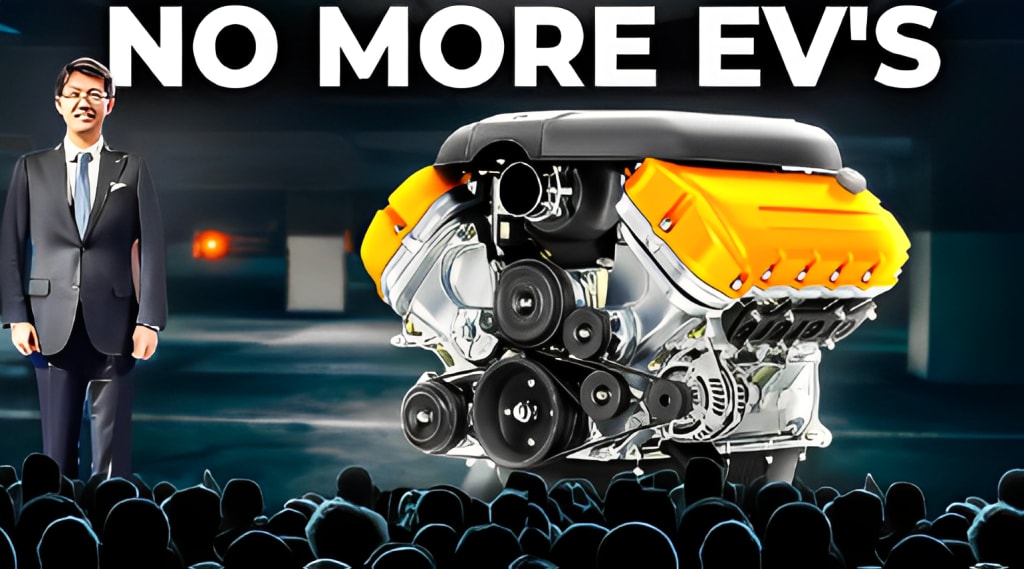
Toyota's new hydrogen combustion engine is a big deal. It works and it means big things for the transportation industry. The planet needs all the help it can get, and this engine is going to make a huge dent.

But now, Toyota has come up with something completely different. They're calling it the new hydrogen combustion engine. This technology could be a game changer in the automotive industry. Unlike other car manufacturers that have gone all-electric, Toyota is taking a different
route. But it's not just about being different—it's about being better.
Toyota's new hydrogen combustion engine is a big deal. It works and it means big things for the transportation industry. The planet needs all the help it can get, and this engine is going to make a huge dent. And according to globalcitizen.org, the transportation industry is responsible for a whopping 15% of carbon emissions worldwide.
And, it's no secret that traditional combustion engines have been a big contributor to the
pollution problem, and while electric cars are definitely gaining popularity, they're not the only solution, some might argue. Enter Toyota's new branch in its diversified carbon neutrality approach: the hydrogen combustion engine. Hydrogen is the most abundant element in the universe and has the highest specific energy density of any non-nuclear power source.
It's exhaust-free and non-toxic and can be created using many sources, stored indefinitely,
and shipped relatively easily. Millions of tons of hydrogen are produced and used without incident every year, and it's already being used as a power source in buildings, electric cars, forklifts, ships, and trains.
What's the deal with hydrogen-engine cars?
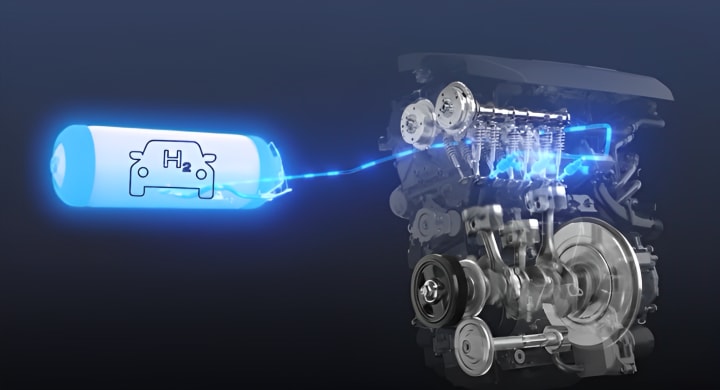
That's right, no harmful pollutants. Now, you might be wondering how it all works. All hydrogen engines use a fuel cell, which converts hydrogen into electricity. It's like magic, but with science. And did you know that Toyota began cutting down on fossil fuel-powered vehicles back in 1997, when it first rolled out the Prius? They've been on the eco-friendly train for a while now. But they're not the only ones.
Automakers all over the world are working to create environmentally friendly cars using
solar energy, electrical energy, and hydrogen power. It's not just about saving the planet; it's about providing energy security, improving air quality, and minimizing environmental impact.
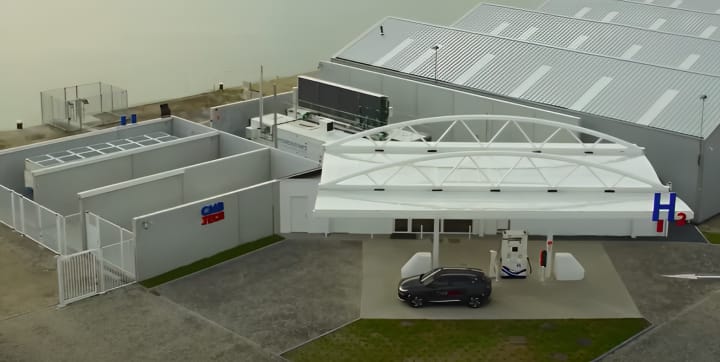
And, once produced, hydrogen is also efficient and cost-effective to distribute. Most new vehicle hydrogen refueling stations create hydrogen on site with electrolysis, using 100% renewable surplus energy. And the best part, these stations are containerized and only require water and power to operate. Power is supplied on green tariffs or, at some stations, is sourced directly from solar or wind on-site. Toyota has now claimed to have created a new way of harnessing the power of hydrogen. Their engineering team recently showed off the Corolla Cross H2 concept, a new prototype car with a hydrogen combustion engine. Toyota has been working on a new car with a hydrogen combustion engine different from the fuel cell technology that powers its last hydrogen-powered car, the Toyota Mirai.
The concept of powering an internal combustion engine with hydrogen is not new.
One of the pioneers in the game was German automaker BMW, which introduced the 750HL
back in 2002, followed by the Hydrogen 7 in 2005. BMW's Hydrogen 7 was based on a traditional gasoline-powered 6.0-liter V-12, but with some modifications to burn hydrogen as well as gasoline. It's a dual-fuel engine! And just to make it even cooler, only 100 of these bad boys were ever produced. But it had some of the worst downsides. For starters, it's highly flammable, so you might want to think twice before lighting a match anywhere near your hydrogen-powered car. It's also difficult to process and store, which can be a bit of a headache.
And let's not forget nitrous oxide, which is emitted during combustion. While it may not be as bad as carbon monoxide, it's still considered a pollutant by the EPA.
That is where Toyota comes in. Well, Toyota believes that there is currently no single solution to reducing vehicle emissions or meeting customer transport needs. It's all about delivering the right vehicle to the right place at the right time. So, investments have to be made in all areas in order to meet immediate, medium-term, and long-term needs throughout the world. And that's where hydrogen comes in, forming an integral part of Toyota's Beyond Zero campaign. And they are planning to do it with their H2. You may be thinking, "What is H2?" Well, it's Toyota's fancy name for hydrogen-powered internal combustion engines, and it's looking like the future of automotive technology.
How does this work?
The GR Corolla H2 is equipped with a 1.6-liter turbocharged three-cylinder engine, but with
a twist: it runs on hydrogen. To make this happen, Toyota uses thick, armored fuel tanks to store the highly flammable hydrogen technology, which they picked up from their FCEV, the Mirai. And, with just 5 kilograms of hydrogen, the car can be driven for up to 300 miles—and
the only thing it emits is 50 liters of water! Talk about environmentally friendly. Now, let's talk about the power. Toyota has also teamed up with Yamaha Motor to create a hydrogen-fueled V-8 engine. That's right, a V-8 that runs on hydrogen—and it produces 455 horsepower and 398 pound-feet of torque. But the real showstopper? The eight-into-one top-mounted exhaust manifold that creates a unique high-frequency sound And if that's not enough, hydrogen-powered cars also have a higher range and faster refueling times compared to electric vehicles—only 90 seconds for the GR Yaris H2. Plus, it reduces the need for limited-supply materials like lithium and nickel, which are Corolla H2 is definitely something to keep an eye on.
And with real-world testing already underway, it won't be long before we see these cars
hitting the road. And when it does, forget everything you know about electric cars, because the Toyota hydrogen combustion engine has a lot of advantages over them. The biggest one is that it has a larger range and refueling is as fast as a drag race. Now, not only is this technology beneficial to drivers, but it's also environmentally friendly. You see, the Toyota hydrogen engine doesn't require nearly as much rare metal as lithium or nickel, which are critical to the manufacturing of EV batteries. And while it does have a battery, it's substantially smaller than an EV's battery. The Corolla Cross H2 concept car is now undergoing real-world evaluation and winter road condition testing in northern Japan.

And with the Japanese government's high hopes for hydrogen, they plan to have 200,000 fuel cell-powered vehicles on the road by 2025 and 800,000 by 2030, with more refueling stations planned across the country.
Now, let's talk about the sound. It not only sounds fantastic, but the exhaust bark is no different from a tuned gasoline-powered vehicle. And, with no fossil fuel to burn, Toyota's innovative hydrogen engine emits nearly no CO2. Sure, it does produce a certain number of noxious gases, but significantly less than a pure gasoline car. But what about safety, you may ask? Toyota's got that covered too. They've added stronger connecting rods, harder valves and valve seats, and fuel injectors that use gas instead of liquid. So you can ride with confidence, knowing that safety is a top priority.
What are the benefits of this new technology?
Well, let's start with the main drawback of electric cars: charging. We've all heard horror stories, but with hydrogen, it's no big deal. Just like an ICE car, hydrogen takes 90 seconds to fill up, and although there aren't many outlets right now applying it, they normally integrate well with traditional gas stations. Plus, the small battery in the GR Yaris H2 requires fewer raw materials like lithium or nickel, making it even more environmentally friendly.
About the Creator
Keep reading
More stories from Ermias Yohannes Tsegai and writers in FYI and other communities.
The Influence of Internet Dependence on Our Lives and Cognitive Functions
A time when smartphones, maps, and search engines were foreign concepts. While some individuals can recall such a period, the idea of living without these technological conveniences now feels utterly alien to us. However, the increasing reliance on the online realm raises important questions about its impact on our lives. How does it affect our relationships, sources of information, and social interactions? Moreover, are there noticeable effects unfolding within our brains as a result? This essay delves into the consequences of internet dependency, shedding light on its influence on our lives and cognitive functions, supported by concrete facts and research.
By Ermias Yohannes Tsegai3 years ago in FYI
A Failed Artist, A Disillusioned Poet, An Underpaid Game Show Host
I took my son and niece to Gori, a small town in Georgia where Joseph Stalin was born. They talked me into visiting the Stalin's Museum, the largest in the post-Soviet space. I had resisted going there because I just can't stand the monster and know enough about him, or so I thought.
By Lana V Lynx23 days ago in FYI
Did Scientists Just Find Proof of the Multiverse? That One Cold Spot in Space Might Say Yes
The Multiverse Isn’t Just Sci-Fi Anymore If you think the idea of parallel universes belongs only in science fiction movies or late-night conspiracy forums, you might want to rethink that, especially today.
By Areeba Umair6 days ago in FYI



Comments
There are no comments for this story
Be the first to respond and start the conversation.