
The Pulse of a Nation: Bangladesh Votes Today in a Post-Revolutionary Landmark
From the Monsoon Revolution to the Ballot Box: How 127 million voters are redefining South Asian democracy today.

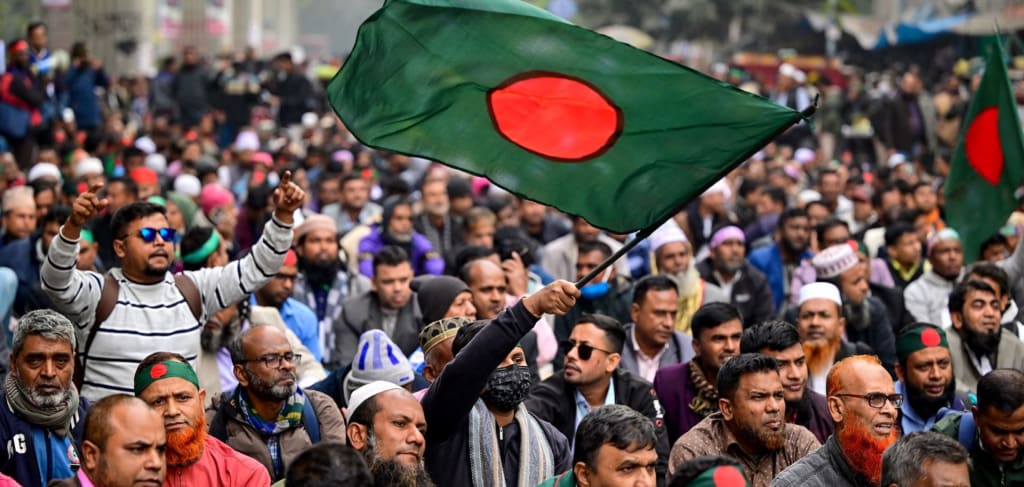
Today, February 12, 2026, the streets of Dhaka are quieter than usual, but the atmosphere is heavy with anticipation. At 7:30 AM local time, polling stations across Bangladesh opened for the first general election since the "Monsoon Revolution" of 2024 toppled the 15-year regime of Sheikh Hasina.
This isn't just an election; it is a high-stakes referendum on the future of democracy in South Asia.
1. Two Ballots, One Vision
Voters today are carrying two different ballot papers into the booths—a scene never before seen in the nation’s history.
- The White Ballot: For choosing a representative for the 300-seat Jatiya Sangsad (Parliament).
- The Pink Ballot: For a national referendum on the "July Charter." If the "Yes" vote wins the referendum, the newly elected government will be legally bound to implement sweeping reforms, including a two-term limit for Prime Ministers and the creation of a Upper House in Parliament.
2. A New Political Map
For the first time in decades, the Awami League is not on the ballot. With the former ruling party banned following the 2024 unrest, the contest has become a fascinating, "bipolar" struggle:
- The Frontrunner: The Bangladesh Nationalist Party (BNP), led by Tarique Rahman, who recently returned from 17 years in exile. They are campaigning on "Stability and Experience."
- The Disruptor: The 11-Party Alliance, a unique and controversial union between the conservative Jamaat-e-Islami and the National Citizen Party (NCP)—the party born directly from the 2024 student protest leaders.
3. The "Gen Z" Election
Nearly 44% of today's voters are between the ages of 18 and 37. For many, this is the first time they believe their vote can actually change the system.
"We didn't just protest for a change of faces; we protested for a change of the system," says one first-time voter in Chittagong. This demographic is less focused on old party loyalties and more concerned with 8.5% inflation, job scarcity, and the elimination of the "VIP culture" that has long dominated Bangladeshi politics.
4. High Security, Higher Stakes
To ensure a "clean" vote, the interim government led by Nobel laureate Muhammad Yunus has deployed nearly one million security personnel, including over 100,000 army troops. For the first time, drones and body-cameras are being used to monitor polling centers considered "high-risk."
International eyes are also fixed on Dhaka. Over 400 foreign observers from the EU, the Commonwealth, and the US are on the ground, making this one of the most scrutinized elections in the world this year.
The Silent Frontline: Security and the Information War
While the ballot boxes are the physical center of today's event, a digital battle has been raging in the background. The interim government has raised alarms over a "flood of disinformation"—much of it AI-generated—designed to confuse voters or incite communal tension. To counter this, a record 9.5 lakh (950,000) security personnel have been deployed, making this the most guarded election in the nation's history.
For the first time, drones and 25,000 body-worn cameras are being used to monitor "high-risk" polling stations. This level of surveillance is a double-edged sword: for some, it provides a sense of safety after years of electoral intimidation; for others, it is a stark reminder of the fragile peace the country is currently maintaining.
Why This Matters to the World
The outcome of today’s vote will ripple far beyond the borders of Bangladesh. It will determine:
- Regional Stability: Will the new government repair the fractured relationship with India, or continue the recent pivot toward China and Pakistan.
- Economic Resilience: Can the next administration manage the $450 billion economy while tackling systemic corruption.
- The Prototype for Reform: If the "July Charter" passes, Bangladesh will become a rare global example of a nation successfully restructuring its entire constitution via a popular vote after an uprising.
As the sun sets over the Bay of Bengal tonight, the counting will begin. Bangladesh is no longer just "standing at a crossroads"—it is actively choosing its path.
About the Creator
Shazzed Hossain Shajal
Passionate about exploring world stories—from breaking news to cultural transformations and amazing human encounters. I write about current events and why they matter, using facts and opinion to captivate readers.
Keep reading
More stories from Shazzed Hossain Shajal and writers in FYI and other communities.
🌟 Leah Lewis: Rising Star, Resilience, and a Moment of Reckoning
Leah Lewis has quietly become one of Hollywood’s most compelling young talents — a versatile actress, voice artist, and creative powerhouse whose career continues to evolve with grace and grit. But 2025 has brought both triumph and turbulence.
By Shazzed Hossain Shajal4 months ago in FYI
Part 2 Interview With Joe Patterson, Author Of Melanin Memoirs
This is my second interview with Joe Patterson. His 4th anniversary writing on Vocal will be in March 2026. He has one achievement on Vocal, The Other Foot. He has over 17,000 reads on Vocal since he started on Vocal in 2022. Joe Patterson is very creative poet and rapper. Joe is deep thinker and I feel it is reflected in his latest published book, Melanin Memoirs.
By Mariann Carrolla day ago in Interview


Comments
There are no comments for this story
Be the first to respond and start the conversation.