

The Pandyas were one of the ancient South Indian dynasties that ruled the Tamil-speaking region of South India for centuries. They were known for their significant contributions to the culture, economy, and politics of ancient India. The Pandyas ruled a vast territory that included modern-day Tamil Nadu, Kerala, and parts of Sri Lanka.
Early History:
The exact origins of the Pandyas are shrouded in mystery, and there is no concrete evidence about the early history of the dynasty. However, it is believed that the Pandyas were originally a Dravidian tribe that settled in the southern part of India around the 6th century BCE. According to some legends, the dynasty was founded by a fisherman named Kulasekara who was chosen by the goddess Meenakshi to rule over the Pandya kingdom.
Political and Military History:
The early Pandyas were known to be a peaceful and prosperous dynasty, and their kingdom grew in size and influence. However, as with many ancient dynasties, the Pandyas had to face numerous invasions and wars. One of the most significant conflicts they faced was with the Chola dynasty, who were their rivals for control of South India.
The Pandyas and the Cholas were engaged in a bitter struggle for control of the Tamil-speaking region of South India for several centuries. The Pandyas initially enjoyed some success against the Cholas, but ultimately, the Cholas emerged as the dominant force in the region.
Cultural Contributions:
Despite their political and military struggles, the Pandyas left a significant cultural legacy in South India. They were great patrons of the arts and literature, and they made significant contributions to the development of Tamil culture.
The Pandyas were known for their love of music, dance, and theater. They were great patrons of the classical dance form of Bharatanatyam, which has its roots in ancient Tamil Nadu. The Pandyas also patronized the development of classical music in Tamil Nadu, which is still popular today.
The Pandyas also made significant contributions to the development of Tamil literature. They were patrons of the Sangam literature, which is a collection of ancient Tamil poems and songs that describe the life and culture of the Tamil people. The Pandyas also patronized the development of the Tamil epic Silappathikaram, which is still considered one of the greatest works of Tamil literature.
Religion:
The Pandyas were known to be great patrons of Hinduism. They were responsible for the construction of numerous temples in Tamil Nadu, including the Meenakshi Amman Temple in Madurai, which is one of the most famous and important Hindu temples in South India. The Pandyas also patronized the development of the Shaiva Siddhanta, a school of philosophy that emphasizes the worship of the Hindu god Shiva.
Economy:
The Pandyas were also known for their economic prosperity. They had a well-developed trade network that extended as far as Rome and China. The Pandyas were famous for their exports of spices, pearls, textiles, and other luxury goods. They also had a thriving agriculture industry that was based on the cultivation of rice and other crops.
Legacy:
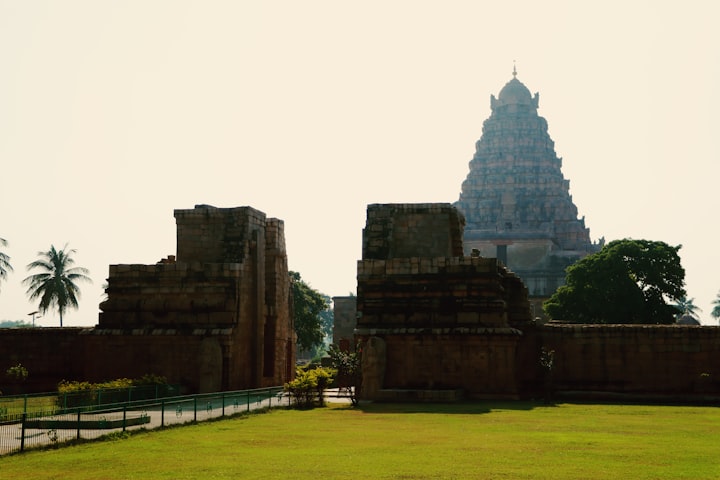
The Pandyas had a lasting impact on the development of South India. They were responsible for the construction of numerous temples and other architectural wonders that are still standing today. The Meenakshi Amman Temple in Madurai, which was built by the Pandyas, is still considered one of the greatest examples of South Indian temple architecture.
The Pandyas were also responsible for the development of Tamil culture and literature. Their patronage of the arts and literature helped to establish Tamil as a classical language, and many of the greatest works of Tamil literature
About the Creator
Keep reading
More stories from Yuvan Prajith and writers in FYI and other communities.
The Chola dynasty
The Chola dynasty was one of the most powerful and influential dynasties of ancient India, ruling from the 9th century to the 13th century. They were known for their great military conquests, administrative efficiency, and cultural achievements. The Cholas were a Dravidian dynasty that ruled primarily in the Tamil-speaking region of southern India, and their reign is often referred to as the "Golden Age" of Tamil culture.
By Yuvan Prajith3 years ago in FYI
A Planetary Alignment will coincide with Mercury Retrograde
Double phenomena in the heavens Some people say in jest that the planets have aligned in their favor when life works the way they desire. Were you aware that there are seasons when things do line up in the heavens? There will be a planetary alignment AKA a planet parade, on February 28, 2026.
By Cheryl E Preston8 days ago in FYI



Comments
There are no comments for this story
Be the first to respond and start the conversation.