
The Most Expensive Mistakes in History: How Small Errors Led to Trillion-Dollar Losses
Life is filled with twists, turns, and, most importantly, mistakes. From minor typos to massive blunders, it’s fascinating to see how small errors can snowball into colossal losses. Whether it's a typo in a flight ticket or a simple miscommunication leading to the loss of a spacecraft, these mistakes have led to some of the most expensive and jaw-dropping financial consequences in history. In this article, we’ll explore some of these errors, and the astounding costs that followed.

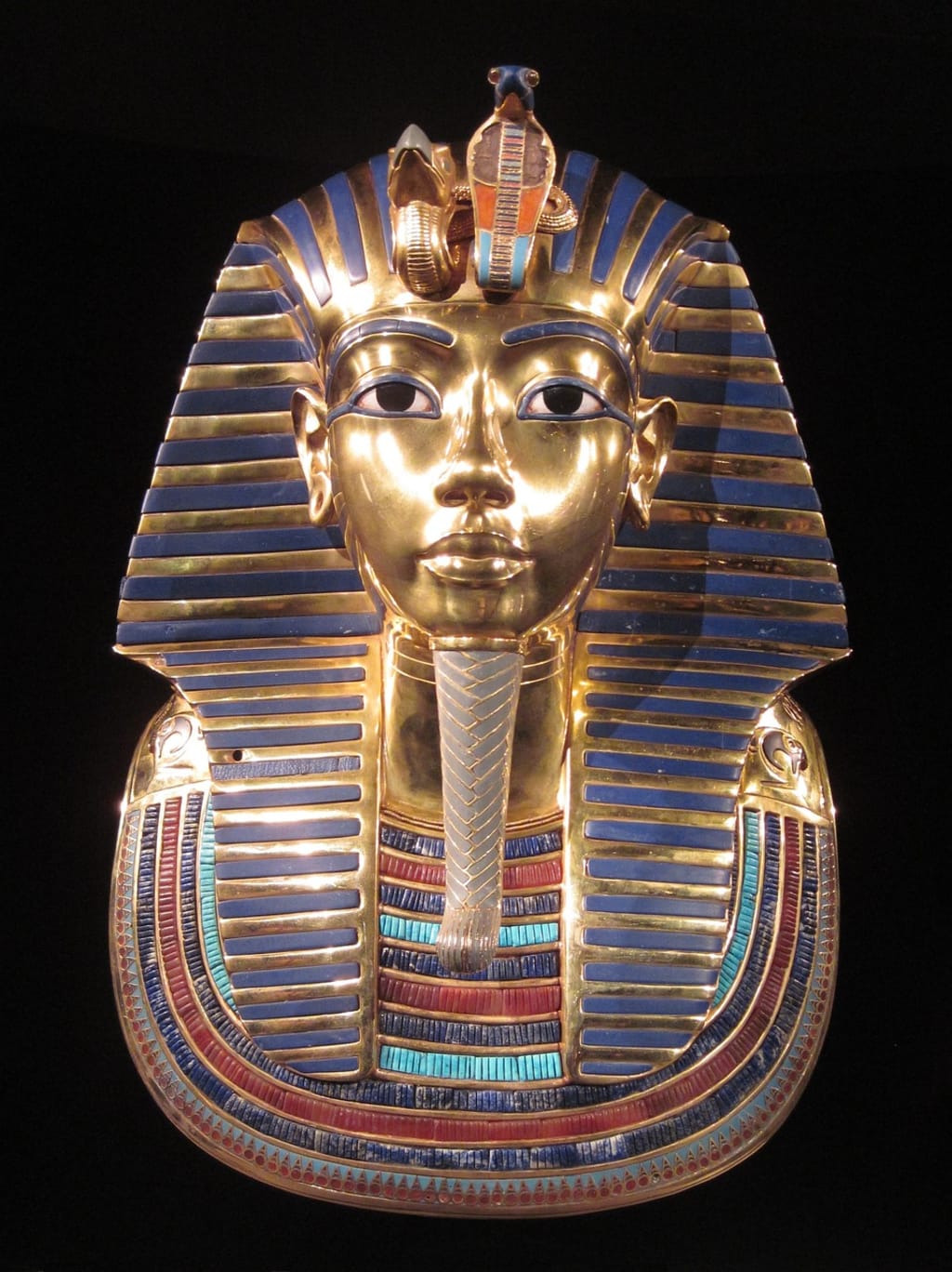
1. King Tut’s Golden Mask: A $2 Million Blunder
In 2015, a seemingly simple mistake caused a massive mishap at the Egyptian Museum in Cairo. The funeral mask of the famous pharaoh King Tutankhamun, which is made of solid gold, was damaged when its beard detached. The error occurred during a restoration attempt when the person in charge used a strong adhesive that was not suitable for such a delicate artifact. The museum didn’t publicly release a specific financial value for the damage, but experts speculate that the golden mask could be worth upwards of $2 million. This was a tragic and irreversible mistake that, although not causing the loss of the mask itself, certainly led to a severe devaluation in its historical and monetary worth.
2. The World's Costliest Typo: A $5.5 Million Loss
Mistakes in pricing can cost businesses a lot of money, and one typo in 2006 led to a whopping loss of $5.5 million for an airline. Alitalia, the Italian airline, made a simple mistake by listing a business class flight from Toronto to Loma, Cyprus, at just 39 Canadian dollars—when the usual fare was closer to $3,900. The mistake was quickly spotted by savvy online shoppers who jumped at the opportunity, purchasing the tickets in droves. While Alitalia initially tried to cancel the erroneous bookings, they ultimately decided to honor the tickets. This resulted in a significant loss, though the airline ended up making only a small fraction of what it would have earned had the tickets been sold at the correct price.
3. The Walkie-Talkie Skyscraper: Reflecting Sunlight, Melting Cars
The Walkie-Talkie building in London, officially known as 20 Fenchurch Street, is an architectural marvel with its distinctive curved glass walls. However, in 2013, the building became infamous for a much more dangerous reason: its reflective glass caused sunlight to concentrate onto the street below, with intense heat damaging parked cars and even causing fires. The building, which cost around $200 million to construct, required a $10 million fix, including the installation of a sunshade to prevent further incidents. What was originally thought to be a stunning design feature quickly turned into an expensive and hazardous flaw, costing the owners millions to remedy.
4. Superman’s Mustache: A $25 Million Mistake
Sometimes, Hollywood mistakes are not only costly but also bizarre. In the case of Justice League (2017), the production team faced a unique challenge when actor Henry Cavill, who played Superman, was required for reshoots after the original filming had already finished. The problem? Cavill had grown a mustache for his role in Mission: Impossible - Fallout, and Warner Bros. couldn’t afford to wait for him to grow it back. As a result, an extensive visual effects team had to be hired to digitally remove Cavill’s mustache from the movie, which cost a staggering $25 million. The delay and additional costs hurt the production’s budget and caused headaches for the team trying to maintain continuity.
5. The Beatles: A $125 Million Regret
Back in 1962, music producers made a significant error by rejecting a band that would go on to become one of the most influential and successful in history—the Beatles. At the time, many in the music industry believed guitar-based music was on the decline, which led to the rejection of the Beatles’ demo. But in 1964, after the band exploded in popularity, producers who had passed on them must have regretted their decision. In just a couple of years, Beatles merchandise—such as lunch boxes and inflatable dolls—generated over $50 million in sales. Today, their legacy is worth an estimated $125 million, and their influence on the music industry is immeasurable.
6. The Mars Orbiter Mishap: A $125 Million Loss
In 1999, NASA’s Mars Climate Orbiter was lost due to a simple but disastrous mistake involving the use of different measurement systems. Lockheed Martin, the company responsible for building the orbiter, used the imperial system (feet and pounds) while NASA used the metric system (meters and kilograms). This oversight led to a navigation error, causing the spacecraft to miss its intended orbit and ultimately leading to its destruction. The loss of the orbiter was a $125 million mistake, and NASA has since made significant efforts to prevent similar errors in future space missions.
7. The French Train Fiasco: A $20 Billion Setback
France’s national railway company, SNCF, made a costly mistake when it ordered new trains that turned out to be too wide for the platforms at over 1,000 of the country’s stations. The mistake, which has already cost the company around $20 billion, was due to a miscommunication between the railway operator and those responsible for measuring the station platforms. The company failed to consider the older stations built before the 1980s, which caused the new trains to be incompatible with many of the platforms. As a result, SNCF has been forced to widen numerous stations, quietly spending billions on this oversight.
8. The Dubai Aquarium Leak: Another $20 Billion Loss
In Dubai, a simple glass breakage in the giant aquarium tank at the Dubai Mall led to an enormous financial burden. In 2010, a leak in the shark tank caused water to spill onto the floor of the mall. While no animals were harmed and the situation was quickly resolved, the damage control and repair costs were massive. The aquarium’s owners faced a huge financial setback, with total costs estimated to reach around $20 billion due to the need for extensive repairs and the potential loss of customers during the incident.
9. Netflix’s Missed Opportunity: A $150 Billion Regret
Back in the year 2000, Netflix co-founder Reed Hastings offered to sell the company to Blockbuster for just $50 million. Blockbuster, then the reigning giant of movie rentals, declined. Fast-forward to today, and Netflix is worth more than $150 billion, having evolved into a dominant force in streaming, producing original content, and dominating the global entertainment industry. Blockbuster, on the other hand, is now a relic of the past. The decision to pass on Netflix is one of the most famous business mistakes in history, costing Blockbuster an unfathomable amount of potential revenue.
10. Apple’s Trillion-Dollar Mistake
The biggest mistake of them all might belong to Ronald Wayne, the third co-founder of Apple. In 1976, Wayne held a 10% stake in the company alongside Steve Jobs and Steve Wozniak. However, just 12 days after founding the company, Wayne sold his shares for a mere $800. Fast-forward to today, and Apple is valued at over $1 trillion, making Wayne’s decision one of the most expensive mistakes in business history. Had he held onto those shares, they would be worth hundreds of billions today.
Conclusion: The Price of Mistakes
From simple typos to flawed business decisions, mistakes can have consequences far beyond what we initially expect. Some of these errors were small, some were preventable, but all of them led to staggering financial losses. The lesson? Pay attention to the details, because sometimes, even the smallest mistake can cost you billions.
About the Creator
Lisa Ann Bastiaan
Fueled by curiosity and a passion for truth, I delve into mysteries, science, and human psychology. Through storytelling, I uncover the unknown, spark discovery, and ignite meaningful conversations about the fascinating.
Keep reading
More stories from Lisa Ann Bastiaan and writers in FYI and other communities.
Unraveling the Mystery of the World's First Civilization
For decades, researchers have debated which civilization can lay claim to being the world’s first. The long-held belief was that the Sumerians of Mesopotamia, known for their early development of writing, were the earliest civilization. However, recent discoveries have challenged this narrative, suggesting that Egyptian and Indus Valley cultures may have an equally strong claim to this title.
By Lisa Ann Bastiaan12 months ago in FYI
A Failed Artist, A Disillusioned Poet, An Underpaid Game Show Host
I took my son and niece to Gori, a small town in Georgia where Joseph Stalin was born. They talked me into visiting the Stalin's Museum, the largest in the post-Soviet space. I had resisted going there because I just can't stand the monster and know enough about him, or so I thought.
By Lana V Lynx17 days ago in FYI
Minister Told Armoured Vehicle Which Left Soldiers Vomiting Was ‘Safe’
A growing controversy has erupted after revelations that a government minister was assured an armoured military vehicle was “safe”, despite reports that soldiers using it later suffered severe nausea, dizziness, and vomiting. The incident has sparked serious questions about military oversight, equipment testing, and whether frontline troops are being adequately protected by those responsible for their safety. As details continue to emerge, the issue has become a flashpoint in debates over accountability within defence procurement and soldier welfare. What Happened Inside the Vehicle According to reports, the armoured vehicle was deployed during routine military operations and training exercises. Soon after extended use, multiple soldiers began experiencing intense physical reactions, including vomiting, headaches, and disorientation. Medical evaluations suggested that the symptoms were consistent with poor ventilation, exposure to fumes, or mechanical issues inside the vehicle’s sealed environment. In armoured vehicles designed to protect occupants from external threats, airflow and internal safety systems are critical—and failures can quickly become dangerous. Despite these warning signs, the vehicle had reportedly been cleared for use following assurances provided to senior officials. Ministerial Assurance Under Scrutiny At the heart of the controversy is the claim that a minister responsible for defence matters was told the vehicle posed no safety risk. This assurance reportedly influenced the decision to continue deployment without immediate suspension or further investigation. Critics argue that this raises troubling questions: Were safety reports properly reviewed? Were soldiers’ complaints taken seriously? Did bureaucratic pressure outweigh on-the-ground realities? Opposition figures and military advocates have called for transparency, demanding to know who approved the vehicle, what data was used to declare it safe, and whether warnings were ignored. The Human Cost for Soldiers For serving personnel, the issue goes beyond politics. Soldiers trust that the equipment they are issued has been thoroughly tested and meets strict safety standards. When that trust is shaken, morale and confidence suffer. Several affected soldiers reportedly required medical attention, and some expressed frustration that their symptoms were initially dismissed as minor or unrelated. Military families and veterans’ groups have voiced anger, saying that troops already accept enormous risks—and avoidable equipment failures should never be one of them. Procurement and Testing Concerns The incident has reignited long-standing concerns over defence procurement processes. Modern military vehicles are complex systems, often developed through private contractors and approved through layers of bureaucracy. Experts note that problems can arise when: Testing conditions do not reflect real-world use Feedback from soldiers is delayed or filtered Cost or deadlines take priority over safety If early warning signs were overlooked in this case, it could indicate a broader systemic issue rather than an isolated error. Official Response and Calls for Investigation Following public backlash, officials have stated that the issue is being reviewed and that soldier safety remains a top priority. Some authorities have pledged to examine ventilation systems, internal sensors, and maintenance records for the vehicle. However, critics argue that internal reviews are not enough. There are growing calls for an independent investigation to determine: Whether the “safe” assessment was accurate Who provided the assurance to the minister Whether protocols were followed Without clear answers, confidence in military leadership risks further erosion. A Broader Debate on Accountability This incident highlights a recurring tension in defence policy: the gap between decision-makers and those directly affected by their decisions. When assurances made at high levels conflict with lived experiences on the ground, accountability becomes essential. Transparency advocates argue that admitting mistakes is not a weakness—but failing to address them is. For many observers, the key question is not just whether the vehicle was unsafe, but how warnings were handled once problems emerged. Conclusion: Safety Should Never Be Assumed The controversy surrounding the armoured vehicle serves as a stark reminder that safety cannot be declared—it must be proven, continuously tested, and reassessed. Soldiers rely on trust: trust in their equipment, their leadership, and the systems designed to protect them. When that trust is compromised, restoring it requires honesty, accountability, and meaningful reform. As investigations unfold, the outcome will likely shape future defence decisions and determine whether lessons are truly learned—or repeated.
By Fiaz Ahmed about 19 hours ago in FYI



Comments
There are no comments for this story
Be the first to respond and start the conversation.