
The Memory Merchant
Most people in the city walked past the narrow brick storefront without ever seeing it. The sign over the door was small, hand-painted in fading silver letters: FYI: Curiosities & Corrections

M Mehran
Most people in the city walked past the narrow brick storefront without ever seeing it. The sign over the door was small, hand-painted in fading silver letters: FYI: Curiosities & Corrections.
Corrections, in this sense, meant memories.
I found it on a cold afternoon when my phone died right as I needed directions. I ducked inside hoping for an outlet. Instead, I stepped into a room that smelled like cinnamon and old paper. Shelves overflowed with jars—small ones, tall ones, squat ones shaped like teapots, each containing something glowing faintly inside.
“Careful with those,” a voice said.
A man emerged from behind the counter. Tall, thin, hair silver as frost. “They’re memories.”
I blinked. “You mean… metaphors? Like journals?”
“No, no,” he said with a patient smile. “Actual memories. People trade them. People buy them. People let them go.”
I was too tired to laugh. Too curious to leave.
“FYI,” he continued, gesturing to the shelves, “memory is far less reliable than most believe. Your brain rewrites events every time you recall them. These”—he tapped a jar—“are first drafts. The originals.”
Inside the jar, a tiny swirl of gold shivered, like a firefly trapped in syrup.
“You’re kidding.”
He shrugged. “Try one.”
---
He handed me a jar labeled Copenhagen, 1971 – First Snowfall.
“Open it. Just a crack.”
The moment the lid loosened, something slipped into me—a cold breath of air, a child’s gasp, the fluttering brightness of flakes landing on eyelashes. For three seconds, I was a kid in Denmark, snow soaking through my mittens, my heart ballooning with awe.
I snapped the lid shut, trembling.
“What—how—”
“Neuroscience plus a little craftsmanship,” he said. “Long story.”
He watched me with the polite distance of someone waiting for a reaction he had seen a thousand times.
“That was incredible,” I whispered.
“As it should be. First memories are the purest.”
Then he leaned forward. “Would you like to trade one of yours?”
---
I should have walked away. I should have thanked him and left and blamed the strange experience on exhaustion and low blood sugar. But curiosity has always been my worst habit.
“What kind of memory do you want?” I asked.
“Something you don’t mind losing,” he said. “Preferably something personal. But not essential. Nothing foundational, unless you want side effects. FYI: remove a core memory and your personality shifts.”
“Side effects?”
“Confusion. Emotional dissonance. In extreme cases, feeling like a stranger to yourself.”
He said it as calmly as a doctor describing mild dizziness.
I thought about the memories I held. There were bad ones. The night my brother left. The argument with my father that still woke me sometimes. But the idea of losing them felt like cheating, like tearing chapters out of a book because I didn’t like the plot.
“I’ll trade a small one,” I said finally. “Something harmless.”
He nodded approvingly. “Good. Harmless is always safer.”
I closed my eyes. “I have one—learning to ride my bike when I was six. The moment I realized my dad had let go.”
“Oh,” he said softly. “That one matters.”
“Does it?”
“Do you want to forget your father’s faith in you?”
That made me pause. Memories, I realized, weren’t isolated. They linked to everything else.
“Okay… what about the time I learned to whistle?”
He smiled. “Perfect.”
He asked me to place my fingertips on a small copper bowl. It warmed under my hands. I felt something tug—more emotional than physical—and then the faintest pop, like a bubble bursting deep inside my mind.
He handed me a new jar filled with pale blue light. First Whistle – Age 8.
“Keep it,” he said. “Your first trade is free.”
I waited for some sense of loss, but there was nothing. I knew I had learned to whistle once, but the memory of it sat behind a translucent curtain. More idea than experience. It didn’t hurt.
“Why do people do this?” I asked.
“Because people want to feel again,” he said. “Not just think. FYI: emotions fade faster than facts. I sell the feeling of first times.”
I wasn’t the kind of person who did spontaneous things. I had a routine—a job, bills, a “safety net” that I liked to pat myself on the back for. But then one day, something inside me cracked.
I quit. Just like that. My boss was shocked. My friends were horrified. And honestly, I was terrified. But I also knew that if I didn’t leave, I would never forgive myself.
So, I bought a one-way ticket to a country I couldn’t even pronounce. No plan, no itinerary, no promise of seeing the inside of my own apartment again anytime soon.
FYI: The first night was worse than I imagined. I arrived at a tiny hostel with squeaky floors, the smell of something vaguely burnt, and a dorm room full of strangers. I curled up on the bottom bunk, feeling every ounce of anxiety and excitement at the same time.
I kept telling myself: This is what freedom smells like.
The first morning, I wandered through streets that were alive in a way my hometown never had been. Street vendors shouted over each other. Children darted in and out of puddles. The smell of spices hit me before I even turned the corner. Every corner was a new surprise.
I met a local named Lina who sold handwoven scarves on the corner of a busy street. She smiled at me, offered me tea, and somehow, in a twenty-minute conversation, taught me more about life than I had learned in years of cubicles and deadlines.
FYI: Talking to strangers when you’re alone feels different. There’s no social armor. You’re just… you.
Over the next few weeks, I did everything I had always been too scared to do: I haggled at markets, I got lost in neighborhoods I couldn’t read the signs of, I danced at a street festival even though my rhythm was non-existent. I cried on rooftops, laughed with strangers, and discovered corners of myself I didn’t even know existed.
But here’s the thing about traveling alone: it’s not all Instagram-worthy sunsets and picturesque markets.
There were nights I cried into my pillow because I missed home. Nights I felt invisible in a crowd, realizing that no one knew my name, no one had any obligation to care. Nights I stared at the ceiling of my tiny room and wondered if I had made a huge mistake.
FYI: That’s okay.
Those moments of loneliness were just as important as the moments of joy. They taught me that I could survive myself. That I could be okay even when the world felt too big and too loud.
One day, while hiking a trail that overlooked a valley so vast it made my heart ache, I ran into an elderly man painting the view. He didn’t speak much English. I didn’t speak much of his language. But somehow, we shared a quiet understanding as we watched the sun sink behind the mountains.
He handed me a small sketch he had drawn and simply said, “Keep seeing.”
FYI: That moment changed me. I realized that travel wasn’t about taking pictures or checking places off a list. It was about noticing. About experiencing life so fully that you couldn’t ignore it.
By the end of my trip, I wasn’t the same person who had stepped on the plane. I had shed layers of fear, expectation, and routine. I had discovered that the world was bigger than my apartment, my office, my comfort zone.
I also realized something else: that freedom doesn’t always mean going somewhere. Sometimes it’s about learning to be okay with yourself, no matter where you are.
When I returned home, I didn’t go back to my old life. FYI: I didn’t have to. I had a new perspective, a new courage, and a quiet certainty that life is too short to wait. I started pursuing projects I had been too scared to attempt. I reconnected with people I had lost touch with. And I started planning my next trip—not as an escape, but as a continuation of the life I wanted to live.
FYI: Here’s the truth—they don’t tell you this in travel brochures. Leaving everything behind isn’t just about the places you go. It’s about who you become when there’s nothing left to hold you back.
So if you’re reading this and feeling trapped by routines, fear, or the “shoulds” of life, here’s my advice: Step into the unknown. Book that ticket. Walk down streets you’ve never walked before. Talk to strangers. Dance badly. Cry on rooftops. Laugh with abandon.
Because when you do, you might just find that the world isn’t as scary as you thought. And you might discover a version of yourself that you’ve been waiting to meet all along.
FYI: I did. And it was worth every terrifying, exhilarating, lonely, beautiful second.
About the Creator
Keep reading
More stories from Muhammad Mehran and writers in FYI and other communities.
“The Secret Influence of Everyday Smells”
M Mehran Smell is one of the most powerful senses, yet it’s often overlooked. A simple whiff of fresh coffee, rain-soaked earth, or baking bread can instantly transport you to another time, place, or emotion. FYI, scents are more than just pleasant experiences—they shape our memories, emotions, and even decisions.
By Muhammad Mehran6 months ago in FYI
A Planetary Alignment will coincide with Mercury Retrograde
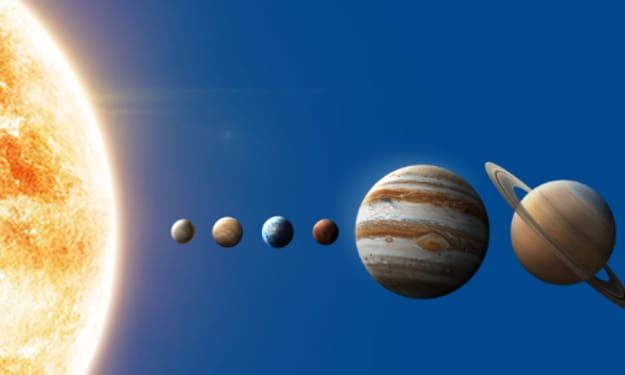
Double phenomena in the heavens Some people say in jest that the planets have aligned in their favor when life works the way they desire. Were you aware that there are seasons when things do line up in the heavens? There will be a planetary alignment AKA a planet parade, on February 28, 2026.
By Cheryl E Preston3 days ago in FYI
Fastener Traceability Requirements in the Aerospace Industry
In the aerospace industry, even the smallest components carry significant responsibility. Fasteners such as bolts, rivets, screws, and pins may appear minor compared to engines or avionics systems, but they play a vital role in maintaining aircraft structural integrity. Because these components are used in high-stress and safety-critical environments, strict fastener traceability requirements are enforced across the global aerospace supply chain.
By Beckett Dowhan6 days ago in FYI



Comments
There are no comments for this story
Be the first to respond and start the conversation.