
The First Light Bulb Before Edison
The Pioneering Journey of Barometric Lights


Have you ever wondered who invented the light bulb? It's a question that can start arguments among science history buffs. While many people think of Thomas Edison as the light bulb guru, there's more to the story. Before Edison, others were busy creating different kinds of "light bulbs." The journey of light bulbs starts way before most people realize.
Let's talk about the first light bulbs. You might think of a traditional light bulb, but it turns out there were glowing glass containers filled with mercury called barometric lights. Sounds mysterious, right?
Back in the late 1600s, a scientist named Jean-Félix Picard noticed something strange in his lab. He was messing around with a barometer, a device that measures air pressure. Inside it, mercury sloshed around and, surprise, it glowed. Picard reported this odd discovery to the French Academy of Sciences.
Now, forget about Thomas Edison for a moment. The real hero of our story is Francis Hauksbee, Newton's assistant. In 1705, Hauksbee decided to figure out what was going on with these barometric lights. Instead of spinning glass vials like a crazy scientist, he came up with something simpler—a hand-cranked, nine-inch glass sphere. By pumping air out and spinning the sphere, he made it glow. It wasn't enough to light up a room, but still, a hand-powered lightbulb!
Hauksbee found out something cool. When he touched the spinning sphere, it glowed even brighter. Weird, right? Over in France, another scientist, Pierre Polinière, was also playing with barometric lights. He discovered he could make the mercury glow by slapping it or adding some sand. Both Hauksbee and Polinière were onto something big.
Today, we know that the glow of barometric lights was because of something called frictional electricity. You know when you rub a balloon on your hair and stick it to the wall? That's frictional electricity at play. When certain materials rub against each other, they make electric potential energy, which eventually turns into light. The same thing happened with the mercury in those glass containers.
Hauksbee's experiments, even though they were like tiny light shows, were a huge deal. They helped scientists understand how objects become electrically charged. Fast forward a couple of centuries, and we finally discovered "electrons," but Hauksbee's work laid the groundwork for the early days of electricity.
So, the next time you turn on a light, remember it's not just about flipping a switch. It's about centuries of curious minds, from Picard to Hauksbee, unraveling the mysteries of light and electricity. They didn't have fancy light bulbs like we do, but their experiments were like catching lightning in a bottle—pretty cool, right?
In conclusion, the journey to understand and create the first light bulbs takes us on a fascinating adventure through history. Beyond the commonly attributed inventor, Thomas Edison, pioneers like Jean-Félix Picard and Francis Hauksbee paved the way for our modern illumination. The discovery of barometric lights, those mysterious glowing glass containers filled with mercury, unfolded in an era where the understanding of electricity was still in its infancy.
Hauksbee's ingenious hand-cranked, nine-inch glass sphere, though not powerful enough to light up a room, represented a groundbreaking moment in the quest for artificial light. His experiments, coupled with those of contemporaries like Pierre Polinière, revealed the wonders of frictional electricity, a phenomenon that centuries later would be crucial in explaining the essence of light and electricity.
The story of these early light bulbs is a testament to human curiosity and ingenuity. While we now flick switches without a second thought, it's essential to appreciate the journey that started with mysterious glows and curious minds. From Picard's dimly lit laboratory to Hauksbee's hand-powered lightbulb, each step brought us closer to unraveling the secrets of illumination. In essence, these pioneers caught lightning in a bottle, leaving an indelible mark on the history of science and the everyday marvel of lighting up our world.
It's time for us to say goodbye. Thank you for being awesome! Drop your questions, comments, and likes and make this place lively and fun.
Stay curious and keep being amazing!
Goodbye for now, and until our next journey together!!
About the Creator
Digi Ben
Welcome to the world of insightful and engaging articles! Whether you're seeking in-depth analyses, practical guides, or entertaining narratives, my articles here are tailored to cater to diverse interests. Stay tuned!
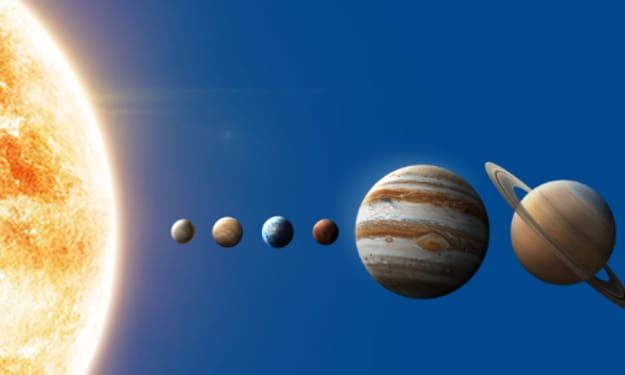
A Planetary Alignment will coincide with Mercury Retrograde
Double phenomena in the heavens Some people say in jest that the planets have aligned in their favor when life works the way they desire. Were you aware that there are seasons when things do line up in the heavens? There will be a planetary alignment AKA a planet parade, on February 28, 2026.
By Cheryl E Preston7 days ago in FYI
What Makes an Electronic Component Suitable for Aerospace Applications
Electronic components play a central role in modern aerospace systems. From flight control computers and radar systems to communication modules and cabin management systems, aircraft depend heavily on reliable electronics. However, not every commercial-grade component is suitable for aerospace applications. The aviation environment presents extreme operational challenges that require specialized design, rigorous testing, and strict regulatory compliance.
By Beckett Dowhan5 days ago in FYI



Comments
There are no comments for this story
Be the first to respond and start the conversation.