
The Enigmatic Experience of Déjà Vu: A Glimpse into the Mysteries of the Mind
Unraveling the Science and Philosophy Behind a Common Yet Mysterious Phenomenon

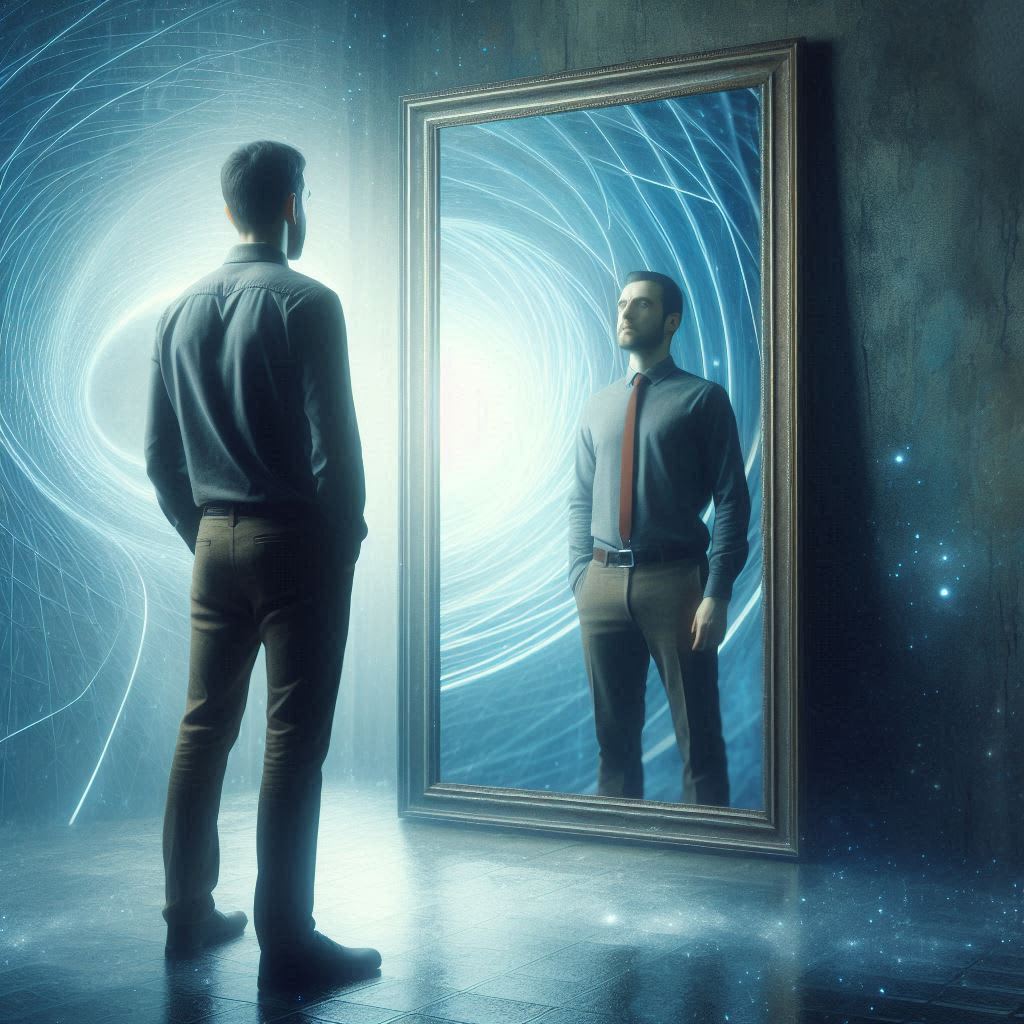
Déjà vu, a French term meaning "already seen," is a peculiar and often disconcerting experience that many people have encountered at least once in their lives. It is characterized by a feeling that a current situation has already been experienced, despite the knowledge that this is not possible. This phenomenon has intrigued scientists, philosophers, and the general public alike, raising questions about the nature of memory, consciousness, and the workings of the human brain. This essay explores the nature of déjà vu, its potential causes, and its implications for our understanding of the human mind.
Déjà vu occurs when a person feels an overwhelming sense of familiarity with something that shouldn't be familiar at all. It might be a place, a conversation, a smell, or even a sequence of events. The experience is often fleeting, lasting only a few seconds, but it leaves a lasting impression and a sense of wonder. Many describe it as a momentary glitch in the matrix of reality, an eerie sensation that challenges their perception of time and memory.
One of the most compelling aspects of déjà vu is its universality. Research indicates that approximately two-thirds of people have experienced déjà vu at least once in their lives. It tends to be more common in younger individuals, particularly those between the ages of 15 and 25. This age group is generally more open to new experiences and more likely to encounter novel situations, which might explain the higher prevalence of déjà vu.
The scientific investigation into déjà vu has led to several hypotheses about its underlying mechanisms. One prominent theory is the dual-processing explanation, which suggests that déjà vu occurs when there is a brief malfunction in the brain's memory systems. According to this theory, the brain processes new experiences in two separate but parallel pathways: one for immediate perception and another for long-term memory. If these pathways momentarily become out of sync, the brain might mistakenly interpret a new experience as a memory, leading to the sensation of déjà vu.
Another hypothesis involves the temporal lobe of the brain, which is heavily involved in processing memories. Some researchers believe that déjà vu might be linked to minor, often imperceptible seizures in this area. These seizures could disrupt normal memory processes, causing a false sense of familiarity. This explanation is supported by studies of individuals with temporal lobe epilepsy, who frequently report experiencing déjà vu just before a seizure.
Psychological theories also offer intriguing perspectives on déjà vu. Some suggest that it might be a form of "cryptomnesia," where forgotten memories resurface without being recognized as such. For instance, a person might visit a place they have seen in a photograph or a dream, leading to a sense of familiarity that they cannot consciously place. Additionally, déjà vu might be related to cognitive processes involved in recognizing patterns. The brain is adept at detecting patterns and making predictions, and sometimes, these processes might misfire, resulting in the erroneous sensation of having already experienced a moment.
Beyond its scientific explanations, déjà vu has profound philosophical implications. It raises questions about the nature of reality, time, and human consciousness. Some people interpret déjà vu as evidence of reincarnation, parallel universes, or precognition. While these ideas are more speculative and less scientifically grounded, they reflect the deep human desire to understand and find meaning in the mysteries of existence.
Déjà vu also plays a significant role in popular culture. It is a common theme in literature, film, and art, often used to evoke a sense of mystery or to explore complex narratives involving time travel, alternate realities, or psychological states. The concept of déjà vu resonates with people because it taps into the fundamental human experience of memory and the sometimes-unreliable nature of our perceptions.
In conclusion, déjà vu is a fascinating and multifaceted phenomenon that continues to captivate scientists, philosophers, and the general public. Its fleeting nature and the profound sense of familiarity it evokes make it a unique window into the workings of the human mind. While scientific research has provided several plausible explanations for déjà vu, it remains, in many ways, an enigma. Whether viewed through the lens of neuroscience, psychology, or philosophy, déjà vu challenges our understanding of memory, reality, and the nature of human consciousness. As research continues to unravel its mysteries, déjà vu will undoubtedly remain a topic of enduring fascination and curiosity.
About the Creator
A Failed Artist, A Disillusioned Poet, An Underpaid Game Show Host
I took my son and niece to Gori, a small town in Georgia where Joseph Stalin was born. They talked me into visiting the Stalin's Museum, the largest in the post-Soviet space. I had resisted going there because I just can't stand the monster and know enough about him, or so I thought.
By Lana V Lynx21 days ago in FYI
The Rise of AI Agents at Work
For years, businesses have invested in software to speed things up. Tools to manage tasks. Tools to track progress. Tools to automate steps. Yet despite all this technology, work often still feels slow, fragmented, and dependent on human follow-ups.
By Wama Sompuraabout 3 hours ago in FYI




Comments
There are no comments for this story
Be the first to respond and start the conversation.