
The development of British history
From a Roman province to world domination

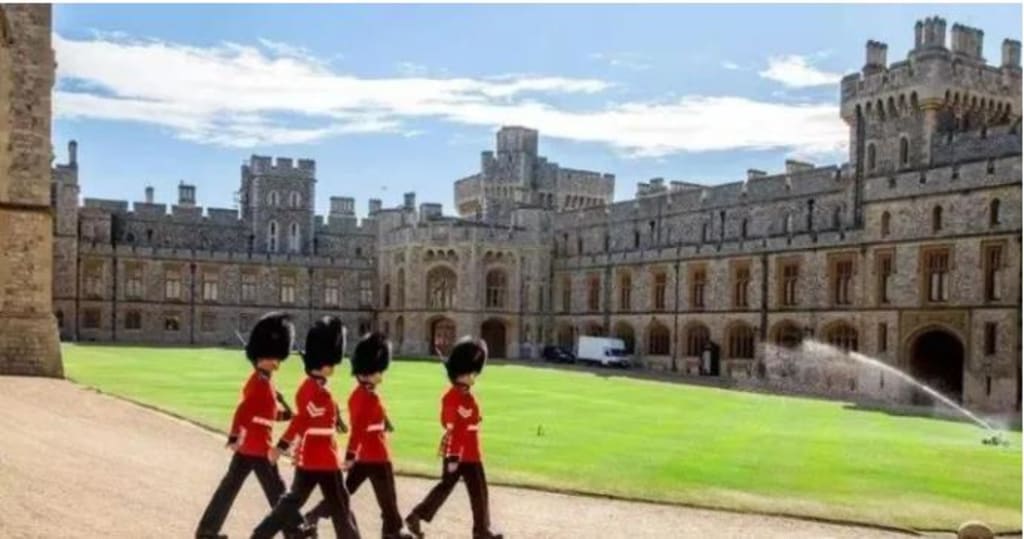
If there is one country that has had the most profound impact on the world since human civilization entered the modern era, it is Britain. The political system, economic changes, and legal norms born in this country, which once established the Sunset system, have had a profound impact on Europe and the world, and have changed the geopolitical landscape.
Primitive Society Period
Long before the Indo-European peoples of Central Asia migrated to Europe around 4000 B.C., numerous tribes speaking Iberian languages, known as Iberians, had already entered the region of Central and Western Europe. By about 1300 B.C., a group of Iberians crossed the Channel and settled and flourished in the southeastern part of the island of Great Britain, located in northwestern Europe. Five hundred years later, after about 700 B.C., a Celtic group of Indo-Europeans arrived in western Europe and continued to migrate to the British Isles. These Celtic settlers were also known as the Britons, and their ethnic name later became the name for the term Britain
Brittonic Celts
By the time the Celts arrived in the British Isles, they were already proficient in the use of iron, had advanced plowing techniques compared to other groups of the same period, and had even begun to use the money for trading. The development of productivity contributed to the prosperity of the Celtic society in Britannia, but eventually, they were confronted by the prying eyes of their powerful neighbors. At this time, the European continent was at the height of the Roman Republic, and the Roman political arena was dominated by Pompey, Crassus, and Caesar, who was known as the "first three giants" of ancient Rome. At that time, the British Isles were a region of terror in the minds of the ancient Romans, isolated overseas and portrayed as a dangerous place full of monsters and beasts. For reasons of political struggle, Caesar led two invasions of Britain in 54 B.C., gaining himself more political prestige by being greeted by the Senate in a triumphal ceremony.
Roman Conquest of Britain
During Caesar's time, ancient Rome was not as willing to invade Britain because it was more concerned with internal power struggles. When Claudius became Roman emperor in 43 A.D., he decided to lead an invasion of Britain to strengthen his position and eventually turn it into a province of the Roman Empire. However, the Roman Empire's conquest was not complete, as they only occupied the southeast, while the western and northern regions remained a Celtic territory. To stop the Celtic invasion from the north, the Roman emperor Hadrian built a great wall across the northern part of the island in the 2nd century AD, known as Hadrian's Wall. Later, as the resistance of the British slaves intensified, the Roman Empire declined, and the conflict between the Roman and Celtic upper classes became more pronounced, the resistance to Roman rule intensified, even to the point of large-scale revolts such as the Boudicca Revolt. Finally, in 407 A.D., the Roman garrison was forced to withdraw from Great Britain, bringing an end to its rule.
The Age of the Seven Kingdoms and the Viking Invasion
The decline of the Roman Empire was due to internal factors such as the widening gap between the rich and the poor, military misrule, and the collapse of the civil system, as well as external factors such as the prolonged invasion of the Sabbat and Germanic barbarians. Among them, the southward movement of the Germanic tribes created a long period of tension on the northern frontier of the empire, and stimulated the military power in the late Roman Empire to grow, even to the point of being able to influence the abolition of the emperor. When the Romans withdrew from Britain, these Germanic tribes immediately followed to fill their vacancies. The Germanic tribes, including the Angles and Saxons near the mouth of the Elbe and in southern Denmark, as well as the Jutes from the lower Rhine, invaded Britain from the middle of the 5th century onward, a process that lasted about a century and a half.
The Age of the Seven Kingdoms
By the 7th century, the Germanic tribes had established seven powers in the British Isles, which became known as the "Age of the Seven Kingdoms," and these areas became the prototypes of what would become the Kingdom of Britain. Just as the name "Britain" was derived from the Britons, the name "Anglo" came from the name of the new invaders, the Angles. The Anglo-Saxons were not the only invaders, however, as Viking groups, mainly Danes, invaded Britain from the 8th century onwards. The Germanic peoples were the first Vikings to cross the Jutland Strait from Scandinavia into Central Europe, but by this time they were already estranged from each other and had no regard for the old ways. To resist the Danish kingdom of Wessex, King Esselstyn unified the seven kingdoms in 927 and established the Wessex Dynasty, which unified the English kingdom, and his successors gradually recovered the Danish occupation.
The English resist the Danish Viking invasion
However, in the early 11th century, the Danes made a comeback and invaded the Anglo-Jewish capital of London. King Knut the Great of Denmark became King of England until the death of Knut's son when the throne reverted to Edward the Confessor (so named because of his great devotion to the Christian faith), an Anglo-Greek. When the British Isles were ravaged by the Vikings, the same was true of the continent across the sea from them. Charles III, the king of the Franks at that time, was notoriously incompetent and was known as Charles the Fat. During his term of office, France compromised with the Normans, a group of Vikings from northern Europe, and allowed them to occupy the area around the Pas-de-Calais and establish the Duchy of Normandy. When Edward the Confessor died without an heir, Count Harold of West Saxony, a great nobleman, was crowned king, which aroused the discontent of William, then Duke of Normandy.
Norman Dynasty
The Anglo nobles made Harold king, which angered William, Duke of Normandy, across the Channel because William had been indebted to his cousin Edward the Confessor and had been promised that he would repay the favor by becoming king. After the Battle of Hastings, William won a great victory and was crowned King William I. He was called "William the Conqueror" and the Norman Dynasty was established. Soon after the establishment of the Norman Dynasty, William the Conqueror began to implement the institutional policy of strengthening the king's power, promulgating the Salisbury Oath in 1086, which emphasized the obligation of loyalty to the king by the feudal vassals of the nation's territories. Later on, William also excluded a large number of Chinamen to conduct economic and demographic surveys throughout England, which were compiled into the Survey of Land and Services. The English people saw these surveyors as fierce and fierce, and the content of the survey was so detailed that it was like a doomsday judgment, so it was also called the "Doomsday Judgment Book".
The Battle of Hastings
With the Salisbury Oath and the Doomsday Book, the King of England strengthened his control over the personal and property rights of the state. After a period of relative stability between William I's two sons, William II and Henry I, the competition for the throne was between Henry's nephew, Stephen, and his grandson, Henry, Earl of Anjou. In the end, an agreement was reached that Stephen would remain king and Henry would succeed to the throne after his death, i.e. Henry II.
The Goldfinch Dynasty (Anjou Dynasty)
Although Henry II had Norman royal blood, however, he simultaneously inherited Normandy from his mother (Matilda, daughter of Henry I) and Anjou from his father, by obtaining a dowry from his wife Eleanor, and became the Duke of Aquitaine. Because of this, Henry II became the actual largest lord of France, with a territory exceeding that of King Louis VII of France, which also laid the groundwork for future conflicts between England and France. According to reason, the dynasty established by Henry II should be called the Anjou dynasty, but because of its coat of arms decorated with small branches of the goldfinch flower, so it is usually called the goldfinch dynasty. During his reign, Henry II continued the policy of William the Conqueror and consolidated his rule by issuing the famous Military Edict in 1181 and reforming the English judiciary by allowing commoners to pay court fees to appeal cases directly from the lord to the king's court. In this way, the king completed the collection of military and judicial powers.
During the reign of Henry II, English kingship reached its peak, but it was also during the period of the Goldfinch Dynasty that the king's power began to go downhill. After John I came to power, both domestic and foreign affairs were in a dilemma, and the territories opened up by his father Henry II, and his brother Richard I the Lionheart were almost lost, making him a notorious "king of lost territories". As a result, the king's authority fell into disrepute and the nobles took advantage of the opportunity to occupy London with their people, forcing John to sign the Magna Carta, which further undermined the king's power. John later reneged and denied the provisions of the Charter, which led to a long period of civil war and a decline in England's power.
Signing the Magna Carta
The Magna Carta emerged from a uniquely British social context and became the cornerstone of British constitutionalism, which would later influence the compilation of the North American Declaration of Independence. Under pressure from the nobles, Henry III, the successor to John the Dispossessed, later convened a joint conference, known as the Oxford Conference, at which he passed the Oxford Regulations, which further limited the power of the King and increased the influence of Parliament. It was at this meeting that the principle of regular parliamentary meetings was established in England. It was based on the "Oxford Convention" that the later "Westgate Convention" was held. In this meeting, citizens of lower status than knights were admitted to the Parliament for the first time, which led to the emergence of the British National Assembly.
Edward I
The relationship between the king and the nobles was not always tense during the Goldfinch Dynasty. After several bloody conflicts, especially after Edward I's conquest of Wales, which brought immediate benefits to the English nobility, the King called the Parliament to raise funds for the army and the two sides worked closely together. For this reason, this Parliament was called the "Model Parliament". During the reign of Edward III, England, which was becoming increasingly powerful, started another war against France to fight for the French throne, which lasted for 116 years and was called the "Hundred Years' War between England and France".
Lancaster-York Dynasty
During the reign of Edward III, the Goldfinch Dynasty reached its peak again, but the struggle within the royal family was also intensified. The House of York, an offshoot of the King's House, was descended from Edward III's fourth son, while the House of Lancaster was descended from Edward III's third son. The conflict between the two sides intensified after the deposition of Richard II, the eldest son of Edward III, and eventually broke out into a full-scale conflict. At the beginning of his reign, Richard II introduced poll taxes three times to solve the financial crisis, which caused the lower classes to take action and eventually led to the Watt-Taylor peasant revolt in 1381. The nobility was also dissatisfied with Richard II's political stance of using favorites to the exclusion of the nobility and eventually provoked Henry IV to rise against Charles, who received the support of Parliament and became king, creating a precedent for kings to respect the opinions of Parliament and establishing the Lancaster Dynasty.
The War of the Red and White Roses
Since the Lancaster coat of arms was a red rose and the York family coat of arms was a white rose, it was also known as the Red and White Rose War, also known as the War of the Roses. The two sides fought intermittent civil wars for the throne of England, and eventually, Henry Tudor (House of Lancaster) won and married Elizabeth, daughter of Edward IV (House of York), to consolidate his rule. In this way, the two royal houses were reunited and the Tudor dynasty was established. The War of the Red and White Roses was a protracted and brutal one that left the great nobility of England devastated and the lower and middle classes increasingly dominant in Parliament.
Tudor Dynasty
After Henry Tudor, Henry VII established the Tudor dynasty, the social structure of England had long since undergone a radical change as a result of the War of the Red and White Roses. The enclosure movement, which was one of the most important means of capital accumulation in England, emerged at this time and became more and more intense. The European Reformation was introduced to Great Britain and merged with capitalism to form a unique English Reformation model. In the Elizabethan era, the Queen formally introduced a large number of industrial and commercial newcomers into Parliament, and actively participated in the black slave trade and the establishment of the East India Company, while the Anglo-Western War broke out with England, and England was on the eve of a great success.
Anglo-Spanish Naval War
However, the continued rise of Britain's power was accompanied by the decline of the royal family. To make the country strong, Elizabeth I made great efforts to develop industry and commerce, and promoted new businessmen to the Parliament. However, when she demanded that the monopoly of certain goods be granted to the crown, she met with strong opposition from these merchant interests. With the advent of the industrial and commercial era in England, the power contrast and composition of the superstructure changed quietly and would spread throughout Europe and the world.
Stuart Dynasty
With the death of Elizabeth I in 1603, the Tudor dynasty experienced a problem common to previous dynasties, the extinction of a royal heir. Eventually, the English had to invite the son of a distant niece of the Queen to succeed him, the then King James of Scotland. James was the ninth king of the Stuart dynasty of Scotland, and at this time became the first king of the Stuart dynasty of England and Ireland, known as James I. However, unlike the parliamentary kingship system in England, Scotland was in a high state of divine right, so the relationship between James I and the English parliament and the people was very tense. Under his son Charles I, the conflict between the two sides broke out and eventually led to the outbreak of the English Civil War.
Cromwell's "New Model Army"
With the support of the Parliament, the strongman Cromwell organized the "New Model Army" defeated the royal army, and appointed himself as the Lord Protector for life. The defeated Charles I was beheaded, making him the first European monarch to be publicly executed. However, Charles I's son, Charles II, was immediately proclaimed to the throne but had difficulty exercising his power due to the reality. But with Cromwell's break with Parliament, Charles II's chance came. The government of the Protectorate enforced a military dictatorship and strictly enforced Puritan precepts, even dissolving the Parliament. This led to the death of Cromwell, the nobles quickly restored the parliament, and immediately on the Protectorate government to counter-attack, welcomed back Charles II, the Stuart dynasty has since been restored. It was also in the time of Charles II, England's parliament was divided into two factions of power, the "Tory" supported the king, and the "Whig" against the king.
Guillotine of Charles I
When Charles II died, he named his younger brother James II as the heir to the throne. However, the Catholic faith of James II did not meet the interests of the bourgeois nobility, which dominated the Parliament after the Reformation, and the conflict between the king and the Parliament broke out again. Thus, at the instigation of the nobles, the two parties in Parliament unanimously decided to invite James II's son-in-law, William, the ruler of the United Provinces of the Netherlands, to succeed to the throne, namely William III. William III and his wife Mary II ruled England together, which was called the "Glorious Revolution". Taking this opportunity, the nobles of the British Parliament signed the Bill of Rights with William III, which further limited the royal power and expanded the power of the Parliament, laying the foundation of the British constitutional government and the emergence of a constitutional monarchy.
Hanover Dynasty
After the death of Mary II, the throne was passed to her sister Anne. However, Anne was pregnant more than a dozen times in her life, but either miscarried or died, eventually leading to the Stuart Dynasty extinction. At this time, George Ludwig, the son of James I's granddaughter Sophia, the German Elector of Hanover (a contender for the throne of the Holy Roman Empire), was highly regarded by the British aristocracy and was officially invited to become King of Great Britain and Ireland, George I, in 1714. George, I was already 54 years old at this time. Being a German native speaker, he did not know and did not want to learn English, which led to communication between the king and his ministers being carried out only through translators. Bored with this, George I simply chose one of his cabinet members to preside over the cabinet meetings, which was the predecessor of the prime minister. It was also during George I's tenure that the "South Sea Bubble" occurred in the British financial sector, and London had become a world financial center.
About the Creator
Lavezzi
I will spend forever wondering if you knew.
A Planetary Alignment will coincide with Mercury Retrograde
Double phenomena in the heavens Some people say in jest that the planets have aligned in their favor when life works the way they desire. Were you aware that there are seasons when things do line up in the heavens? There will be a planetary alignment AKA a planet parade, on February 28, 2026.
By Cheryl E Preston12 days ago in FYI




Comments
There are no comments for this story
Be the first to respond and start the conversation.