

If you’re not living completely off the grid like a benign Ted Kaczynski you’ve undoubtedly become acquainted with the word “tariff” and hopefully have more than a passing familiarity with its meaning.
I’m not interested in semantics; I’m more interested in the externalities of tariffs, which are overwhelmingly problematic and more grave than the obvious cost increases to businesses and consumers.
The First Problem:
The first such spillover effect is the most obvious and easiest to understand. Raw and finished goods affected by tariffs are going to cost more. Tariffs are, in effect, a tax on imported goods that are paid by the importer. However, given how tight margins are for any company making a physical product, the cost is normally passed onto the consumer. Companies simply cannot afford to add the cost of the tariff onto their normal cost of goods sold, operating expenses, and everything else they must pay.
For the broader economy this will impact consumer spending, which represents the largest individual portion of Gross Domestic Product (GDP) in the United States. One of the beauties of competition in the marketplace is it drives prices down as companies try to undercut each other on price to create demand. Conversely, when prices go up, people buy less.
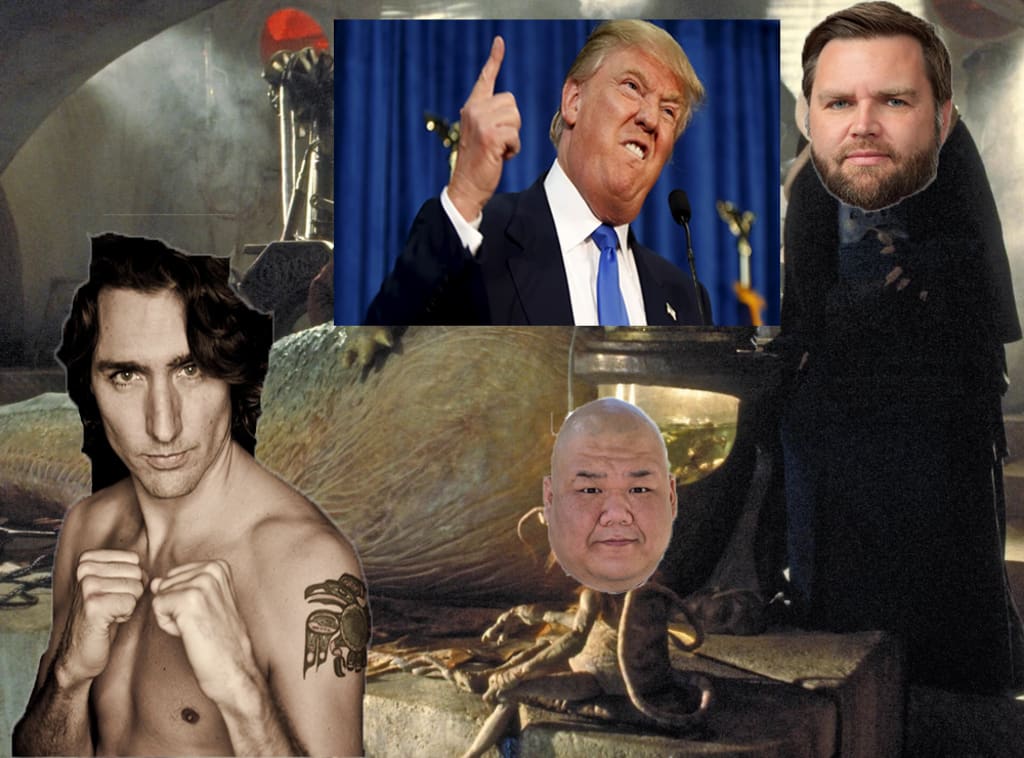
If you’re still incredulous about tariff induced price inflation, consider this: President Trump just warned auto manufacturers not to raise prices; then flippantly told the world he didn’t care about auto price increases. The architect of tariffs, overtly acknowledging the upward pressure tariffs put on prices, leaves no more room for denial.
The Second:
The next is the impact of tariffs on the United States’ alliances with its global allies. When Canada, the EU, and others express their feelings about the escalating trade war they exclusively express negative sentiments. They’re palpably outraged, bitterly disappointed, and openly defiant. This is no more evident than in their retaliatory tariffs. Justin Trudeau didn’t mince words when he said Canadian tariffs are being aimed explicitly at the economies of politically red states to punish them for their role in President Trump’s trade war opening salvo.
From their point of view, they’ve done nothing to warrant a tax on their businesses that will make them less competitive in American markets. Their economies are being punished for imagined slights as part of a deranged attempt to project strength. At least when your supposed friends say catty things behind your back there’s some implication they care enough about your feelings to not want to hurt you. The level of disrespect here is far worse than any vituperative school yard shit talk.
It’s a distressing fact of life that destruction is easier than creation, both in the concrete (no pun intended) and intangible senses. A reputation can take a lifetime to build and a moment to destroy. America has benefitted from several post-war generations worth of cooperation and fidelity that have grown ours and our allies' economies as we’ve stood resolute and united against antagonistic authoritarian governments who don’t believe in the warm and fuzzy notion of working together with one another for the betterment of all.
In the span of several weeks much, if not all, of that trust has been eroded. Even if we were to successfully reset all tariffs to the levels before this lunacy began, the suspicion that the United States could again reverse course and reward our allies' good faith with more punitive tariffs will remain in the back of their minds. It will take decades to dislodge, if it ever can be.
If you care at all about negotiating mutually advantageous trade arrangements that deliver prosperity to all parties and support a rules-based forum to resolve conflicts, this ought to worry you. This will exacerbate the economic costs brought on more directly by tariffs. For example; as I write this the U.S. government is being told by its counterparts in Denmark and Finland, among others, that we can’t buy eggs from them, so if you were sanguine about the price of a carton coming back under control, think again. Canadian retailers are pulling American products ranging from poultry to Jack Daniels off the shelves, impacting those businesses and their employees. Trucks crossing the Canadian border from Washington are being hit with additional tolls, increasing the price of the goods they carry in their destination market, Alaska.
Individually, these occurrences aren’t disastrous. Add them all up, however, and factor time into the equation, and the output will inevitably be felt by consumers, even impacting their quality of life. It’s death by a thousand cuts. And if the trade war really escalates to drastic retaliation, it’ll take a lot fewer than a thousand to make the body politic bleed profusely.
And Finally:
Compounding the problems is something equally as dire that can be summarized in one word: uncertainty.
The U.S. government has “flown by the seat of its pants” as the saying goes, as far as its planning and approach to implementing this policy goes. It’s threatened tariffs, postponed some, implemented some, and acted completely erratically. The only thing we know about the encores to this production is that they’ll continue to run for the foreseeable future. We just don’t know the schedule.
And therein lies the problem. If you implement X tariffs on Y goods and are done with it the markets incorporate them into the way we do business and we can soldier on with a new, albeit pricier, normal. As it stands, normalcy is out of reach.
I recall once seeing a documentary about survivors of Josef Stalin’s Soviet Union. They described an intense daily anxiety around being dragged off to the Gulag, which was relieved when it finally happened despite the fact that serious pain lay ahead.
I realize that’s a dramatic analogy, but drama is the best word to use if we’re looking to describe these events with a singular word, so I stand by it. Though our current situation is nowhere near as frightening as what those people experienced, the point remains the same; whatever the outcome is, it’s far better for everyone involved and adjacent, which is pretty much the whole world at this point, to know what that outcome is than to be left wondering.
Maybe we’ve arrived at this point because we’re hooked on this kind of theater. A possible repercussion of our collective addiction to reality (I use the term loosely) TV is that we desire similar melodrama in all aspects of our daily lives, no matter how consequential it may be. The sniping between Donald Trump, Scott Bessent, and Elon Musk, on the one hand, and Mark Carney, Keir Starmer, and Emmanuel Macron, on the other, is the bro version of the Real Housewives of New York City, Atlanta, London, Baghdad, Pyongyang, or wherever else they’ve migrated to.
Turns out this sort of entertainment isn’t free, it comes with a substantial cost, including, but not limited to, higher prices at Walmart.
When world leaders bicker, you get global pretense, such as promises to do more about the 20 kilograms of fentanyl, (a microscopic amount), making its way to the United States from Canada annually, shows of force in the form of Mexican soldiers doubling as border patrol, which they promised a while ago to do anyway and doesn’t address the problem of fentanyl smuggling, and Ontario resetting its energy prices for several American states back to their pre-trade war levels.
Tariffs have been around since antiquity. There is a sensible purpose; protecting native industry, which the United States is pretending to care about. Any tangible benefit U.S. companies stand to gain from these policies is nothing worth writing home about. But the U.S. government is not acting in good faith. The result is ad hoc, terribly misguided, and woefully counterproductive policies that are already creating profound losses for both the American people and the global economy, and the one thing we can foresee reliably is they will magnify.
About the Creator
Brain Juice
Wise ass from NYC and fervent storyteller. Writing about all things topical with flair, imagination, and wit. No AI generated content, just a little editing. All opinions expressed are solely my own, which is what makes them great.
Keep reading
More stories from Brain Juice and writers in FYI and other communities.
A Failed Artist, A Disillusioned Poet, An Underpaid Game Show Host
I took my son and niece to Gori, a small town in Georgia where Joseph Stalin was born. They talked me into visiting the Stalin's Museum, the largest in the post-Soviet space. I had resisted going there because I just can't stand the monster and know enough about him, or so I thought.
By Lana V Lynx19 days ago in FYI
Is There a Hidden Ocean Inside the Earth, and Are We Running Out of Time?
If you think you understand what’s beneath your feet, science might want a word with you, because recent research suggests our planet may be hiding something massive. And no, this isn’t sci-fi. It’s grounded in real discoveries, strange footage, and unsettling predictions about where humanity is headed.
By Areeba Umairabout 6 hours ago in FYI



Comments (1)
Tariffs are definitely a problem! Great work! Trump sucks!