
Some of the most heavily guarded places on earth
Ready to go where few have ever been? You're getting an all-access pass to the world's most restricted and heavily guarded places.

Martian Madness:
What’s a video about heavily guarded places without mentioning Area 51? It might be the most famous secret in the world, but what do we actually know about it? The official story is that it's a classified U.S. Air Force facility near Las Vegas, Nevada. Originally, it was used by the CIA for developing and testing the U-2 reconnaissance plane. But that’s not why it’s infamous. In 1989, Bob Lazar claimed he worked there, reverse engineering a crashed alien spacecraft. Since then, Area 51 has become a hotbed of conspiracy theories and myths. In 2019, a group of 150 Americans even threatened to "Naruto run" past security to free the aliens they believed were being held captive. This kind of stuff is why other countries think we’re crazy!
Honestly, it’s impossible to know the full extent of Area 51's security measures. The entire area is a no-fly zone, with armed guards patrolling the perimeter and motion sensors covering areas the guards can't reach. Employees aren’t even allowed to drive to work; instead, they’re flown in on private jets operated by Janet Airlines. The secrecy surrounding Area 51 only adds to its mystique. Despite documented proof of its existence dating back to 1955, the CIA didn’t officially acknowledge Area 51 until 2013. That definitely sounds suspicious, but the truth is, we have no idea what they’re hiding. Could all this alien talk be a distraction from what’s really going on?
Max Security Slammer:
Ever since I dodged a jaywalking ticket in 2008, I’ve been living like a fugitive. The thought of prison terrifies me—especially if it’s the ADX Florence in Fremont County, Colorado. Opened in 1994, this is the only supermax prison in the U.S., designed for the most dangerous criminals. With a capacity of just 490 inmates, it houses some of the most notorious names, like Ted Kaczynski, the Unabomber, and Dzhokhar Tsarnaev, the Boston Marathon Bomber. For these high-profile prisoners, security measures are extreme.
Inmates at ADX Florence spend almost all their time in solitary confinement. For the first three years, they have no contact with other prisoners. If they behave well, they can earn a bit of time outside—but “outside” is a heavily guarded concrete pit, barely large enough to take a few steps. And it's worse than it sounds. The pit’s design allows sunlight in, but the sky remains out of view, making escape nearly impossible. Their cells are tiny—just 7 by 12 feet—with a small window, four inches by four feet, that offers a limited view of the sky.
The cells are designed to prevent harm; the bed, desk, and chair are all made from poured concrete, and if a toilet clogs, it shuts off automatically. The shower is on a timer to prevent flooding. Outside the cells, there are motion sensors, cameras, and remote-controlled steel doors. Officers monitor the prisoners 24/7, and if anything goes wrong, a panic button locks down the entire building. Even if someone managed to escape, they'd face laser beams and attack dogs. The best hope for inmates is good behavior.
Vegetation Vault:
We humans are a resilient bunch. Take me, for example—you’d never guess I was dropped on my head as a kid. But no matter what, we always find a way to survive. That’s where the Svalbard Global Seed Vault comes in. It’s humanity’s backup plan—a safety net for our future food supply. Imagine this: a catastrophic event wipes out crops worldwide. How would we feed ourselves? Well, the Global Seed Vault is the answer. Located on the Norwegian island of Svalbard, it’s a gene bank with over 1.2 million seed samples from nearly every country. These seeds safeguard the future of our food supply.
The vault is tucked away in one of the most remote places on Earth, deep within a mountain. It’s buried 430 feet into thick rock and permafrost, which keeps the temperature just below zero degrees Fahrenheit, preserving the seeds perfectly. But it's not just the natural conditions that protect the seeds; they’re also stored in high-tech refrigeration units. Even if those fail, scientists predict it would take 200 years for the internal temperature to rise above freezing. Each sample consists of 500 seeds stored in custom three-ply foil packages, and the vault has the capacity to hold 4.5 million varieties. Protecting this place is crucial—it could mean the difference between a nutritious meal and a bowl of rocks.
Presidential Palace:
The White House in Washington, D.C., is perhaps the most recognizable piece of American architecture. Over 1.25 million people tour it every year, and with its unassuming facade and constant flow of visitors, you might think it lacks security. But just because you don’t see it doesn’t mean it’s not there. Every day, around 6,000 visitors pass through the 55,000-square-foot complex, but they must give 21 days' notice for extensive background checks. And that's just the beginning.
A 15-mile flight restriction zone surrounds the White House, with surface-to-air missile launchers strategically placed around the city to prevent any aerial threats. The roof is equipped with a radar system that constantly scans the area for danger. Even if someone managed to approach the building, they'd have to contend with a 10.5-foot-tall fence topped with sharp barbs, pressure sensors, and crash-resistant concrete. And forget about sniping—the windows are bulletproof, and some rooms, like the Presidential Emergency Operations Center and the Situation Room, double as nuclear bunkers. From the outside, it might look peaceful, but the White House is a fortress.
Diligent Defense:
One of the things I love most about America is our ability to innovate. Who says buildings need four sides? The Pentagon, for instance, is a five-sided powerhouse in Arlington County, Virginia, and the headquarters of the U.S. Department of Defense. It’s not skimping on security, either. Anyone entering the building undergoes thorough screening, and photography inside is strictly banned to protect confidentiality.
Deliveries to the Pentagon go through a 250,000-square-foot remote facility first, where 250 trucks are processed daily. These trucks undergo intense inspection, including undercarriage checks with mirrors and explosive detection by a canine squad. Drivers pass through metal detectors before opening any cargo doors, and all materials are x-rayed and inspected before being allowed into the Pentagon.
Perhaps the most impressive feature of the Pentagon is its blast-resistant windows in Wedge 1. Each window is 1.5 inches thick and weighs a ton. During the 9/11 attacks, when a hijacked plane struck the Pentagon, these windows saved countless lives, showing just how crucial these security measures are.
Blast-Proof Bunker:
So, that’s how the U.S. government secures everything above ground. But what about below? Enter the Cheyenne Mountain Complex in Colorado Springs, Colorado—an impenetrable underground fortress. Built in the 1950s as a shield against Soviet bombers, it has housed many vital U.S. defense units over the years. If you were inside, you’d feel pretty safe.
The facility is buried 2,000 feet deep in granite, secure against earthquakes, nuclear explosions, and electromagnetic pulse (EMP) attacks. EMP weapons can disrupt communications and sabotage electrical networks, but the Cheyenne Mountain Complex is like a giant Faraday cage, shielding itself from external charges.
Building this secret sanctum required excavating 693,000 tons of granite, and it’s protected by two 3.5-foot-thick, 20-ton blast doors capable of withstanding a 30-megaton explosion. For reference, the most powerful U.S. nuclear weapon, the B-41, had a maximum yield of 25 megatons. Today, the complex is closed to the public and serves as a backup training center for North American Aerospace Defense Command (NORAD). Considering it’s heavily guarded by military personnel, you might want to rethink trying to sneak in.
Information Station:
Enough with the government secrets—ready to see something really cool? Tucked away in Butler County, Pennsylvania, is one of America’s most secure storage facilities, known simply as "The Underground." Run by Iron Mountain, a data management company, this facility is hidden in plain sight. From the road, you’d never guess what lies beneath: a massive underground city spread across a 1,200-acre former limestone mine.
This underground metropolis has its own fire brigade, security, speed limits, traffic lights, street names, and sidewalks. But why? This isn’t just any old storage facility. It houses everything from government records and corporate documents to master recordings by famous musicians. Even Charles Darwin’s will is stored here.
With millions of priceless items on site, security is paramount. The facility employs around 2,000 people daily to ensure everything runs smoothly. But physical items aren’t the only things stored here—Iron Mountain also safeguards critical digital data. Multiple copies of the same data are stored in separate locations, ensuring customer information is safe, no matter what. Getting into The Underground is a challenge, but getting out with anything valuable? Impossible!
Divine Security:
Next up, we’re heading to Vatican City, home to the Catholic Church and one of the smallest countries in the world. Here, the Vatican Apostolic Archives—often called the Vatican Secret Archives—are hidden away. Only about a mile of the 53 miles of bookshelves is accessible to the public. The rest is off-limits, holding centuries of history, including documents like the papal bull that excommunicated Martin Luther in 1521. Most people think of dusty old scrolls, but in reality, the Vatican Apostolic Archives are a vital part of Catholic history.
While not as mysterious as other places, the archives remain heavily protected. Only scholars with special permission can enter, and the archives are so vast that it would take 12 minutes just to walk from one end to the other. Security is crucial here, and if you’re thinking about trying to sneak in, you’ll face the Swiss Guard, a small but elite military unit trained in everything from hand-to-hand combat to high-tech weaponry. If you’re planning a heist, be prepared for a swift and deadly response.
Gold Fortress:
We all know the price of gold fluctuates. Today, it’s worth about $2,000 per ounce, but the gold in Fort Knox, Kentucky, is far more valuable. The Fort Knox Bullion Depository stores 147 million ounces of gold in a structure that’s just as secure as the White House or the Pentagon. The building, opened in 1937, is made of 16,000 cubic feet of granite, 4,200 cubic yards of concrete, 750 tons of reinforced steel, and 670 tons of structural steel. The gold inside is estimated to be worth over $290 billion, but nobody really knows—it's a mystery how much is actually there.
If you’re thinking about stealing some, think again. Security at Fort Knox is tight, with one of the most impenetrable vaults in the world. The vault door weighs 20 tons, and to open it, you’d need to know multiple combinations held by various staff members. Even if you made it that far, you’d face armed guards, Apache attack helicopters, and military units stationed at nearby Fort Knox. So, let’s just say the gold is staying right where it is.
Wrapping Up Our Thrilling Journey
And that’s a wrap on our adrenaline-packed tour of the world’s most secure places! From secret bunkers to top-secret facilities, we’ve uncovered the lengths taken to guard these mysterious locations. The thrill of this exploration has been undeniable.
Now, I want to hear from you—how has this adventure changed your view on the excitement and mystery of hidden places? Share your thoughts in the comments below. Thanks for joining me on this thrilling journey—stay adventurous, and I’ll see you in the next one!
About the Creator
Adebayo Mahmud
To go straight to the point i like diving into topics that interest me and make me begin to think. Promoting peoples work especially those have interest in, in my articles is an hobby of mine. (I GUESS :-p).
Keep reading
More stories from Adebayo Mahmud and writers in FYI and other communities.
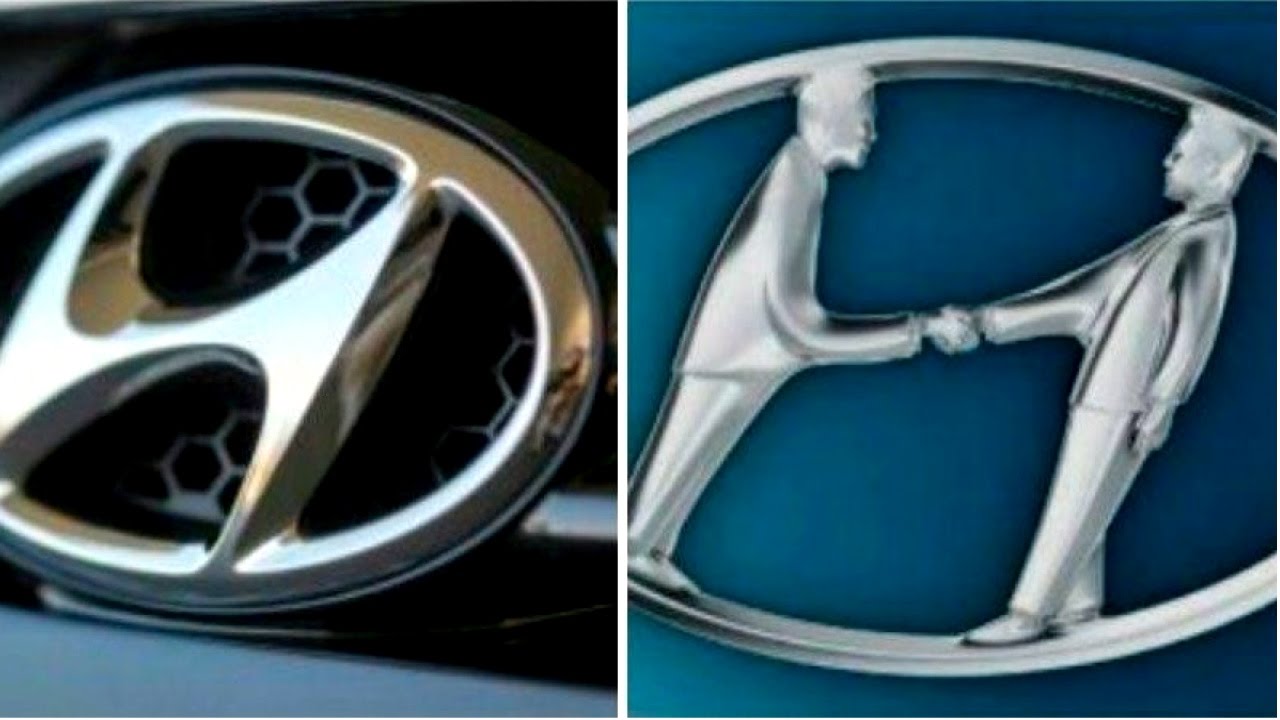
16 FAMOUS LOGOS WITH HIDDEN MEANINGS
Unveiling the Secrets Behind 16 Famous Logos: What You Never Noticed! We see them everywhere—on our clothes, gadgets, cars, and even food. But have you ever stopped to think about the hidden meanings behind those iconic logos? Every line, curve, and color was designed with intention, often conveying something far deeper than just visual appeal. Let’s dive into the fascinating world of logo design and discover the secrets behind 16 famous logos!
By Adebayo Mahmudabout a year ago in FYI
A Failed Artist, A Disillusioned Poet, An Underpaid Game Show Host
I took my son and niece to Gori, a small town in Georgia where Joseph Stalin was born. They talked me into visiting the Stalin's Museum, the largest in the post-Soviet space. I had resisted going there because I just can't stand the monster and know enough about him, or so I thought.
By Lana V Lynx21 days ago in FYI
Inside Customer Service
By the end of your shift, you will have smiled through someone’s anger, apologized for things you didn’t do, and wondered why respect has become optional. You will have listened to complaints that aren’t yours, taken responsibility for mistakes you didn’t make, and kept calm when bring treated like you don’t matter. This is the reality of working in customer service.
By Blaire Havenabout 8 hours ago in FYI


Comments (1)
Thanks for sharing