
Sex in Evolution
What can Peacocks teach us about our Sexual Evolution
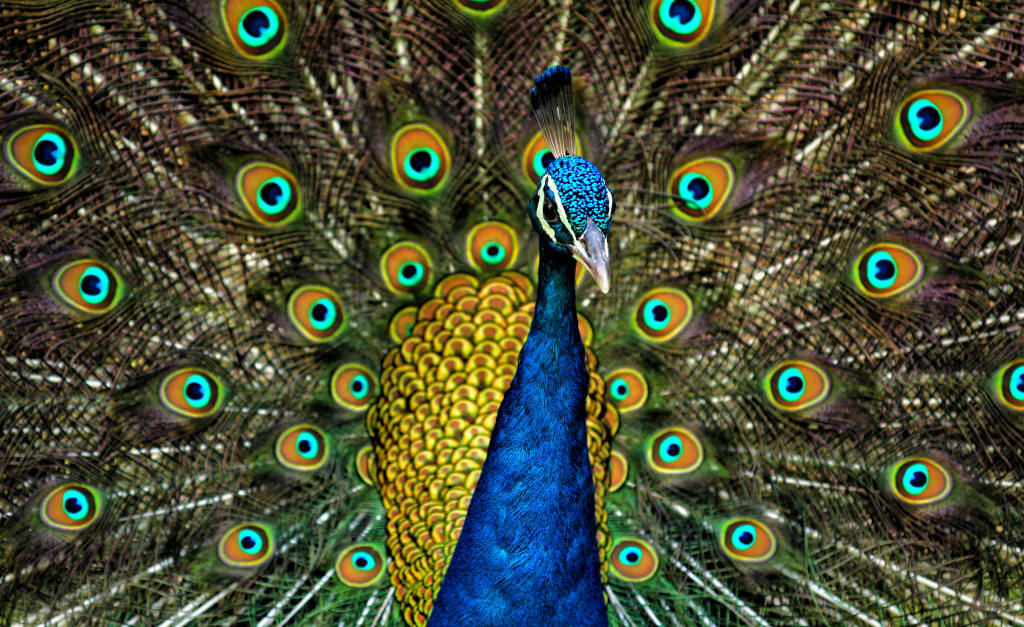
Peacocks are renowned for their magnificent tail feathers, which they use primarily for attracting mates. The elaborate display of their tail feathers during courtship rituals is a spectacle to behold and plays a crucial role in mate selection.
Darwin's theory of sexual selection revolutionized our understanding of evolution by proposing that certain traits evolve not solely for survival advantage but for reproductive success. This theory addresses the paradox of traits that seem to defy natural selection by being elaborate, extravagant, or even hazardous to survival.
This paradox puzzled him because natural selection, the primary mechanism driving evolution, typically favors traits that enhance an organism's survival and reproductive success in its environment.
The peacock's extravagant tail feathers are a classic example of a trait shaped by sexual selection. While these feathers may seem impractical and burdensome in terms of survival, they play a crucial role in attracting mates during courtship displays. Peahens, the female peafowl, are believed to prefer males with the most elaborate and vibrant displays, which in turn leads to the perpetuation of these ornamental traits over generations. This phenomenon, which he termed sexual selection, represents a distinct evolutionary force alongside natural selection.
Sexual selection operates through two main mechanisms: mate choice and intrasexual competition. In mate choice, individuals of one sex (typically females) select mates based on specific traits or characteristics they find attractive. These traits may signal good health, genetic quality, or the ability to provide resources. Intrasexual competition involves competition between members of the same sex (usually males) for access to mates, often through displays, fights, or other forms of competition. This competition can take various forms, such as physical combat or displays of dominance.
While natural selection favors traits that enhance survival, sexual selection operates through mate choice and competition, often leading to the evolution of elaborate or ornamental features. In many species, females play a prominent role in mate choice, selecting males with preferred traits that may indicate good health or genetic quality.
The link between male ornamentation and female preference creates a positive feedback loop, perpetuating the evolution of elaborate traits over generations. This process, first identified by Ronald Fisher, highlights the role of sexual selection in driving evolutionary change, even if it means traits may be detrimental to survival.
The concept extends beyond physical traits to include behaviors that attract mates. The "sexy son hypothesis" suggests that females selecting physically attractive males will have sons with similar traits, leading to increased reproductive success for subsequent generations.
While natural selection and sexual selection often work together, sexual selection can sometimes outweigh the effects of natural selection, as seen in the persistence of elaborate traits like the peacock's tail feathers.
Although the idea of female choice in evolution was initially controversial, it has since been recognized as a significant factor in shaping traits and behaviors across various species, including humans. While humans exhibit complex mating behaviors influenced by both biological and cultural factors, the principles of sexual selection still apply, demonstrating the dual engines of evolution: survival and reproduction.
What does this say about us? The idea of sexual selection are sometimes applied to humans. On the one hand, we are animals and we've certainly gotten that way with both natural selection and sexual selection. On the other hand, we've also got the ability to make choices based on cultural and other preferences.
Survival and reproduction. Peacocks are one of the most recognizable birds on the planet. There's this really interesting secret about evolution, hiding there. There's some really deep mysteries hiding in some surprisingly common places.
About the Creator
Diana C.
Facts, News, General knowledge.
I have a passion for writing. I currently work for a local newspaper writing about community events. Now, I want to share my passion and write interesting articles about news, science and general knowledge.
A Failed Artist, A Disillusioned Poet, An Underpaid Game Show Host
I took my son and niece to Gori, a small town in Georgia where Joseph Stalin was born. They talked me into visiting the Stalin's Museum, the largest in the post-Soviet space. I had resisted going there because I just can't stand the monster and know enough about him, or so I thought.
By Lana V Lynx20 days ago in FYI
Vitrectomy Surgery Explained: When It’s Recommended and What Patients Should Expect
Vitrectomy surgery is a type of eye surgery that involves the removal of the vitreous gel from the eye. The vitreous is the clear, gel-like substance that fills the center of the eye and helps it maintain its shape. This surgery is primarily recommended to treat a variety of retinal problems, and it plays a vital role in restoring vision for patients with specific eye conditions.
By Franklin Norton4 days ago in FYI


Comments
There are no comments for this story
Be the first to respond and start the conversation.