
Science Affair
Think You Know Science? This Myth Might Shock You


Have you ever heard that we only use 10% of our brains? Chances are, you’ve come across this fascinating tidbit at some point. Maybe it was in a Hollywood blockbuster or during a casual conversation with friends. It’s one of those catchy, mind-blowing facts that stick with you, making you wonder what kind of superhuman powers might be lying dormant in your own brain, just waiting to be unlocked.
But what if I told you that this so-called "fact" is actually nothing more than a myth? That’s right — the idea that we only use a fraction of our brain’s full potential is one of the most persistent and misleading scientific misconceptions out there. And while it may seem harmless, the myth has taken root in popular culture and even convinced a large portion of the population to believe it’s true. Let’s dive into where this idea came from, why it’s wrong, and what’s really going on inside your head.
Origins of the 10% Myth
The roots of the myth can be traced back to the late 19th century. Harvard psychologist William James is often credited with popularizing the idea that humans only use a small portion of their mental abilities. While James never actually put a specific number on it, he did believe that most people fail to reach their full intellectual and physical potential. Over time, this idea morphed into a concrete, quantifiable figure — the infamous 10%.
The theory gained further traction thanks to one of James' students, Boris Sidis, who took this concept to the extreme. Sidis, a brilliant psychologist in his own right, believed that with the right methods, it was possible to unlock greater mental powers. He even raised his son, William James Sidis, under this philosophy, pushing him to excel from an early age. William became a child prodigy, entering Harvard at just 11 years old and demonstrating an astonishing intellect. Many used his extraordinary abilities as “proof” that we all have hidden cognitive potential waiting to be unleashed.
Hollywood took this idea and ran with it. Films like Limitless and Lucy played on the fantasy of untapped brain power, showing characters who, after unlocking their full cognitive potential, become near god-like in their abilities. It’s a thrilling concept — the idea that just beneath the surface of our ordinary minds lies unimaginable genius. But as much as these movies captivate audiences, the science behind them is completely fictional.
The Science Behind the Brain’s Full Capacity
So, do we really only use 10% of our brains? In short, no.
Neuroscientific evidence has thoroughly debunked this myth. Brain imaging technologies like MRI and PET scans have given us the ability to see the brain in action, and what we’ve discovered is that the entire brain is active — even when you’re resting or sleeping. Different tasks may require different areas of the brain to work harder than others, but no part of it sits idly by, unused.
In fact, the brain is one of the most energy-hungry organs in the human body. Despite making up only about 2% of your total body weight, it uses roughly 20% of your energy. This isn’t wasted energy, either. Even the simple act of moving your hand or interpreting what you see requires complex and coordinated activity across multiple regions of the brain.
A good example of the brain’s constant work is found in something as simple as sleeping. You might assume that your brain takes a break when you do, but that’s far from the truth. During sleep, your brain is still highly active, consolidating memories, regulating bodily functions, and even dreaming. There’s never a time when your brain is only 10% operational. The brain is always on, always working.
Why the Myth Persists
Despite all this hard evidence, the 10% myth refuses to die. According to a 2013 survey, about 65% of Americans still believe that we only use a small fraction of our brain’s true potential. Even more surprisingly, a 2012 study found that 50% of science teachers in the UK and the Netherlands thought the myth was true.
So, why is this belief so stubbornly persistent? Part of the answer lies in how the myth appeals to our sense of untapped potential. The idea that we’re all secretly geniuses just waiting to be unlocked is a powerful one. It feeds into the human desire for self-improvement and the belief that we could accomplish anything if we only found the right key. The myth also gets a boost from movies, TV shows, and even some self-help books that push the notion of hidden mental powers.
But there’s another reason the myth sticks around: Neuroscience, as a field, is still relatively young. For much of history, scientists had limited tools to study the brain, leading to all kinds of misconceptions about how it worked. Early neurologists, for instance, couldn’t see the full picture of how different parts of the brain communicated and worked together, which may have contributed to the belief that large sections of the brain were essentially unused.
The Real Potential of the Brain
Even though the 10% myth is bogus, that doesn’t mean our brains don’t have incredible potential. The human brain is capable of astonishing feats, from artistic creativity to complex mathematical reasoning, and new discoveries in neuroscience are helping us better understand how to harness that potential.
For instance, the concept of neuroplasticity — the brain’s ability to reorganize itself by forming new neural connections — shows that our brains are more flexible and adaptable than we once thought. Learning new skills, picking up a new language, or even recovering from brain injuries all demonstrate how our brains are constantly changing and growing.
So, while you might not be able to unlock superhero-level abilities by popping a pill, you can still push the boundaries of what your brain is capable of through learning, practice, and a healthy lifestyle.
Debunking the Myth, Celebrating the Brain
The next time someone tells you that we only use 10% of our brains, you can confidently tell them they’re wrong. While the myth may make for a great storyline in a Hollywood movie, the reality is far more impressive. Our brains are always working, always adapting, and always evolving. Rather than looking for some hidden shortcut to unlock your mental potential, remember that your brain is already an extraordinary organ — and with the right care and effort, you can make the most of its incredible abilities.
About the Creator
Horace Wasland
Research analyst, writer & mystical healer. Exploring the edge where science meets mystery. From mystery/the mystical, to facts, news & psychology. Follow for weekly insights on all four and please leave a tip if you like what you read :)
Keep reading
More stories from Horace Wasland and writers in FYI and other communities.
A Round and About? Not really
When it comes to navigating intersections, Americans have a clear preference: traditional traffic signals. The roundabout, a popular traffic solution in other parts of the world, often faces resistance in the U.S. Despite their proven safety and efficiency benefits, roundabouts are met with skepticism and confusion. But why is there such aversion to this traffic innovation? Let’s delve into the reasons behind Americans’ reluctance to embrace roundabouts.
By Horace Waslandabout a year ago in FYI
A Failed Artist, A Disillusioned Poet, An Underpaid Game Show Host
I took my son and niece to Gori, a small town in Georgia where Joseph Stalin was born. They talked me into visiting the Stalin's Museum, the largest in the post-Soviet space. I had resisted going there because I just can't stand the monster and know enough about him, or so I thought.
By Lana V Lynx7 days ago in FYI
United States Glass Drinkware Market Size and Forecast 2025–2033
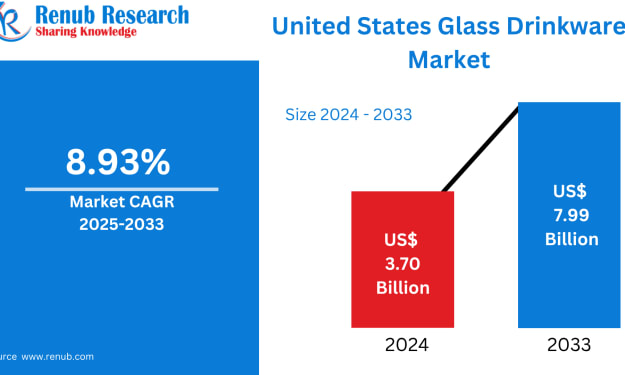
United States Glass Drinkware Market The United States Glass Drinkware Market is expected to reach US$ 7.99 billion by 2033, rising from US$ 3.7 billion in 2024, at a CAGR of 8.93% from 2025 to 2033. Growing consumer awareness of sustainability and reusable materials, the expansion of the hospitality and beverage industries, and the desire for high-end, fashionable glassware in both homes and foodservice settings are the main factors propelling the U.S. glass drinkware industry.
By jaiklin Fanandish3 days ago in FYI



Comments
There are no comments for this story
Be the first to respond and start the conversation.