
Saudi Arabia Biodegradable Plastic Market Set for Transformative Growth Through 2033
Sustainability Goals, Regulatory Push, and Industrial Adoption Accelerate the Kingdom’s Shift from Conventional Plastics

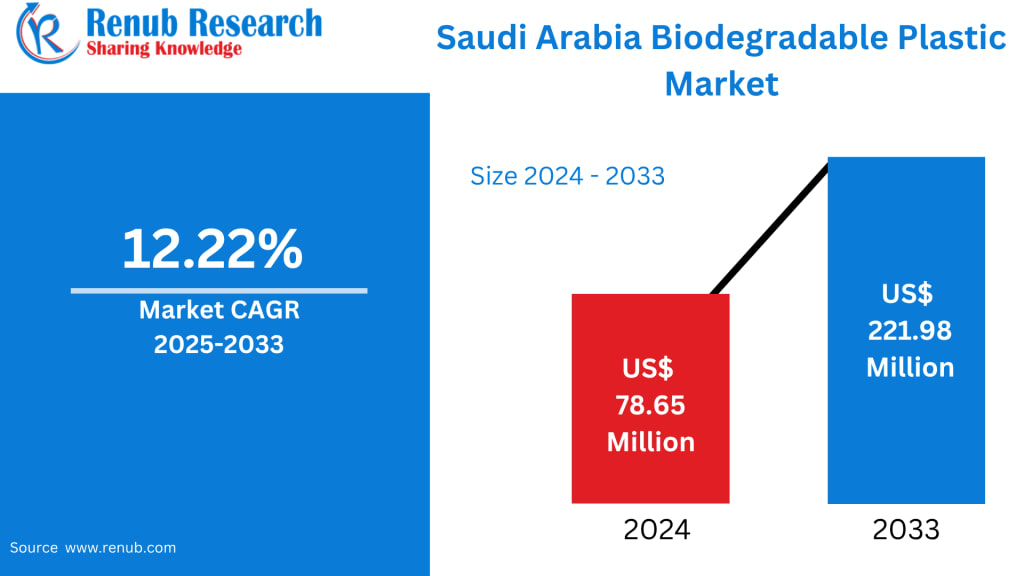
The Saudi Arabia Biodegradable Plastic Market is entering a defining decade of transformation. According to Renub Research, the market is expected to reach US$ 221.98 million by 2033, rising sharply from US$ 78.65 million in 2024, registering an impressive CAGR of 12.22% from 2025 to 2033.
This sharp rise reflects a fundamental shift in how Saudi industries, consumers, and policymakers view plastics, sustainability, and waste management. Environmental concerns, particularly linked to single-use plastics, are now pushing companies and regulators toward greener, more responsible material options. The rapid expansion of the packaging industry, coupled with rising adoption in agriculture and consumer goods, further strengthens the demand outlook for biodegradable plastics in the Kingdom.
Saudi Arabia Biodegradable Plastic Market: A Sector in Transition
Saudi Arabia is taking concrete steps toward environmental responsibility as part of its Vision 2030 program. As industries move away from conventional plastics—which contribute significantly to land and marine pollution—biodegradable plastics are emerging as a key solution.
The biodegradable plastics sector in Saudi Arabia is driven by three core pillars:
Growing environmental awareness
Supportive regulations and certifications
Expanding applications in packaging, agriculture, and consumer products
As local manufacturers, government institutions, and global chemical companies collaborate, the Kingdom is seeing rapid innovation in material science, product development, and commercialization of bioplastic solutions.
However, unlike traditional plastics, biodegradable alternatives require specific conditions for decomposition, and Saudi Arabia’s waste-processing infrastructure is still evolving. With proper investments in composting and recycling systems, as well as stronger policy integration, the biodegradable plastics ecosystem could expand even faster.
Environmental Responsibilities Driving Change
1. Sustainability Objectives and Rising Environmental Awareness
Growing environmental awareness—both globally and domestically—is reshaping consumer attitudes in Saudi Arabia. As the impacts of plastic pollution become more visible, especially in marine ecosystems along the Red Sea and Arabian Gulf, consumers and businesses are seeking sustainable alternatives.
Saudi Arabia’s commitment to sustainability is not merely rhetorical. The Kingdom’s Vision 2030 and the Saudi Green Initiative both emphasize:
Waste reduction
Eco-friendly materials
Resource efficiency
Sustainable manufacturing
Biodegradable plastics fit perfectly within these objectives, serving as a credible alternative to traditional plastics that persist for hundreds of years.
Consumer attitudes are evolving as well. Households, retail chains, and food-service brands increasingly seek biodegradable bags, cups, containers, and packaging. This behavioral shift is expected to remain one of the strongest demand drivers through 2033.
2. Regulatory Push and Government Policies
Government regulations are a pivotal force shaping the Saudi biodegradable plastics market.
Authorities are steadily restricting single-use plastics, imposing fees, and encouraging the adoption of biodegradable alternatives. The Saudi Standards, Metrology and Quality Organization (SASO) has already introduced guidelines and certifications to verify biodegradability, compostability, and product quality.
Key regulatory developments include:
Gradual bans on non-biodegradable plastic bags in supermarkets
Mandatory SASO certifications for biodegradable materials entering the market
Incentives for companies adopting sustainable packaging
Alignment with global circular-economy principles
These policies are driving businesses—particularly in retail, packaged goods, and food services—to switch from conventional plastics to biodegradable solutions.
The regulatory push is expected to intensify over the next decade, accelerating adoption across multiple sectors.
3. Rising Demand in Packaging and Agriculture
Packaging remains the largest application segment for biodegradable plastics in Saudi Arabia.
Major uses include:
Food packaging
Retail bags
Bottles and containers
Film wraps
Personal-care and household products packaging
Consumers increasingly favor eco-friendly packaging, and brands are responding by adopting materials such as PLA, PHA, PBAT, and starch blends.
In agriculture—a sector with high plastic consumption—biodegradable mulch films, plant pots, and agro-waste bags are gaining rapid traction. These products not only reduce soil contamination but also eliminate the need for labor-intensive removal of plastic residues.
The agriculture and packaging sectors together are creating robust demand momentum, reinforcing biodegradable plastics as a long-term growth market in the Kingdom.
Challenges Slowing Market Expansion
1. Limited Consumer Awareness
Despite growing interest, many Saudi consumers remain unclear about:
How biodegradable plastics work
Correct disposal methods
Differences between compostable, oxo-degradable, and biodegradable materials
Misuse—such as disposing biodegradable plastics in regular landfills—reduces their environmental effectiveness. Without proper consumer education, demand growth could be slower than expected.
Stakeholders agree that awareness campaigns, labeling clarity, and consistent messaging are essential.
2. Regulatory and Certification Complexities
SASO certifications, while necessary, can be:
Time-consuming
Costly
Operationally challenging
Smaller companies may struggle to meet the stringent testing and documentation requirements. The lack of global standardization on biodegradability criteria further complicates matters for manufacturers aiming to export.
Streamlined regulatory procedures and improved technical guidance could help accelerate the entry of new biodegradable plastic products into the Saudi market.
Regional Insights: How Key Cities Are Shaping Market Growth
Biodegradable plastic adoption in Saudi Arabia varies significantly across regions, with major economic hubs leading the shift toward sustainable materials.
Dammam: A Thriving Industrial Hub
Dammam, situated in the Eastern Province, plays a vital role in the materials supply chain thanks to its proximity to the King Fahd Industrial Port.
Key drivers in Dammam include:
Strong logistics connectivity
Rapid adoption in packaging and consumer goods
SASO-certified biodegradable products entering local markets
Increased sustainability focus in industrial clusters
However, Dammam still needs more robust waste management and composting infrastructure to fully utilize biodegradable plastics’ environmental advantages.
Riyadh: The Center of Policy, Commerce, and Innovation
As the capital and business epicenter, Riyadh is a major driving force behind the Kingdom’s shift to sustainable materials.
Riyadh’s biodegradable plastics market is strengthened by:
Large consumer population
Expanding retail and food-service sectors
Government-led environmental initiatives
Industry events such as the ECOPLAS Forum
Adoption of materials like PLA, PHA, PBAT, and starch blends
Retailers and FMCG brands in Riyadh are increasingly switching to biodegradable packaging to comply with regulations and appeal to eco-conscious consumers.
Still, high material costs and insufficient waste processing infrastructure remain challenges.
Jeddah: A Commercial and Gateway City Embracing Sustainability
Jeddah, with its extensive commercial activity and strategic Red Sea port, is rapidly adopting biodegradable plastics.
Key factors shaping growth:
Strong demand in food services and packaging
Support from the Saudi Green Initiative
Plans to reduce plastic waste by up to 40% by 2030
Adoption of bio-based materials across agriculture and retail
Jeddah’s market growth is significant but slowed by higher production costs and limited composting facilities. With improvements in local waste-management infrastructure, Jeddah is positioned to become one of the most robust markets in the Kingdom.
Market Segmentation Overview
By Material Type (Market & Volume)
Polybutylene adipate terephthalate (PBAT)
Polybutylene succinate (PBS)
Polylactic acid (PLA)
Polyhydroxyalkanoate (PHA)
Starch Blends
Others
By Application
Packaging
Agriculture
Consumer Goods
Others
By State
Dhahran
Riyadh
Khobar
Jeddah
Dammam
Others
Key Companies Covered
Each company includes: Overview, Key Persons, SWOT Analysis, Recent Developments, Revenue Analysis, and Strategic Direction.
Total Corbion
Mitsubishi Chemical Holding Corporation
Toray Industries
BASF SE
Green Dot Bioplastics
Amcor Limited
These major players are focusing on expanding production capacity, increasing local partnerships, and innovating new materials tailored for Saudi industrial and environmental requirements.
Final Thoughts: A Market Poised for Sustainable Transformation
The Saudi Arabia Biodegradable Plastic Market is on a strong upward trajectory. With a 12.22% CAGR through 2033 and market size expected to surpass US$ 221 million, the Kingdom is rapidly moving toward a circular, sustainable material ecosystem.
However, for Saudi Arabia to unlock the full potential of biodegradable plastics, three strategic priorities are essential:
Strengthening waste management and composting infrastructure
Enhancing consumer education and corporate awareness
Streamlining regulatory and certification processes
If these challenges are addressed, Saudi Arabia could evolve into a regional leader in biodegradable materials—aligning economic expansion with environmental responsibility and shaping a greener future for the Middle East.
About the Creator
Ben Tom
Ben Tom is a seasoned content writer with 12+ years of experience creating SEO-friendly blogs, web copy, and marketing content that boosts visibility, engages audiences, and drives results.
A Failed Artist, A Disillusioned Poet, An Underpaid Game Show Host
I took my son and niece to Gori, a small town in Georgia where Joseph Stalin was born. They talked me into visiting the Stalin's Museum, the largest in the post-Soviet space. I had resisted going there because I just can't stand the monster and know enough about him, or so I thought.
By Lana V Lynx6 days ago in FYI
United States Glass Drinkware Market Size and Forecast 2025–2033
United States Glass Drinkware Market The United States Glass Drinkware Market is expected to reach US$ 7.99 billion by 2033, rising from US$ 3.7 billion in 2024, at a CAGR of 8.93% from 2025 to 2033. Growing consumer awareness of sustainability and reusable materials, the expansion of the hospitality and beverage industries, and the desire for high-end, fashionable glassware in both homes and foodservice settings are the main factors propelling the U.S. glass drinkware industry.
By jaiklin Fanandisha day ago in FYI



Comments
There are no comments for this story
Be the first to respond and start the conversation.