
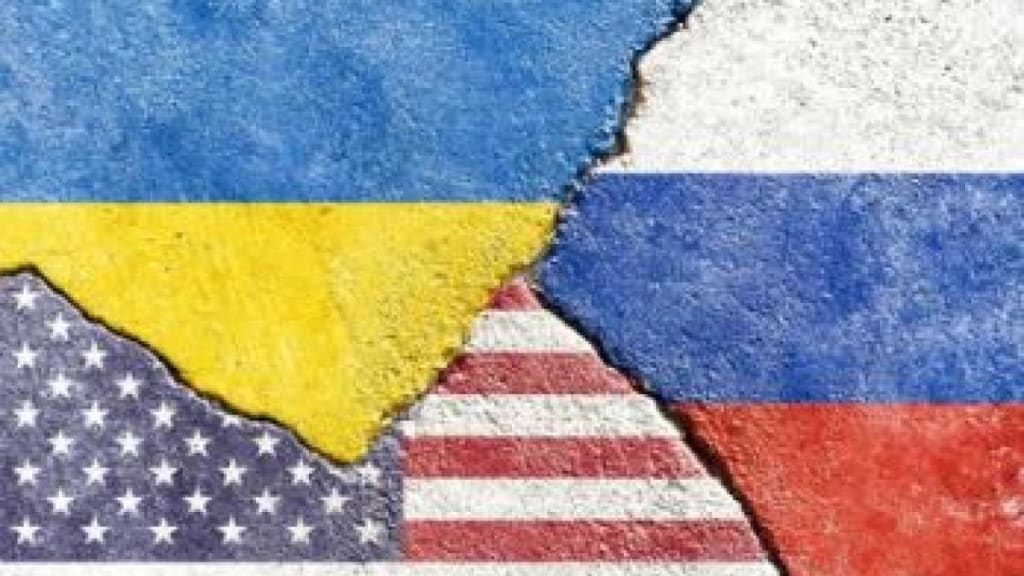
The relationship between Russia and Ukraine has been a complex and contentious one for centuries, marked by a history of territorial disputes, cultural differences, and political tensions. In recent years, the conflict has escalated into a full-blown crisis, with both countries engaging in military confrontations, economic sanctions, and propaganda wars.
To understand the current situation between Russia and Ukraine, it is essential to look back at their historical relationship. Ukraine has been part of the Russian Empire since the 17th century, and later part of the Soviet Union. In the 20th century, Ukraine gained independence from the Soviet Union in 1991 after the collapse of communism, but the two countries still maintained close ties. However, the relationship between Russia and Ukraine took a drastic turn in 2014, following a political crisis in Ukraine.
The Ukrainian political crisis began when then-president Viktor Yanukovych, who had close ties to Russia, was overthrown in a revolution led by pro-European Union protesters. Russia, fearing the spread of pro-Western influence in Ukraine, responded by annexing Crimea, a Ukrainian peninsula on the Black Sea with a majority of Russian-speaking residents. This move was met with widespread condemnation from the international community, and the United States and European Union imposed economic sanctions on Russia.
The annexation of Crimea sparked a conflict in eastern Ukraine, where Russian-speaking separatists took control of several regions. The Ukrainian government, with support from the West, launched a military operation to regain control of the territories. The conflict, which has been ongoing since 2014, has claimed over 13,000 lives and displaced millions of people.
The situation in Ukraine has also led to a deterioration in relations between Russia and the West. The United States and European Union have imposed a range of economic sanctions on Russia, including restrictions on trade, banking, and investment. Russia has responded by imposing its own sanctions on Western countries, particularly targeting agricultural products and luxury goods.
The conflict between Russia and Ukraine has also led to a propaganda war, with both sides accusing the other of disinformation and fake news. Russian media has been accused of spreading propaganda about Ukraine, while Ukrainian media has been criticized for biased reporting on the conflict.
Despite efforts to find a diplomatic solution to the conflict, tensions between Russia and Ukraine remain high. In November 2018, Ukraine imposed martial law in several regions following an incident in which Russian naval vessels fired on Ukrainian naval vessels in the Kerch Strait, which separates Crimea from Russia. The incident sparked fears of a wider conflict between the two countries, and there have been reports of increased military activity on both sides.
The situation in Ukraine has also had a significant impact on the country's economy. The conflict has disrupted trade and investment, with many businesses closing or relocating to other countries. The Ukrainian currency, the hryvnia, has lost value, and inflation has risen. The country has also struggled with corruption and political instability, with several changes of government since the revolution in 2014.
Russia has also been affected by the conflict, with economic sanctions taking a toll on the country's economy. The value of the Russian ruble has fallen, and inflation has risen. The sanctions have also made it difficult for Russian businesses to access international markets and finance, leading to a decline in investment.
In conclusion, the conflict between Russia and Ukraine is a complex and contentious issue that has been ongoing for centuries. The annexation of Crimea and the subsequent conflict in eastern Ukraine have led to a deterioration in relations between Russia and the West, as well as significant economic and social costs for both countries. While efforts have been made to find a diplomatic solution to the conflict, tensions between the two countries remain high, and the situation is unlikely to be resolved in the near future.
About the Creator
Keep reading
More stories from Click & Learn and writers in FYI and other communities.
Future of Bitcoin
Bitcoin is a digital currency that has been on the rise since its inception in 2009. Despite its volatile history, it has emerged as one of the most popular cryptocurrencies in the world, with a market capitalization of over $1 trillion. While the future of Bitcoin is uncertain, there are several factors that suggest that it could continue to grow in the coming years.
By Click & Learn3 years ago in FYI
A Failed Artist, A Disillusioned Poet, An Underpaid Game Show Host
I took my son and niece to Gori, a small town in Georgia where Joseph Stalin was born. They talked me into visiting the Stalin's Museum, the largest in the post-Soviet space. I had resisted going there because I just can't stand the monster and know enough about him, or so I thought.
By Lana V Lynx19 days ago in FYI



Comments
There are no comments for this story
Be the first to respond and start the conversation.