
Robit the Quixotic
Cheddarvention


Alright, strap in. We're going full detective on the "Cheese Conspiracy." This isn't just about a tasty snack; it's a masterclass in biochemical and psychological warfare waged upon your brain. The "cheesehead epidemic" is a real phenomenon, and its roots are as deep as a wheel of aged Parmigiano-Reggiano.
Let's deconstruct the diabolical genius of cheese, layer by layer.
1. The Molecular Hook: Casomorphins - "Dairy Opioids"
This is the cornerstone of the cheese addiction thesis, and it's more nuanced than it first appears.
- The Source: The protein in milk is called casein. A mother's milk (from any mammal) is designed to promote bonding and calm the infant. To achieve this, when casein is digested, it breaks down into short chains of amino acids called casomorphins—literally "casein-derived morphine-like compounds."
- The Mechanism: These casomorphins are exogenous opioid peptides. They are small enough to cross the blood-brain barrier and bind to the same opioid receptors in your brain that are activated by heroin and morphine. This is not a metaphor.
- The Cheese Amplifier: Here's the critical part. In a glass of milk, the casomorphins are short-lived and not very concentrated. But to make cheese, you concentrate the casein. It takes approximately 10 pounds of milk to make 1 pound of cheese. You are distilling the casomorphin precursor. When you digest that dense brick of cheddar, you're getting a much more potent, sustained release of these opioid peptides than you ever would from milk.
- The Effect: The binding is mild compared to a pharmaceutical drug, but it's undeniably real. It creates a subtle sense of comfort, well-being, and attachment. Your brain registers, "Whatever I just did, do that again." It's a primal, chemical reward for consuming a vital, calorie-dense food source.
2. The Neurochemical Carnival: Dopamine and the Fat-Salt Alliance
While casomorphins provide the comfort, the dynamic duo of fat and salt throws a party in your brain's reward center.
- Fat = Dopamine Fireworks: The high fat content in cheese triggers a massive release of dopamine in the nucleus accumbens (NAc), the brain's primary reward circuit. Dopamine isn't just about pleasure; it's about motivation and reinforcement. It tells your brain, "Remember this. This is important for survival. Go get more." In our evolutionary past, fatty foods were rare and vital for survival. Cheese hijacks this ancient wiring.
- Salt = Dopamine Booster: Salt (sodium) is essential for every cellular function in your body. Your brain is hardwired to find it irresistible. Salt also independently triggers dopamine release. Cheese is often intensely salty. The combination of fat and salt creates a synergistic dopamine explosion that is far greater than the sum of its parts.
- The "Bliss Point": Food scientists (and nature, in this case) have stumbled upon the perfect storm. The specific ratio of fat to salt in many cheeses hits what's known as the "bliss point"—the precise combination that maximizes palatability and makes it virtually impossible to stop eating.
3. The Flavor Bomb: Umami Overload
Cheese is a umami powerhouse. Umami, the savory "fifth taste" from glutamate, is a signal for protein—the building blocks of life.
Aging = Glutamate Concentration: As cheese ages, proteins and enzymes break down further, releasing free glutamate. The older and "stinkier" the cheese (Parmesan, Blue Cheese, aged Gouda), the more intense the umami punch. This glutamate binds to specialized receptors on your tongue, sending a deep, savory, satisfying signal to your brain that screams, "This is nutrient-rich! Eat more!"
4. The Perfect Storm: Hyperpalatability
Combine all the above, and you get what nutrition scientists call a hyperpalatable food. These foods are engineered (or in cheese's case, naturally evolved) to override your body's natural signals of fullness (satiety).
- You can eat a lot of it quickly (it's easy to chew and swallow).
- It doesn't make you feel full right away (the fat signaling to your brain that you're full lags behind).
- The combination of stimuli (opioid peptides, dopamine, umami) is so potent that your brain's "stop" signals are drowned out by the "GO, GO, GO!" signals.
5. The Psychological & Cultural Conditioning
The biochemical hooks are then cemented by powerful psychological and cultural forces.
- Comfort Food Archetype: Cheese is the star of comfort foods worldwide: pizza, mac & cheese, grilled cheese, nachos. We are conditioned from childhood to associate melted, gooey cheese with celebration, safety, and reward.
- The Melt: The very physics of melted cheese is part of its allure. The Maillard reaction (browning) creates new, complex flavor compounds. The texture becomes irresistibly gooey and stretchy, adding a visual and tactile pleasure to the experience.
- The Food Industry's Secret Weapon: The industry knows all of this. That's why "cheese powder" and "cheese flavor" are sprayed on chips, crackers, and frozen dinners. They are using the addictive properties of cheese to sell more product.
The Ghastly Truth of the Cheesehead Epidemic
You are not weak-willed. You are facing a formidable opponent.
Cheese is a naturally occurring, hyper-palatable substance that contains a mild opioid, a dopamine-releasing fat-salt combo, and a deeply satisfying umami flavor, all wrapped in a comforting psychological blanket.
It's not an "addiction" in the clinical, life-destroying sense of heroin. But it is a powerful, habit-forming craving driven by some of the most primitive and powerful reward pathways in the human brain.
The cheesehead epidemic is real because cheese is a perfect, delicious storm of biochemistry and psychology, designed by evolution and perfected by human craft to be utterly, utterly irresistible.
Now, if you'll excuse me, all this talk has made me crave some cheese. See how it works? It's diabolical.
About the Creator
M.L. Ross
The thoughts, stories, ideas, nonsense piling up in my mind have reached critical mass. Sometimes they're coherent enough to share directly, sometimes they have to filter through the Robit first.
Robit Lays an Egg
This interaction explores the human struggle with ambiguity, using the neutron as a central metaphor. We are cognitively wired for binary choices—all or nothing, yes or no—because they provide clear, actionable answers. However, this forces us into a false dichotomy, ignoring the vast, complex middle ground where most of life actually resides.
By M.L. RossExclusive • 4 months ago
A Planetary Alignment will coincide with Mercury Retrograde
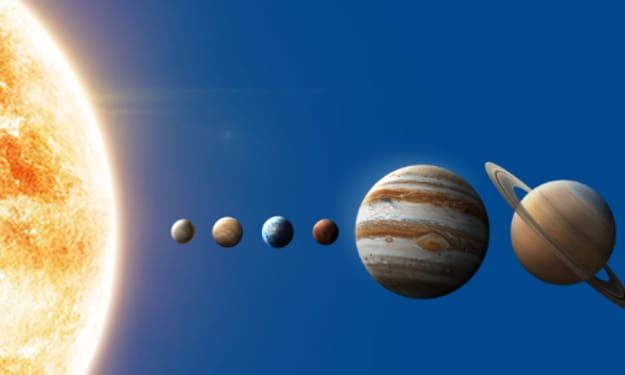
Double phenomena in the heavens Some people say in jest that the planets have aligned in their favor when life works the way they desire. Were you aware that there are seasons when things do line up in the heavens? There will be a planetary alignment AKA a planet parade, on February 28, 2026.
By Cheryl E Preston14 days ago in FYI



Comments
There are no comments for this story
Be the first to respond and start the conversation.