
Revealing the Immunological Vulnerability and Resilience of Babies New Research Unveils Key Findings
Why Babies got so many immunological diseases
Introduction:
Recent ground-breaking studies led by researchers at Columbia University shed light on the development of babies' immune systems and its impact on susceptibility to respiratory infections. Dr.Donna Farber, an expert in immune system development at Columbia University Vage los College of Physicians and Surgeons, spearheaded this research. Through extensive analysis of tissue samples from deceased pediatric organ donors, the studies uncovered distinct aspects of immune system maturation in babies, providing essential insights into their immune response mechanisms.
I. Immune Cell Maturation:
The Key to Understanding Vulnerabilities.
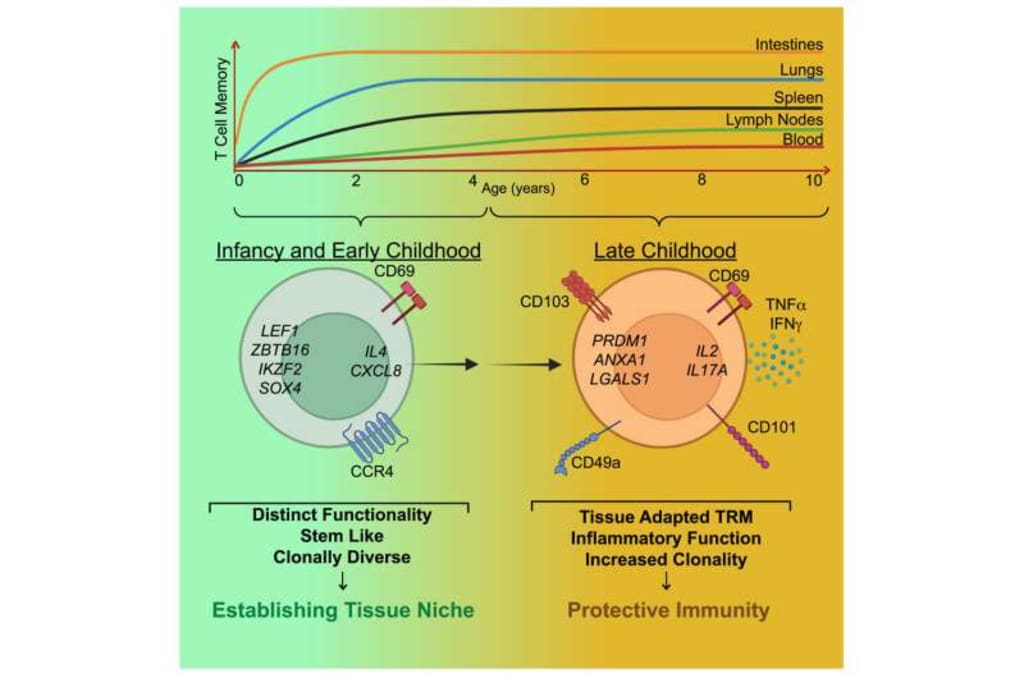
The study published in Immunity focused on memory T cells, specialized immune cells that accumulate after initial pathogen exposure. Researchers discovered that memory T cells accumulate rapidly in the lungs and intestines of babies up to the age of 3, while their development in blood and lymph tissues occurs more gradually. Surprisingly, these cells only gain functional maturity and the capacity for protective immunity around ages 4 to 6 years.
II. Vulnerabilities of Young Children to Respiratory Infections
Dr.Farber points out that the delayed maturation of memory T cells in young children might explain their heightened vulnerability to recurrent respiratory infections and other infectious diseases when compared to adults. Additionally, this finding may offer insights into preventing severe food allergies, as early memory T cells show greater tolerance to new foods, preventing adverse immune responses.
III. Babies' "Secret Weapon" Against New Pathogens
The second study, featured in Nature Immunology, revealed a fascinating aspect of babies' immune response. The research uncovered specialized clusters of antibody-producing B cells surrounded by T cells in the infants' lungs, identified as bronchus-associated lymphoid tissue (BALT). This unique BALT formation typically occurs between 6 and 12 months of age and gradually disappears after age 3.
IV. BALT: An Early Adaptation for Respiratory Pathogens
Dr.Farber explains that BALT plays a crucial role in enabling the lungs to produce antibodies against respiratory pathogens even before T cell memory fully develops. This early adaptation empowers young children to respond effectively to the diverse range of respiratory pathogens encountered in their early years. Interestingly, this mechanism could also account for young children's resilience to new respiratory infections, including the SARS-CoV-2 virus responsible for COVID-19.
V. Potential Links to Chronic Asthma and Allergies
The persistence of BALT into later childhood may hold implications for the development of chronic asthma and allergies. Dr. Farber proposes that the abnormal persistence of BALT might lead to an overreaction to certain antigens, potentially triggering these conditions.
VI. Insights for Vaccine Development
The research findings have potential implications for vaccine development strategies. Dr.Farber highlights that the study's results could offer insights into why early trials of intranasal COVID vaccines have not shown significant promise in adults. Conversely, intranasal influenza vaccines tend to be more effective in children, possibly due to the presence of BALT structures in their lungs, which can initiate new antibodies.
VII. The Crucial Role of Childhood Vaccination
Dr.Farber emphasizes the vital importance of childhood vaccines in safeguarding children from infectious diseases. Before vaccines were available, a significant number of children faced mortality due to infectious diseases during infancy. Childhood vaccination has played a pivotal role in reducing mortality rates and preserving children's health.
Conclusion:
The ground-breaking research conducted by Columbia University researchers provides essential insights into the development of babies' immune systems, uncovering both vulnerabilities and strengths. Understanding the distinct characteristics of memory T cells and the significance of BALT structures contributes to the knowledge of babies' immune response mechanisms. Moreover, the findings may offer potential strategies for preventing severe food allergies and enhancing vaccine development. As scientists continue to explore the complexities of the immune system, advancements in childhood health and disease prevention remain promising. Ultimately, the widespread practice of childhood vaccination stands as a critical measure to protect young lives from infectious diseases and ensure a healthier future.
About the Creator
Keep reading
More stories from writers in FYI and other communities.
A Failed Artist, A Disillusioned Poet, An Underpaid Game Show Host
I took my son and niece to Gori, a small town in Georgia where Joseph Stalin was born. They talked me into visiting the Stalin's Museum, the largest in the post-Soviet space. I had resisted going there because I just can't stand the monster and know enough about him, or so I thought.
By Lana V Lynx25 days ago in FYI
The Rise of AI Agents at Work
For years, businesses have invested in software to speed things up. Tools to manage tasks. Tools to track progress. Tools to automate steps. Yet despite all this technology, work often still feels slow, fragmented, and dependent on human follow-ups.
By Wama Sompura4 days ago in FYI




Comments (1)
It is indeed an informative article .