


Why in the world would anyone want to ban alcohol? Well, a lot of people did around the start of the 20th century. So much so that The Prohibition act was ratified in 1919, and enacted into law by 1920 under the 18th amendment to the American constitution. For the next 12 years, the manufacturing, sale and transportation of alcohol was outlawed. You may already know a little bit about prohibition, but there are some interesting facts that might surprise you.
For instance, did you know that at no time during prohibition was it illegal to consume alcohol? That's right. You could pretty much drink all you wanted as long as you weren't caught buying or selling it, manufacturing it in large quantities, or transporting it to wherever you were planing to get your drink on. The prohibition act only banned the manufacturing, selling and illegal transportation of intoxicating liquors.
The Volstead act was written along side the Prohibition act. It provided many loopholes to ensure that enough of the good stuff would still be produced for medical research, medicinal use, and religious sacraments. The Volstead act also defined what "intoxicating liquors" actually were. Under this this act any head of house hold could produce up to 200 gallons of wine per year for personal use, your doctor could write you a prescription for it, or you could start going to mass several times a day to get your fix. The act was vetoed at first, but congress soon overruled the veto, signing The Volstead Act into law.
During this time, some businesses had to get creative to stay alive. For example, vineyards began selling "grape bricks" or grape concentrate. Along with these bricks of solid grape, there would be instructions on how to NOT turn them into wine. They were very specific instruction on what you should absolutely not do to accidentally turn them into an intoxicating substance. Very creative.
Furthermore, to this date, the 18th amendment has been the only amendment to be repealed from the constitution. Prohibition lasted only 13 years, until a man named Franklin D Roosevelt ran for president and campaigned for its repeal in 1932. He felt that the initial intents and purposes behind prohibition were backfiring and instead were causing an eruption of organized crime, corrupt politics, illegal manufacture and most importantly illegal sale of alcohol, which was not being taxed. It was estimated that alcohol sales generated 3 billion dollars on the black market. That's a lot of money today in the 20's never mind the 1920's. So on December 5th, 1933, F.D.R and his administration repealed the 18th amendment! To usher in the end of prohibition it is said that F.D,R proclaimed, "What America needs now is a drink!"
Another cool factoid is that women were largely at the forefront promoting prohibition. Their passionate demonstrations caught the attention of male voters who were also lobbying for prohibition. No, not that kind of attention. These men put their heads together and formed a new opinion about a woman's right to vote. They correctly observed that by obtaining these women's votes they could greatly help their cause. These demonstrations segued into Women's Suffrage rallies, and a major historical victory occurred in 1920 when women gained the national right to vote! Amen sisters! I guess banning alcohol wasn't all doom and gloom
Since we are talking about women, we may as well talk about how they helped to break gender barriers long before the feminist movement started in the 70's. Speakeasies were the slag term for underground establishments, or night clubs, that had live music and sold booze. Before prohibition there was a saloon culture that men were enjoying, but women were largely excluded from. There were women who were tired of their drunk husbands and then there were women who wanted in in the fun. These young women of the 1920's began to pave the way for gender equality by frequenting these establishments with their male peers. These clubs were nor exclusive to men, and women were finally allowed to join the party. Hooray!
The 1920's were a roaring good time, and prohibition was a big part behind some cultural changes that were taking place. While it's true there was some unfortunate propaganda that targeted blacks and immigrants as the evil, bottom-dwelling drunks of society, there were also some positive things that helped spur the idea of breaking down the barriers of segregation.
At the beginning of prohibition a new sound was coming to life. That sound was called jazz music. Its popularity really started to take off in the Harlem night clubs, often called black and tan clubs, because white and black men and women all gathered there to have a couple drinks, listen to jazz and start creating awesome new dance styles, such as the Lindy Hop. While the music was commonly associated with African American musicians, the dances along with the music were open for all to enjoy. Young people of that era couldn't get enough and it soon began a dance craze that spread across the nation. It was a small step towards racial integration long before the Civil Rights movement.
While we are safe for now, and can legally consume alcohol responsibly i most areas of America, don't take this freedom for granted. A Century later, people are still in cahoots over liquor laws. The second section of the 21st amendment, which repealed prohibition, gave states the power to make their own liquor laws and regulations. There are still some "dry" counties out there that have different regulations on when and how much a person is a allowed to buy or sell alcohol. For example, when I was in college in East Texas, alcohol was not sold on Sundays. So.....we just drove across state lines if we really wanted to party.
As you can see, prohibition was so much more than just a ban on the manufacturing, sale and transportation of alcohol in America. Prohibition planted the seeds for women's rights, racial integration, some of the best music ever to be produced and so much more. It's amazing how something can be intended for one purpose and end up being the spark that ends up changing society as we know it today.
I hope you enjoyed reading these interesting facts about this often misunderstood era of history. If you enjoyed this story please show some love by clicking the heart or sharing it with a friend. If you are feeling extra inspired or generous, any tip is greatly appreciated. You can find this story along with many others if you follow me on twitter @MissWendy1980 . Thanks for reading! Be kind to one another and have an excellent day!
About the Creator
Wendy Sanders
I was born to create. I am an artist and writer from the central coast of California with a dash of the Deep South and a pinch of the pacific northwest for extra flavor. Follow me @MissWendy1980 on twitter
Keep reading
More stories from Wendy Sanders and writers in FYI and other communities.
Spruce up for Spring
Here you are emerging from an entire year of limitations and life changes. There isn't one person one this earth who hasn't been effected by the Covid pandemic. You aren't alone. Our life was turned upside down, and now we are gradually making our way back to a new normal...whatever that may be. Things will never be exactly as they were, and I have come up with a fun strategy to start getting your life back on some sort of track. I love the word spring almost as much as I love the season. Let me show you how the very word itself let me embrace a new concept of "spring cleaning" to reorganize my life.
By Wendy Sanders5 years ago in Motivation
A Planetary Alignment will coincide with Mercury Retrograde
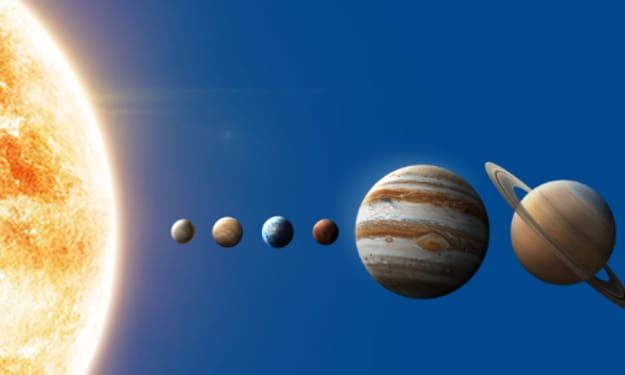
Double phenomena in the heavens Some people say in jest that the planets have aligned in their favor when life works the way they desire. Were you aware that there are seasons when things do line up in the heavens? There will be a planetary alignment AKA a planet parade, on February 28, 2026.
By Cheryl E Preston7 days ago in FYI
Crude Oil Prices and the Cost of Everyday Survival
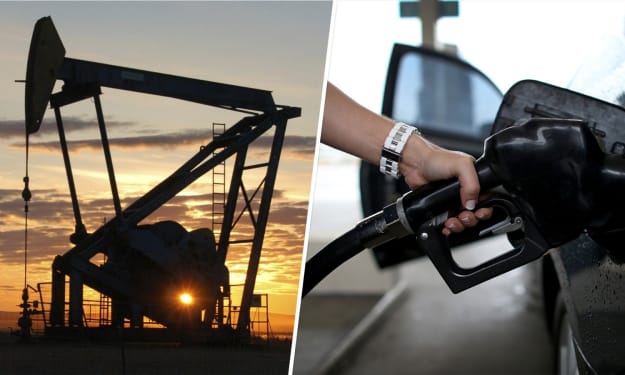
Every morning, before most of us check the weather, global markets are already reacting to crude oil prices. The numbers rise and fall quietly on trading screens, yet they shape how we live. They influence how much it costs to drive to work, ship groceries across states, or heat a small apartment during winter.
By Muqadas khan2 days ago in FYI

Comments
There are no comments for this story
Be the first to respond and start the conversation.