
Paul-Gordon Chandler: How Faith-Based NGOs Are Adapting to a Changing World
Faith-based nonprofit organisations (NGOs) face many unique challenges in today's changing world, including secularisation and today's priorities.

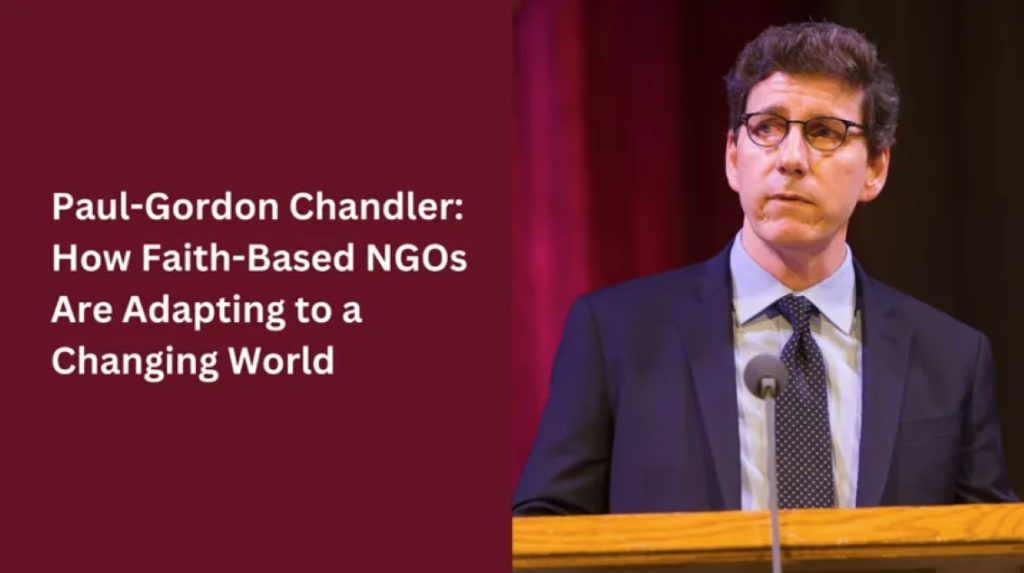
Faith-based nonprofit organizations (NGOs) face many unique challenges in today's changing world, including secularization and today's priorities. While faith is a key principle for these organizations, some NGOs struggle to balance their faith identities with the need to appeal to broader audiences.
Faith-based organizations can learn from Paul-Gordon Chandler, the founding president of CARAVAN Arts, an international cultural nonprofit, who has demonstrated how spirituality can complement humanitarian efforts. His example can be a model for how faith-based organizations don't necessarily have to dilute their faith identity to embrace technology, hone their brands, and continue impacting their communities.
The Role of Faith-Based NGOs in a Changing World
Many faith-based NGOs have deep roots in community engagement, humanitarian aid, and sustainable development. And their ability to adapt to new societal, technological, and political developments while staying true to their core mission is becoming more critical than ever.
Artificial intelligence (AI), hybrid work, and other changes in the business landscape have drastically expanded NGOs' capabilities and potential impacts. At the same time, climate change, political instability, and other global concerns are challenging nonprofits' operations or requiring a shift in focus moving forward.
For example, many NGOs help refugees, immigrants, and others needing emergency aid. As politics, the weather, and other hard-to-predict factors evolve, so, too, must the nonprofit's activities.
Therefore, faith-based nonprofits must be aware of and ready to respond to all opportunities and challenges they encounter. Secularization and misconceptions about their core mission may be some of their more prominent challenges as societal perceptions shift.
Secularization and Its Impacts
Secularization is a complex concept that is interpreted in different ways. Generally, it occurs when an organization, person, or culture gradually separates from a religious affiliation with which they were associated.
From a business perspective, the term might describe an organization, such as a faith-based school, that separates from the religious identity from which it was founded.
Maintaining Faith-Based Identity
Secularization's continued rise in the West and other parts of the world has undeniably changed the landscape for faith-based NGOs. As society has become more polarized, many organizations may find it harder to connect with specific audiences. To navigate these issues, faith-based NGOs must strategically balance their faith-based identities with the need to appeal to a broader audience.
How can leaders and stakeholders bridge the divide, especially when marketing and promoting funding opportunities? Some have maintained their faith identities but limited how much they publicly focus on them, such as avoiding religiously affiliated symbols. While a cultural rather than a faith-based nonprofit, CARAVAN shows us how a focus on the tenets of peace, harmony, and wholeness—spiritual but not religious themes—has a universal appeal.
The Changing Donor Landscape
Why is this important? Because faith-based NGOs require funding to achieve their mission, and they need to understand how to connect with a broader donor base to get it. First is the need to embrace technology.
Allowing digital donations and communicating frequently with their constituents through social media and email campaigns is now part of the course. However, they may also want to consider generational differences, as statistics suggest that religious affiliation is declining and younger donors care more about their gift's social and humanitarian impact. Donors want to make sure their money is supporting change. For example, CARAVAN's motto is 'transformation through the Arts.'
Why Interfaith Collaboration Matters
More faith-based NGOs are embracing interfaith collaboration as they recognize that working together can expand their impact across communities. For example, Paul-Gordon Chandler is curating an exhibition titled 'NOAH: A Future Hope,' where premier contemporary artists from Christian, Muslim, and Jewish traditions are together to address the challenges of climate change and environmental sustainability. It is an inspiring example of faith-based NGOs partnering across faith divides to address global issues while avoiding some of the challenges of secularisation.
About Paul-Gordon Chandler
Paul-Gordon Chandler is a nonprofit executive, art curator, author, and the founding president of CARAVAN Arts. This international nonprofit uses the arts to build bridges between diverse peoples, cultures, and spiritual traditions. He has spent many years studying how different cultures approach the spiritual dimension of life and focuses on using the arts to build bridges to further our global quest for a more harmonious future, both with each other and with the earth. Learn more about CARAVAN's work.
Published by: https://www.hngn.com/articles/264896/20250224/paul-gordon-chandler-how-faith-based-ngos-are-adapting-changing-world.htm
About the Creator
Paul Gordon Chandler
Paul-Gordon Chandler is an author, art curator, non-profit executive, interfaith peacemaker, intercultural bridge-builder and an authority on the Middle East, Africa and Christian-Muslim-Jewish relations. He grew up in Senegal, West Africa.
Keep reading
More stories from Paul Gordon Chandler and writers in FYI and other communities.
Beyond Boundaries: Paul-Gordon Chandler’s Vision for a Global Interfaith Community
Paul-Gordon Chandler is an author and interfaith peacemaker noted for using the arts to build bridges of peace. Chandler founded CARAVAN Arts and has dedicated much of his life to furthering understanding and harmony between peoples, cultures and faiths, both as an art curator and a minister. His vision for the future is shaped by a desire to see our world become a more harmonious place.
By Paul Gordon Chandler11 months ago in FYI
A Failed Artist, A Disillusioned Poet, An Underpaid Game Show Host
I took my son and niece to Gori, a small town in Georgia where Joseph Stalin was born. They talked me into visiting the Stalin's Museum, the largest in the post-Soviet space. I had resisted going there because I just can't stand the monster and know enough about him, or so I thought.
By Lana V Lynx21 days ago in FYI
The Rise of AI Agents at Work
For years, businesses have invested in software to speed things up. Tools to manage tasks. Tools to track progress. Tools to automate steps. Yet despite all this technology, work often still feels slow, fragmented, and dependent on human follow-ups.
By Wama Sompuraabout 3 hours ago in FYI


Comments (1)
Those are some great NGOs! Great work!