
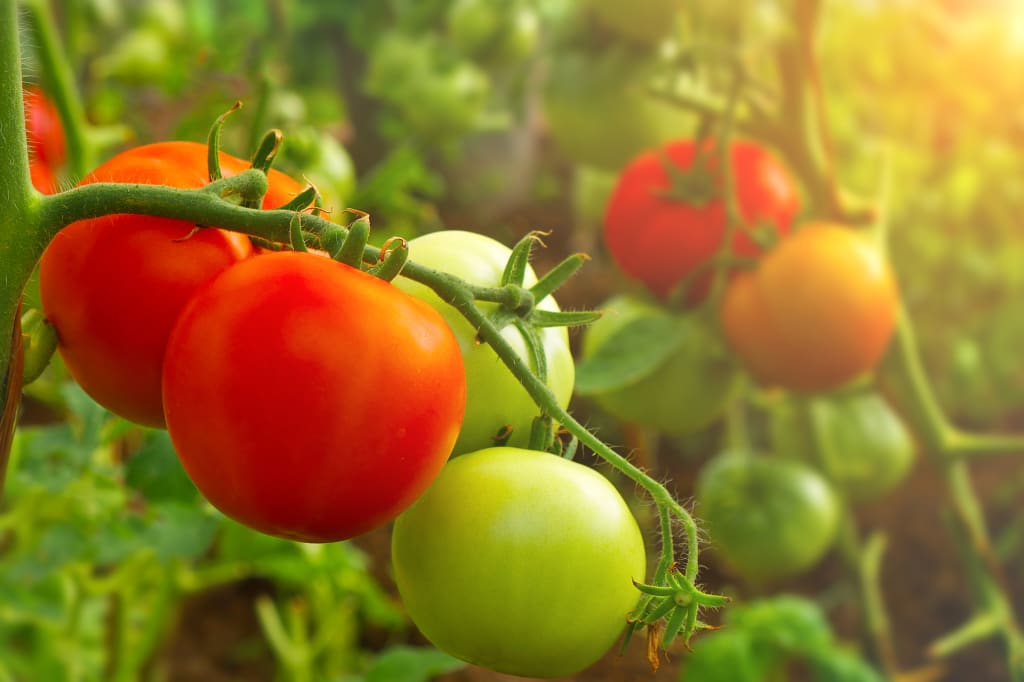
The tomato, is it a fruit or is it a vegetable? Those of us that are logically minded would say fruit because by definition fruits are the products that bloom from a plant. Whereas vegetables are the other parts of the plant; root, stem, leaf, etc. Those of us that are practically minded would say vegetable because culinarily speaking tomatoes have more of a savory taste and are used most commonly in a side dish or main course. The truth of the matter is that both parties are correct.
Peppers, cucumbers, squash, and olives are all examples of fruits that are misclassified as vegetables on a daily basis. However, none of these products has ever had their classification argued in open court. The history of this case truly begins in 1839 when John Nix founded the John Nix and Co. Fruit Commission in New York City. Nix and Co. was one of the first companies to ship produce from Virginia, Florida, and Bermuda into New York. The ability to sell seasonal fruits and vegetables year round quickly made John Nix one of the leading produce markets in all of New York City.
Things only began to sour when President Chester A. Arthur signed the Tariff Act of March 3, 1883. This act required that a ten percent tax was to be paid on imported fresh vegetables. However, there was no provision for the taxation of imported fresh fruits.
In 1886 Nix and Co. began importing tomatoes from the West Indies. Edward L. Hedden was the tax collector for the Port of New York and he firmly believed that tomatoes were vegetables. Responsibly, he collected the ten percent tax on all of their shipments. Nix and Co. tried to protest this for the entire year but were not successful in getting the tax waived. They presented their case to the local courts on February 4, 1887. Their argument was that since tomatoes were, botanically speaking, fruits they deserved to have their taxes refunded.
Nix and his council cited the definitions for the words "tomato", "fruit", and "vegetable" as their only supporting defense. Hedden and his council used a similar approach and cited the words "pea", "cucumber", "squash", "eggplant", and "pepper". All of these are examples of botanical fruits that were culinarily classified and taxed as vegetables. No further evidence was submitted by either party. The courts at the local level sided with Hedden and dismissed John Nix's petition for the return of his taxes.
Outraged by the first verdict Nix and Co. took the case further and presented their argument to the Supreme Court in 1893. Nix and Hedden presented the same arguments before the Supreme Court Justices in April. After sixteen days of deliberating it was unanimously decided that the tomato is in fact both a fruit and a vegetable depending on the context in which it is being discussed. Botanically speaking, the tomato is a fruit of the vine. Legally speaking, the tomato is a vegetable due to the fact that it is eaten as a main course and not a dessert.
With the exception of John Nix, society had no reaction to this verdict. Tomatoes were being enjoyed as a dietary staple and no amount of argument would be able to change that. In my view, the classification of the tomato is irrelevant because it is the most versatile of all produce. They can be enjoyed fresh or cooked, sweet or salty, plain or dressed. They can be enjoyed in a Bloody Mary or in a sauce. Tomatoes are called for in the recipes for dishes from almost every culture in the world. What truly makes the tomato special is that it provides intellectual and dietary nourishment all in one serving.
About the Creator
Emma Barfield
I'm just a small town girl trying to make it in the big city. Always looking for inspiration to see if I have any stories worth telling.
Keep reading
More stories from Emma Barfield and writers in FYI and other communities.
All The Little Things
The old couch in the corner starts to swim before my eyes. The dust filled air and the light filtering in through the old windows gives everything an aged yellow hue. I can’t believe we let Aunt Lou become such a packrat. We knew she was dying, but we couldn’t bring ourselves to prepare. She died almost a year ago and we’re still sorting through all of her things. The thought sent a jolt of pain to my heart. Almost a year and I miss her everyday. My mom said it would pass with time, but I still feel her absence everyday. I look up to stop the tears from falling knowing that if I start the garage will never be emptied. Everything that was fit to be given was claimed by Aunt Lou’s friends and our relatives months ago. All that’s left is the odds and ends that nobody seems to want. I know it’s all junk and most of it will need to be thrown away. But I couldn’t bring myself to do that. I can still feel her here amongst all of her things. How could I part with even one little thing if looking at it would summon her spirit?
By Emma Barfield5 years ago in Families
A Failed Artist, A Disillusioned Poet, An Underpaid Game Show Host
I took my son and niece to Gori, a small town in Georgia where Joseph Stalin was born. They talked me into visiting the Stalin's Museum, the largest in the post-Soviet space. I had resisted going there because I just can't stand the monster and know enough about him, or so I thought.
By Lana V Lynx7 days ago in FYI
United States Glass Drinkware Market Size and Forecast 2025–2033
United States Glass Drinkware Market The United States Glass Drinkware Market is expected to reach US$ 7.99 billion by 2033, rising from US$ 3.7 billion in 2024, at a CAGR of 8.93% from 2025 to 2033. Growing consumer awareness of sustainability and reusable materials, the expansion of the hospitality and beverage industries, and the desire for high-end, fashionable glassware in both homes and foodservice settings are the main factors propelling the U.S. glass drinkware industry.
By jaiklin Fanandish2 days ago in FYI
If You Love Me, You'll Do It
I met Jason when I was five years old. I could say that I loved him from the moment I saw him. He was so handsome to me and I felt in awe by his presence. When they introduced him as the new kid in school, I wanted to be his friend right away. I remember it like it was yesterday. I remember his smile and how he didn't seem shy. He appeared confident and ready to learn. I waved at him and said "hello," before anyone else could even say a word. He sat next to me, and I asked him if he wanted to be friends. He looked so happy as he said, "Yes!"
By Sidney Smith (Sid Smith)7 days ago in Fiction




Comments
There are no comments for this story
Be the first to respond and start the conversation.