
Lockdowns are Directing the Evolution of Novel COVID Strains
Halting the spread of this pandemic is important, but we have to understand what lockdowns are do


Everyone in learns, in biology class, that evolution is governed by forces like natural selection. Sometimes natural selection is referred to as "survival of the fittest," though that's not quite right. Fitness merely changes the probability of different traits surviving within a population. But natural selection isn't simply a biological force. It is an environmental force. Fitness changes based on the environment. A trait that's detrimental in one environment might be useful in another. Sometimes the environment changes for natural reasons. Sometimes humans change the environment.
Over the last few months, we've seen a lot of information about new COVID-19 strains. These strains are quite alarming. They're spreading rapidly, and the highly virulent "B.1.1.7" strain of SARS-CoV-2 now being the cause of the majority of new infections in America (New York Times). Part of this evolution is natural. Some of it isn't.
A Changing Environment for COVID
Shortly after the world became aware of the threat of COVID, extreme measures were taken to slow its spread. Lockdowns, mask wearing, and other methods of stalling the spread of COVID are examples of human made changes to the environment. The methods seemed to help, and may be helping in some regions.
Unfortunately, pathogens are generally very quick to adapt. And we've seen a number of novel strains of SARS-CoV-2, the virus that causes COVID. Mutations and difficulties fighting a pathogen aren't unusual, but what's very interesting is that the mutations that have occurred and allowed these novel strains to spread are specifically adaptations that benefit the virus in the new environment that we've created.
Specifically, variations in the structure of the virus are allowing it to become more virulent. One of the most concerning shifts is that the infection in novel strains lasts much longer and the person remains infectious for much longer (Kissler 2021). This adaptation allows the virus to spread more easily in regions where people engage in social distancing and come into contact with each other less frequently.
Wouldn't These Strains Evolve Anyway?
Not necessarily. The issue with highly virulent diseases is that they often burn themselves out. If too many people are infected at once, there aren't enough new hosts to sustain the pandemic. Therefore high virulence isn't often adaptive, and indeed after a pathogen enters a population, it often becomes less virulent over many generations. We're even seeing this evolutionary trajectory in diseases like AIDS (Nature).
SARS-CoV-2 only recently entered into the human population, and so it makes sense that there would be little attenuation. The virus was quite prolific even from the beginning. That the virus is becoming even more prolific as concerning. But it makes sense given the change in environment.
Beyond COVID & Solutions
These concerns extend beyond COVID. Since pretty much every respiratory infection is subject to this new selective pressure, epidemiologists should be concerned about the risk of novel strains of other pathogens, such as B. pertussis, the bacteria that causes Whooping Cough.
From a scientific perspective, we should be looking into B. pertussis and other respiratory infections to see if there are new strains there as well. Not only will we need to do so in order to protect ourselves from being caught off guard by new strains of these diseases, but it would help further test the theory presented in this article that sustained lockdowns shift the trajectory of pandemics in negative ways.
Moreover, we can start to learn how to adjust our methods of handling pandemics like this one. An option that I've mentioned a number of times is to engage in cyclical distancing. One benefit of this form of distancing is that the environment is ever changing. A persistent singular shift in the environment can be overcome as long as enough organisms initially survive. It is much more difficult to adapt to a constantly changing environment.
Further Reading
I will continue to suggest that at the very least, we need better monitoring of infectious diseases like COVID and Whooping Cough. The public health system is simply not doing enough. And if we had this information, perhaps we could have stopped some of these new strains becoming dominant. And while I don't think lockdowns are entirely bad, we could have done better, as I suggested much earlier in this pandemic.
About the Creator
Daniel Goldman
Visit my homepage. I am a polymath and a rōnin scholar with interests in many areas, including political science, economics, history, and philosophy. I've been writing about all of these topics, and others, for the past two decades.
Keep reading
More stories from Daniel Goldman and writers in FYI and other communities.
The Depressing Idea of Hanlon's Razor
Philosophy is a fun topic. Within philosophical discourse, there's a tool known as a "razor." In particular, Hanlon's Razor states that one should never attribute to malice that which can be adequately explained by stupidity. It is one of many "razors" that exist in philosophical discussion, the most well known of which is probably Occam's razor, though there are many others.
By Daniel Goldman5 years ago in FYI
A Planetary Alignment will coincide with Mercury Retrograde
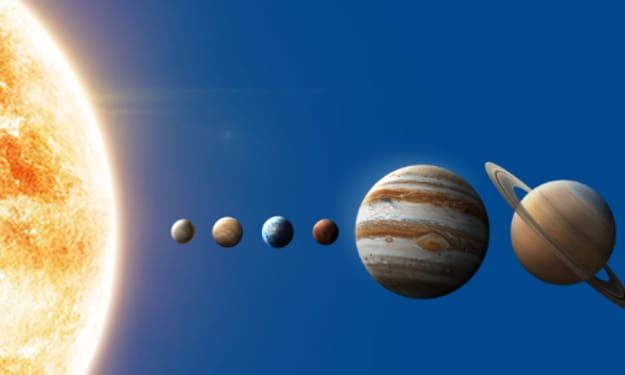
Double phenomena in the heavens Some people say in jest that the planets have aligned in their favor when life works the way they desire. Were you aware that there are seasons when things do line up in the heavens? There will be a planetary alignment AKA a planet parade, on February 28, 2026.
By Cheryl E Preston11 days ago in FYI



Comments
There are no comments for this story
Be the first to respond and start the conversation.