

Introduction:
The absence of sight is a profound challenge that reshapes every aspect of daily life. Living without vision requires an incredible adaptation to a world that is primarily experienced through visual stimuli. This article delves into the multifaceted reality of individuals who are blind, exploring the challenges they face, the adaptive strategies they employ, and the ways society can contribute to creating a more inclusive environment.
The Experience of Blindness:
Blindness is not simply the lack of vision; it is a diverse spectrum that ranges from partial sight to total blindness. For those who have never experienced it, the notion of navigating the world without sight may be daunting. However, it's crucial to recognize that individuals who are blind lead fulfilling lives by developing alternative senses and adaptive skills.
Adapting to a Non-Visual World:
Living without sight necessitates a heightened reliance on the other senses. Blind individuals often develop an acute sense of touch, refined hearing, and an enhanced ability to discern scents. These sensory adaptations become essential tools for interpreting and interacting with the environment. Additionally, advancements in assistive technologies, such as screen readers and Braille displays, have played a pivotal role in bridging the gap between the visually impaired and the visual world.
Education and Employment Challenges:
Blind individuals face unique challenges in the realms of education and employment. Braille literacy, accessible educational materials, and assistive technologies are critical for ensuring equal opportunities in education. Similarly, workplaces need to adopt inclusive practices, providing tools and accommodations to support blind employees in their professional pursuits. Breaking down educational and employment barriers is essential for fostering independence and self-sufficiency.
Independence and Mobility:
One of the most transformative skills for those without sight is mobility. Learning to navigate the world without visual cues involves mastering various techniques, including white canes and guide dogs. Orientation and mobility training empower blind individuals to move confidently and independently, whether through familiar spaces or new environments. It is not just about physical movement but also about mental mapping and spatial awareness.
Technological Advancements:
In recent years, technology has played a significant role in enhancing the lives of the visually impaired. Voice-activated assistants, accessible smartphones, and navigation apps have become indispensable tools for daily tasks, communication, and travel. These technological advancements contribute to increased independence, efficiency, and connectivity.
The Role of Support Systems:
Emotional and social support are crucial components of a fulfilling life for blind individuals. Friends, family, and communities play a pivotal role in providing encouragement, understanding, and assistance when needed. Support groups and advocacy organizations also contribute to creating a sense of community and promoting awareness of the capabilities and challenges faced by the visually impaired.
Cultural Perceptions and Breaking Stereotypes:
Cultural perceptions surrounding blindness often include misconceptions and stereotypes. It is crucial to challenge these preconceived notions and recognize that blindness does not define an individual's capabilities or potential. By promoting awareness and understanding, society can contribute to breaking down barriers and fostering inclusivity. This involves dispelling myths about dependency and embracing the diverse talents and contributions of the visually impaired community.
Creative Expression and Employment Opportunities:
Blind individuals often find innovative ways to express themselves creatively. Whether through music, literature, tactile art, or other forms of expression, the absence of sight does not inhibit the ability to create and contribute to the cultural tapestry. Moreover, it is essential to recognize the diverse talents within the blind community and create more opportunities for their inclusion in various fields.
Conclusion:
Living without sight is undoubtedly a complex journey, but it is essential to recognize the resilience, adaptability, and strength of individuals who navigate the world without the sense of sight. Embracing inclusive practices, leveraging technology, fostering a supportive and understanding community, and breaking down societal stereotypes contribute to creating a world where blindness is not a limitation but a unique aspect of human diversity. As we collectively strive for a more inclusive society, it is vital to acknowledge and appreciate the capabilities and contributions of those living without sight.
About the Creator
A Failed Artist, A Disillusioned Poet, An Underpaid Game Show Host
I took my son and niece to Gori, a small town in Georgia where Joseph Stalin was born. They talked me into visiting the Stalin's Museum, the largest in the post-Soviet space. I had resisted going there because I just can't stand the monster and know enough about him, or so I thought.
By Lana V Lynx26 days ago in FYI
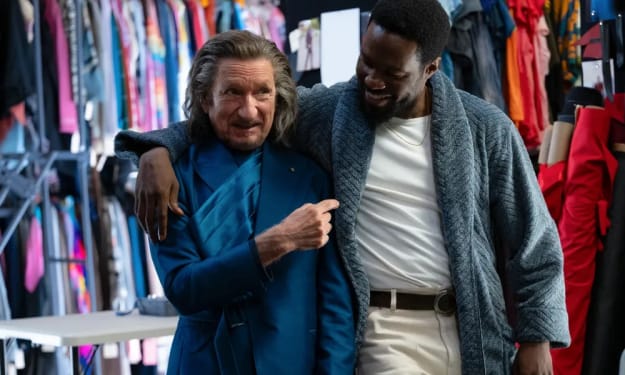
Wonder Man Was Everything I've Missed From Marvel
When I first read that Marvel was developing a show dedicated to Wonder Man, I can't say I had very big expectations as I have no real connection to the character, but the idea of a stuntman turned superhero intrigued me! But having finished the entire show, I can confidently say Wonder Man has set the precedent for what I expect Marvel Studios to release this year, and may be one of my favorite stories the studio has told in the last 7 years. It's no secret that the MCU has been struggling to release worthwhile projects in the aftermath of their colossal saga ending film Avengers Endgame. While there has been some good movies and shows, Marvel studios seemed more interested in quantity over quality, with great projects becoming the exception rather than the rule. This was the opposite of what the Marvel Cinematic Universe had been known for in it's early years , where two films a year made for a sharper more consistent focus that the studio has struggled to maintain.
By Erich Kortum2 days ago in FYI



Comments
There are no comments for this story
Be the first to respond and start the conversation.