
Living Without a Heart
The Incredible True Story and a Troubling Look at Organ Donation

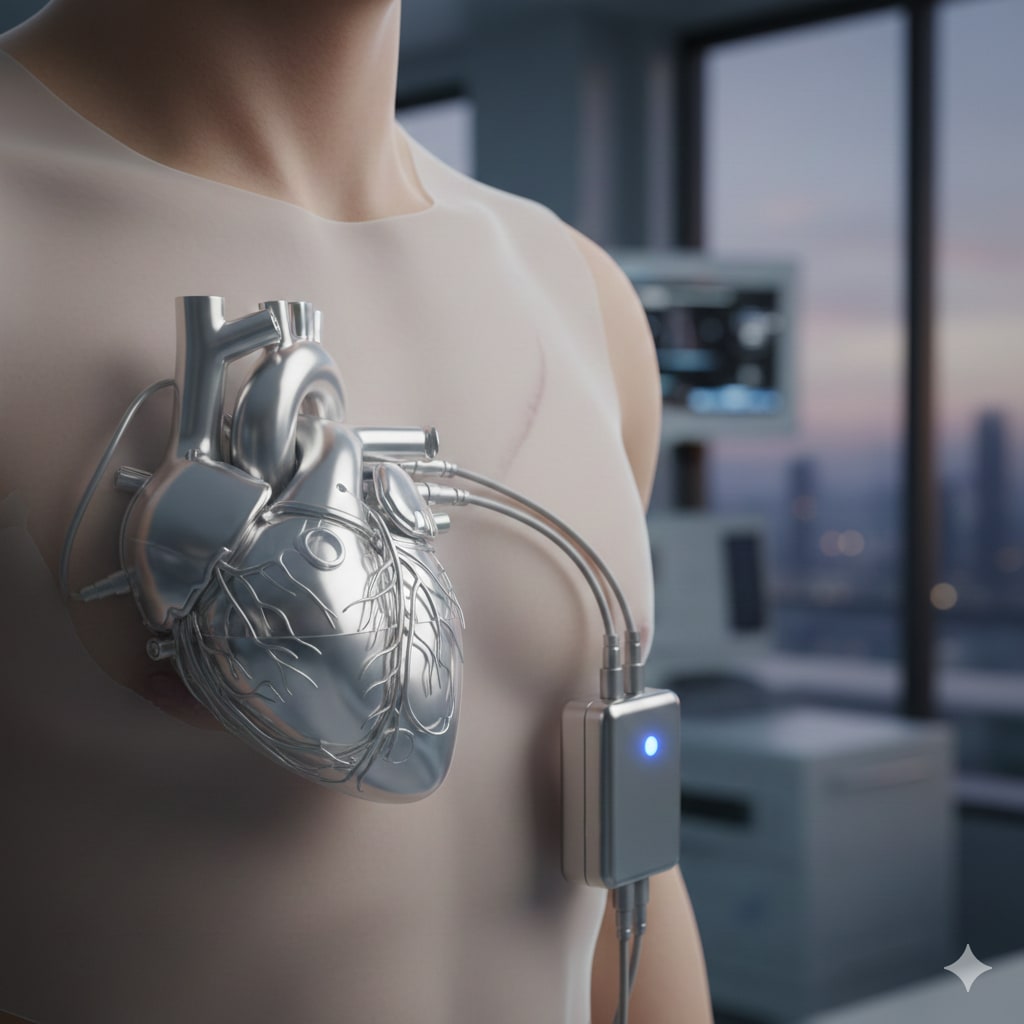
It’s a pretty intense thought: how long can you actually live without your heart beating? Most doctors will tell you that after about three to four minutes without a heartbeat, meaning no blood circulation and no oxygen supply, your brain cells start to die.
That’s why the story of Stan Lin is so mind-blowing. This Michigan man managed to live without a physical heart for a whopping 555 days while he waited for a transplant.
The Problem
Stan Lin’s journey started when he was just 16. After collapsing while playing basketball, doctors diagnosed him with arrhythmogenic right ventricular dysplasia. This is a condition that causes irregular heartbeats and dramatically increases the risk of cardiac arrest. As a temporary fix, a defibrillator was installed to regulate his heart.
However, years later, his condition worsened, and he was placed on the heart transplant waiting list. The issue was that Lin had O-positive blood, the most common type, which meant he wasn’t high on the priority list. Doctors feared he might not survive long enough to receive a new heart.
That’s when a cardiac surgeon, Dr. Jonathan Haft at the University of Michigan hospital, came up with a radical idea: what if Lin could simply live without a heart?
The Solution: Big Blue
In November 2014, Lin’s heart was surgically removed. He was then hooked up to a massive, 418-pound machine nicknamed Big Blue, which functioned as his artificial heart. While the machine worked, it kept him essentially bedridden, unable to move around because of the sheer size and weight of the device he was attached to.
Fortunately, a month later, Lin received a portable artificial heart. This was a recently approved technology that was a backpack version of Big Blue, weighing only about 13 pounds.
Lin recounted to CNN how shocking it was to hear that a machine was going to be his heart. He said, “It feels like a real heart with the backpack.” With this portable device, Lin regained a semblance of a normal life. He was able to play some light basketball and spend quality time with his family. As he described it, “It’s just like a real heart; it’s just in a bag with tubes coming out of you, but other than that it feels like a real heart. It felt just like a backpack with books in it, like if you were going to school.”
There were, naturally, still significant restrictions. He had to take very quick showers due to the electrical nature of the device and couldn’t lift his kids.
A New Beginning
After 555 days of carrying his heart in a bag, Stan Lin finally received a heart transplant in May. At a press conference, he expressed his excitement, saying he looked forward to running a few pickup games once he was healed and ready. “I just want to put the heart to use,” he shared.
Lin’s story is an incredible testament to human resilience and optimism. Living every day with your heart outside your body, tubes connecting you to a machine, is a huge psychological burden. It takes an incredibly tough, determined mindset to get through that experience, and his attitude throughout the ordeal is genuinely inspiring.
The Dark Side of Organ Donation
Lin’s successful transplant highlights the life-saving potential of organ donation, but it also brings a much darker, pressing issue to light.
A major news story recently broke regarding organ harvesting in China. Reports estimate that between 60,000 and 100,000 organs are transplanted each year in Chinese hospitals. This is a massive number, especially considering that China does not have an established, large-scale, voluntary organ donation process like many other countries. The Chinese government’s own numbers claim only about 10,000 voluntary organ donations annually.
The reports allege that the bulk of these organs are systematically harvested from prisoners, particularly prisoners of conscience. These are individuals, often Falun Gong practitioners, Christians, Tibetans, or those with conflicting political views, who are imprisoned not for committing violent crimes, but for their beliefs, faith, or political stances.
The focus is reportedly on these prisoners because, having been locked up for non-crime-related reasons, they generally have very healthy organs. Reports suggest that upon imprisonment, their blood is typed. When an order for a matching organ comes through, the prisoner is executed, and their organs are extracted.
This is not the work of some underground illegal organization; the reports allege that this widespread, systematic organ harvesting is being run by the Chinese government itself.
The discrepancy between the alleged 60,000 to 100,000 transplants and the 10,000 officially reported voluntary donations is a chilling one, suggesting that tens of thousands of people may be killed each year simply for practicing their faith freely or holding their own political views.
It’s a stark reminder that while medical science is achieving miracles like keeping a man alive without a heart for over a year, the ethical issues surrounding organ procurement remain a critical global concern.
About the Creator
Areeba Umair
Writing stories that blend fiction and history, exploring the past with a touch of imagination.
Keep reading
More stories from Areeba Umair and writers in FYI and other communities.
Spooky Saviors: Ghosts Who May Have Saved Lives
Ghosts. Maybe they don’t mean to be terrifying, but often, they are. Think about it: if you wanted someone to do you a favor, wouldn’t you just walk up to them nicely in a well-lit public space and ask? Is it really necessary to suddenly appear in a horrifying way, or, in one famous example, throw up all over someone’s tent before grabbing them from under the bed?
By Areeba Umair29 days ago in FYI
A Failed Artist, A Disillusioned Poet, An Underpaid Game Show Host
I took my son and niece to Gori, a small town in Georgia where Joseph Stalin was born. They talked me into visiting the Stalin's Museum, the largest in the post-Soviet space. I had resisted going there because I just can't stand the monster and know enough about him, or so I thought.
By Lana V Lynx7 days ago in FYI
Singapore Logistics Market: Trade Connectivity, Automation, and Regional Hub Strength
According to IMARC Group’s latest research publication, the Singapore logistics market size reached USD 26.4 Billion in 2024. Looking ahead, the market is expected to reach USD 42.2 Billion by 2033, growing at a compound annual growth rate (CAGR) of 4.37% during 2025–2033.
By Sam walterabout 13 hours ago in FYI
The steps to losing a child
Step One: Lose a child. Not what anyone wants to happen and nothing you can do to change it, but you can go through steps to becoming happy again. You can go through steps to loving again. You can go through steps to become a new you because after losing a child you will never be the same person you once were.
By Tabitha Hinkley4 days ago in Fiction




Comments
There are no comments for this story
Be the first to respond and start the conversation.