


The word war derives from the Frankish term wërra. The Franks were the most famous of the barbarian peoples. Only the Franks were able to stop the Arabs, thanks to Carlo Martello, and form a kingdom almost as large as the Roman Empire. They lived in the territories of present-day France, were of Germanic origin and had mixed with the first inhabitants of that area, namely the Gauls (yes, precisely those of Asterix and Obelix) and the Romans. The Franks were among the first barbarian peoples to accept Christianity and to speak the language of Rome. The popes asked for their help against the Lombards who were defeated by the nephew of Carlo Martello, the future Charlemagne, so nicknamed because he was a great king who accomplished memorable deeds. He was master of France and had taken Italy from the Lombards. His armies, commanded by mighty warriors called Paladins, had gone very far, making him master of the lands that today are called Belgium, Holland, Denmark, Germany, Switzerland, Austria. Since the fall of the Roman Empire, such a vast dominion had not been seen in Europe.
Charlemagne (742–814) was the son of Pippin the short and Bertha with the big foot, who was responsible for the marriage between him and the unfortunate Ermengarda, daughter of the Lombard king Desiderio. When Charles divorced his wife in favor of Hildegard, it seems that her mother did not take it well.
Charles was very tall, robust, strong, with a long nose and prominent belly due to the great drinking and eating. He had large bright eyes, a clear voice, he loved women and family. On Christmas Eve in the year 800, Pope Leo III crowned him emperor of the Romans in Rome. The new empire was called the Holy Roman Empire, Roman because it took the place of the Roman Empire, Sacred because it was Christian.
The Holy Roman Empire was divided into many fiefdoms. The great streets were little used and infested with brigands, few coins were minted, trade languished. Much had been forgotten about the art of cultivating the land, building canals to irrigate it and drain the water in the marshes. The fields withered and went wild. Cities were abandoned and new ones arose where the land was more usable. Europe was a sea of forests and steppes.
As a development of the castrum, that is of the fortified Roman camp, in a strategic and elevated position that is well defensible, castles were built, capable of hosting a garrison with the castellan and his family. Entire villages grew around the castle, inhabited by those who served the lord and obtained protection in exchange. During the sieges it was possible to withdraw inside the walls and resist for a long time.
The lords of the fiefdom were called feudal lords, that is, free men who gave military aid in exchange for a reward and were vassals of the emperor. If the feud was large, it was divided among other castellans, called valvassori, who responded to the major feudal lord. Below the valvassori there could have been valvassini. Vassalli, valvassori and valvassini were the nobles, called knights because they were allowed to fight on horseback.
Although personally illiterate, Charles gave impetus to a cultural reform in architecture, philosophy, literature, poetry and religion. There was a real Carolingian revival. The reform of the Church, in particular, aimed to raise the moral level and cultural preparation of ecclesiastical personnel. Charles was obsessed with the idea that a wrong teaching of the sacred texts, not only from the theological point of view, but also from the “grammatical” one, would lead to the perdition of the soul. Charles claimed to fix the sacred texts and standardize the liturgy, imposing Roman customs, as well as to pursue a style of writing that took up classical Latin. Priests and monks were required to devote themselves to the study of Latin and the education of young people. In every corner of the empire, schools sprang up near the churches and abbeys. Even the spelling was not spared, and was unified, entering into current use the “minuscule carolina”. Letters became regular, ligatures and abbreviations were eliminated, punctuation was introduced, to mark pauses, and the question mark. From those characters derived those used by Renaissance printers, which are the basis of today’s.
The Empire resisted as long as Charles’s son, Louis the Pious, was alive; it was then divided among his three heirs, but the scope of the reforms and the sacral significance radically influenced the whole life and politics of the European continent in the following centuries.
“The Chanson de Roland”, written around the second half of the year 1000, belongs to the Carolingian cycle and is considered one of the most significant works of medieval French literature. Epic in nature, the anonymous poem is inspired by a historical event, the battle of Roncesvalles, in 778, when the rear guard of Charlemagne, by the valiant paladin Rolando / Orlando, was attacked by the Basques, transformed into Saracens in the epic rewriting, aided by the traitor Gano di Maganza. Until the end Orlando refuses to blow the horn to call the reinforcements of the Franks, doing so only when he collapses dying.
Count Orlando lies under a pine,
towards Spain he keeps his face turned.
Of many things he comes back in his mind,
of as many lands as the brave took,
sweet France, those of his lineage,
Charlemagne who raised him, lord of him;
he can’t stop himself from sighing and crying.
But he doesn’t want to forget about himself,
he confesses his sins, asks God for mercy:
“True Father, you never lied,
Lazarus you rose from the dead,
and Daniel from the lions you saved
my soul save from all dangers
of my sins how many I have done in life! ».
The right glove pledges to God:
Saint Gabriel took it from his hand.
His head is bowed over his arm,
folded hands came to an end.
God sends him his angel Cherubino
and San Michel of the sea of Danger;
St Gabriel comes there with them,
they take the count’s soul to heaven.
About the Creator
Patrizia Poli
Patrizia Poli was born in Livorno in 1961. Writer of fiction and blogger, she published seven novels.
Keep reading
More stories from Patrizia Poli and writers in FYI and other communities.
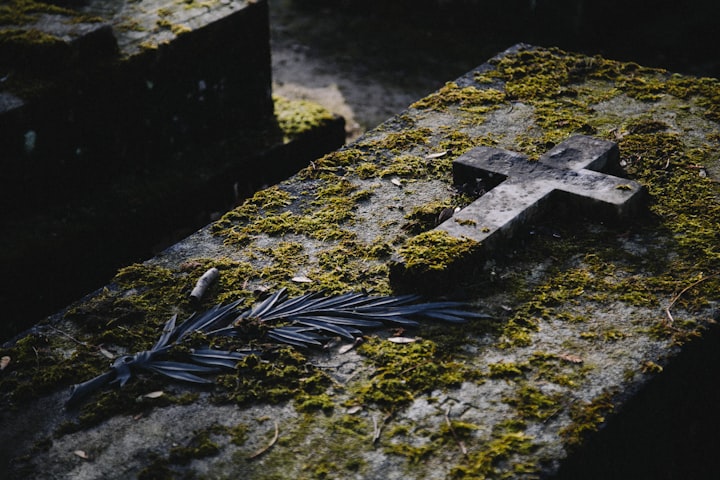
The Cemetery
Wondering if “in the shade of the cypresses and inside the comforted by crying urns” the sleep of death is perhaps less hard or not, I enter the Cemetery of the Lupi, or La Cigna Municipal Cemetery, today on the edge of the port and industrial area of the city of Livorno, near the Cigna stream, in the locality of Santo Stefano dei Lupi. The area takes its name from the gronda of the Lupi , a vast area — that in medieval times extended from Pisa to the village of Labron - so-called by the landowning family. It was precisely the edict of San Cloud, of 1804, to which Foscolo refers in the Carme “I Sepolcri”, together with a concomitant epidemic of yellow fever, to decree the birth of the new cemetery.
By Patrizia Poli4 years ago in FYI
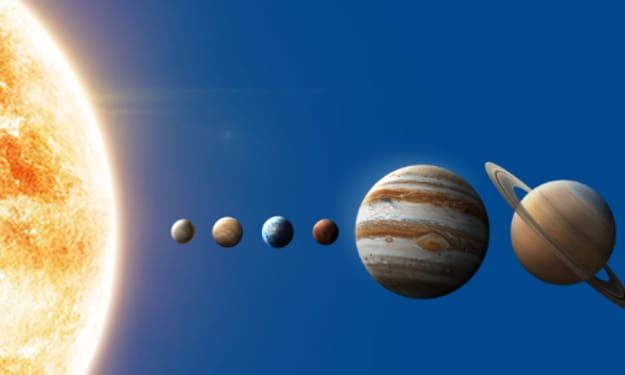
A Planetary Alignment will coincide with Mercury Retrograde
Double phenomena in the heavens Some people say in jest that the planets have aligned in their favor when life works the way they desire. Were you aware that there are seasons when things do line up in the heavens? There will be a planetary alignment AKA a planet parade, on February 28, 2026.
By Cheryl E Preston7 days ago in FYI
Flames on the frontier _when border burn and peace stand at the crossroads
In global politics, some borders are not merely lines drawn on a map; they carry layers of history, culture, memories, and pain. The border between Afghanistan and Pakistan is one such frontier, shaped by decades of mistrust, shared traditions, conflict, and cooperation. The clashes that intensified in February 2026 have once again brought this sensitive region into the spotlight of international attention.
By hamad khan4 days ago in FYI


Comments
There are no comments for this story
Be the first to respond and start the conversation.