
How to Stop Rising Damp in Leeds Farmhouses Before It Hurts Your Property Value
Stop Rising Damp in Leeds Farmhouses

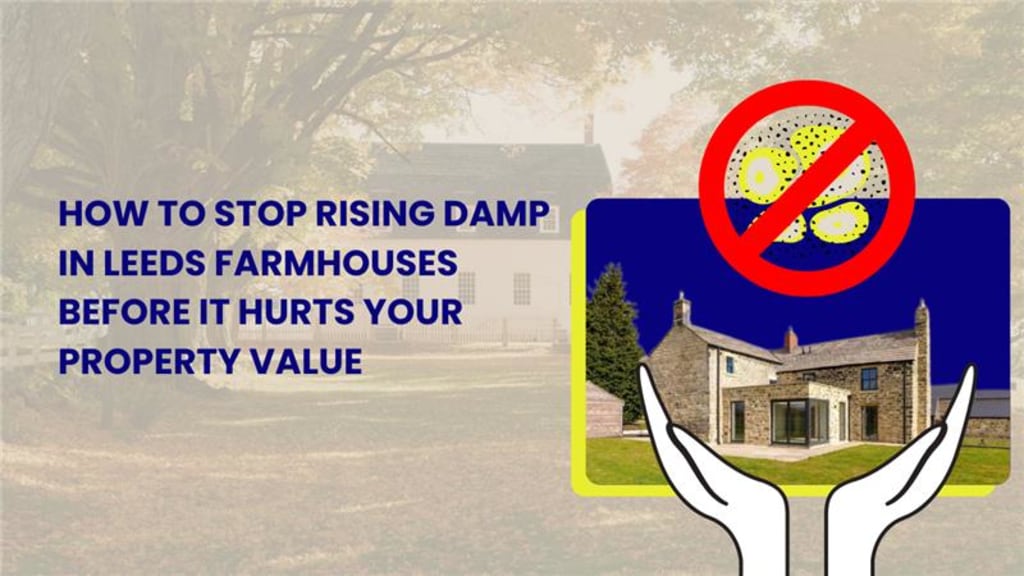
Owning a farmhouse in Leeds comes with plenty of charm-rolling landscapes, rustic character, and timeless architecture. But these beautiful homes are often at risk of a hidden threat that can silently chip away at both their structure and value: rising damp.
Damp is more than a cosmetic annoyance. It weakens walls, fuels timber rot, and leads to costly structural repairs if ignored. Worse yet, untreated rising damp can negatively impact your property value, particularly when it's time to sell.Whether your farmhouse is a family treasure or a long-term investment, This guide explains how to stop rising damp in Leeds farmhouses before it causes serious damage.
Understanding Rising Damp in Farmhouses
Rising damp occurs when moisture from the ground travels up through the porous bricks and mortar of a building. Traditional Leeds farmhouses, often built without modern damp-proofing methods, are particularly susceptible.
The signs are often subtle at first:
- Flaking plaster or paint near skirting boards
- Damp patches or tide marks on walls
- A musty, persistent smell
- Black mould spots at lower wall levels
Left unchecked, these early warnings can evolve into bigger issues, such as decay in timber floors or even internal wall collapses.
The Root Causes of Rising Damp in Leeds Farmhouses
The age and construction style of many Leeds farmhouses make them vulnerable to damp. Understanding why it happens can help you prevent or control it.
Here are a few common culprits:
- Lack of a proper Damp Proof Course (DPC): Many older buildings were constructed before DPCs became standard.
- Deteriorated DPC: Over time, the original barrier may break down or become ineffective.
- Blocked Air Bricks or Poor Drainage: These can prevent moisture from escaping, allowing damp to rise internally.
- External Ground Level Changes: Raised garden beds or paving that sits above the DPC can trap water against the wall.
Without proper intervention, these problems can grow silently over the years, leading to long-term structural deterioration.
Proven Strategies to Stop Rising Damp in Leeds Farmhouses
To tackle rising damp effectively, your strategy should combine moisture control, structural restoration, and modern damp-proofing techniques.
Here’s what you should prioritise:
1.Install or Repair a Damp Proof Course (DPC)
A DPC is a horizontal waterproof barrier designed to stop moisture from rising. Modern methods involve injecting chemical damp-proofing solutions directly into the affected walls.
- This treatment is fast, minimally invasive, and highly effective.
- It can be applied from inside or outside depending on your property layout.
- Often used in tandem with replastering to remove salt-contaminated walls.
2.Improve Drainage and Ventilation
Excessive ground moisture or stagnant air can increase damp issues. Ensuring water flows away from your walls is vital.
- Clear gutters and downspouts
- Regrade ground away from the foundation
- Install additional air bricks or mechanical ventilation where possible
3.Use Breathable Plaster and Paint
Some commercial paints and sealants trap moisture inside walls. When restoring your interiors, use materials that allow moisture to escape naturally.
- Lime-based plaster is especially suitable for period properties
- Avoid vinyl or synthetic paints on interior and exterior surfaces
DIY Damp Prevention Tips for Leeds Farmhouse Owners
While some damp issues require professional attention, you can take steps yourself to reduce risk and delay serious damage.
- Regularly check external brickwork and pointing for cracks
- Keep garden soil or paving below the DPC level
- Monitor humidity with a hygrometer, and use dehumidifiers in poorly ventilated spaces
- Keep furniture a few inches away from walls to allow air circulation
Implementing these habits can buy time and reduce long-term costs, even if professional treatment is ultimately needed.
Why You Should Act Now: Rising Damp and Your Property Value
Ignoring rising damp doesn’t just lead to higher repair bills-it also lowers your home’s market appeal and resale value.
- Potential buyers may request price reductions or back out entirely
- Surveyors can flag damp issues in mortgage reports
- Damp smells and visible damage turn off prospective buyers instantly
Taking action early helps preserve both the structural health and financial value of your home. If you’re thinking of selling or refinancing, dealing with rising damp can be the difference between a smooth transaction and a drawn-out nightmare.
When to Call the Experts: Professional Damp Solutions in Leeds
Some problems are too complex for DIY fixes. That’s where specialist damp proofing services come into play. Trained professionals will assess your property using moisture meters, thermal imaging, and salt analysis before recommending a tailored treatment.
A good damp-proofing contractor will:
- Identify all contributing factors—not just treat the symptoms
- Use certified materials and comply with British Standards
- Offer guarantees on their treatments (usually 20+ years)
- Provide clear, itemised estimates and timelines
Hiring an experienced contractor isn’t just about repairs-it’s about preventing future issues, maintaining comfort, and protecting your investment.
Final thoughts
Rising damp doesn’t just fade away. If you’ve seen signs or suspect it’s developing, early intervention is your best defence. The longer you wait, the more damage it causes-and the more it will cost you later.
To summarise:
- Recognise signs like damp patches, peeling paint, or mould
- Investigate possible causes: poor drainage, old DPC, blocked vents
- Take preventive steps: improve ventilation, check external ground levels
- Use modern chemical DPC treatments for long-term protection
- Work with certified professionals for full restoration and peace of mind
Protect your property's structural integrity—and its future market value.
Need rising damp repair in Leeds? Hire a cost-effective damp proofing specialist who understands historic homes and modern treatments. Visit Damp2Dry Solutions to book a free damp survey and property valuation tailored to your Leeds farmhouse.
About the Creator
Amber
I’m Amber Heijnen, a Leeds‑based conservation specialist with an environmental science background. I restore historic buildings and monuments, blending research‑driven planning with community outreach for lasting, eco‑smart heritage care.
A Failed Artist, A Disillusioned Poet, An Underpaid Game Show Host
I took my son and niece to Gori, a small town in Georgia where Joseph Stalin was born. They talked me into visiting the Stalin's Museum, the largest in the post-Soviet space. I had resisted going there because I just can't stand the monster and know enough about him, or so I thought.
By Lana V Lynx23 days ago in FYI
Is There a Hidden Ocean Inside the Earth, and Are We Running Out of Time?
If you think you understand what’s beneath your feet, science might want a word with you, because recent research suggests our planet may be hiding something massive. And no, this isn’t sci-fi. It’s grounded in real discoveries, strange footage, and unsettling predictions about where humanity is headed.
By Areeba Umair5 days ago in FYI




Comments
There are no comments for this story
Be the first to respond and start the conversation.