
How an Australian Farmer Is Planning to Get US Consumers Hooked on Camel Milk
Queensland camel farmer eyes US market with first export of camel milk, blending innovation, heritage, and global dairy trends.

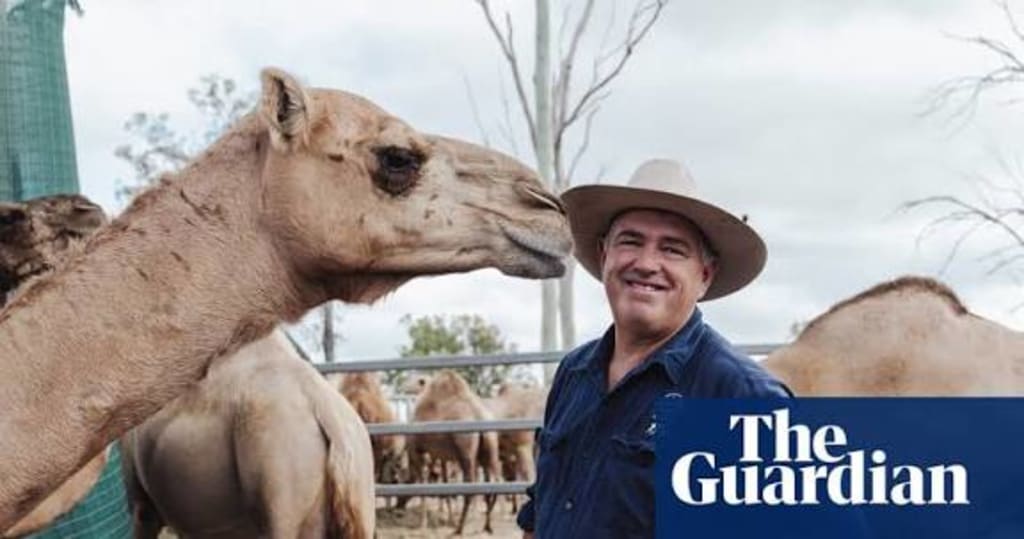
An Australian farmer’s unusual plan to export camel milk to the United States is capturing attention in both agricultural and wellness circles, marking a potential new chapter in the global dairy market. After more than a decade developing one of Australia’s first commercial camel dairies, Paul Martin is now preparing for his first major overseas shipment — and he believes the US market could be a game-changer.
The Guardian
Martin operates his camel farm on a 130-hectare property in the Scenic Rim region of Queensland, southeast of Brisbane. Over the past 10 years, he and his team have built a productive herd, including standout camels such as Caroline, whose genetics produce more than twice the average milk yield of wild camels. This selective breeding, Martin says, is crucial to scaling camel milk production from a novelty to a serious commercial product.
The Camel Milk Opportunity
Camel milk has long been a staple in pastoral communities in Africa and the Middle East, prized for its nutrition and digestibility. But in western countries, it remains a niche product — one that is starting to attract health-minded consumers. Camel milk is naturally lower in allergens than cow’s milk because it lacks the protein beta-lactoglobulin, a major trigger for dairy sensitivities. Its nutritional profile has led some in wellness circles to describe it as a “superfood,” appealing to people with gut-health concerns or dietary restrictions.
Martin plans to export 60,000 litres of camel milk to the United States this year, his first shipment aimed at testing US demand. If successful, he believes exports could grow into a major new commodity for Australia — much like beef or sheep products once did.
Australia’s Unique Camel Advantage
Unlike many countries, Australia has a naturally large population of feral camels — descendants of animals brought in during the 19th century — estimated at hundreds of thousands across the interior. While these populations are often seen as an ecological challenge, some see a commercial opportunity in turning them into dairy resources.
However, experts caution that relying on feral harvests for commercial milk production presents challenges in scale, animal welfare, and sustainability. Government reports suggest that commercial use could support targeted population control, but that captive breeding remains a more realistic path for industry growth.
On Martin’s farm, camel milking is a hands-on, psychology-driven process: camels must be “coaxed” rather than forced to release milk, requiring trust, calm handling, and careful understanding of herd dynamics. “Once you do that,” Martin says, “they’re like a grass-eating Labrador.”
Marketing to US Consumers
For camel milk to catch on in the United States, producers must navigate a complex food environment. Unlike traditional dairy products, camel milk still lacks widespread retail presence, and in some US states there are strict regulations on raw milk production and sales. However, pasteurised camel milk and camel-based products have already begun appearing in specialty markets, often tied to migrant communities familiar with camel milk’s cultural and nutritional value.
Martin believes that the milk’s health positioning — particularly for people with allergies or digestive issues — could help broaden its appeal beyond niche markets. He points to the similarities in health trends between Australia and the US, noting that wellness consumers there have shown interest in alternatives to traditional dairy.
Cultural and Economic Potential
Camels also hold cultural significance for some communities in both countries. Somali Australians, for instance, see camels as symbolic of resilience and heritage, connecting traditional food practices with modern industry innovation. Martin’s farm even offers camel milk cappuccinos and camel-meat pies, blending tradition with contemporary food culture.
Despite the logistical and marketing challenges, Australian producers — including larger players like Aus Camel Dairies Pty. Ltd. — are investing in technology and production facilities aimed at scaling for global markets. Some are even exploring infant formula and powdered camel milk products to broaden export opportunities.
Auscamel Dairies
Conclusion
As Martin prepares his first shipment of camel milk to the United States, the venture represents a broader trend in agricultural innovation: turning unconventional resources into high-value export products. If Australian camel milk can find a foothold among US consumers hungry for healthful, alternative dairy options, it could usher in a new era for an industry once confined to arid deserts and traditional markets.
About the Creator
Fiaz Ahmed
I am Fiaz Ahmed. I am a passionate writer. I love covering trending topics and breaking news. With a sharp eye for what’s happening around the world, and crafts timely and engaging stories that keep readers informed and updated.
Keep reading
More stories from Fiaz Ahmed and writers in FYI and other communities.
Living the Dream’: Why a Young Singapore Lawyer Chooses to Serve Migrant Workers Full-Time
In a quiet office near Singapore’s industrial districts, a young lawyer has traded a promising corporate career for a life devoted to defending migrant workers. While many of his peers pursue high-paying positions in commercial law firms, he has chosen a different path—one driven by conviction rather than compensation. After graduating from law school and qualifying to practice in Singapore, the lawyer briefly worked in a traditional firm. The long hours and high salaries offered professional security, but something felt missing. He soon began volunteering with organizations that provide legal aid to migrant laborers who face workplace injuries, unpaid wages, and housing disputes. “What started as volunteering became my purpose,” he said. “I realized this is the work that makes me feel useful.” A Hidden Workforce Migrant workers form the backbone of Singapore’s construction, shipping, and sanitation industries. Many arrive from South Asia and Southeast Asia with hopes of supporting families back home. While their labor fuels the nation’s rapid development, their lives often remain invisible to the public. Workers frequently encounter contract violations, dangerous working conditions, and barriers to justice. Language differences, fear of deportation, and lack of legal knowledge prevent many from seeking help. For this young lawyer, the imbalance was impossible to ignore. “When a worker is injured, they often don’t know their rights,” he explained. “They feel powerless. Law can give them a voice.” Choosing Service Over Salary Leaving corporate law was not an easy decision. Friends and family questioned why he would give up financial stability for work that offered modest pay and emotional strain. Yet he describes the shift as liberating rather than sacrificial. “I’m living the dream,” he said simply. “I wake up knowing my work directly changes someone’s life.” His days are spent interviewing injured workers, preparing legal claims, and negotiating with employers. Some cases take months to resolve, requiring patience and persistence. Many workers arrive with stories of exploitation and fear, unsure whether anyone will stand up for them. The lawyer sees his role as both advocate and bridge—connecting vulnerable individuals to a system that often feels intimidating and inaccessible. Small Victories, Deep Impact Success is measured not in billable hours but in human outcomes. A worker receiving overdue wages. Another gaining compensation for a serious injury. A third being allowed to return home with dignity instead of debt. “These moments are everything,” he said. “You see relief in their faces. You know justice is not abstract—it’s personal.” He recalls one client who had been denied medical treatment after a workplace accident. With legal pressure, the employer agreed to cover hospital costs and provide compensation. “That man told me he could finally sleep again,” the lawyer said. “That’s why I do this.” Changing Public Perception Beyond legal battles, the lawyer hopes to reshape how society views migrant workers. He speaks at universities and community events, urging young professionals to see them not as statistics but as individuals with stories and families. “Migrant workers build our cities,” he said. “They deserve respect and protection, not silence.” His work has also inspired classmates from law school to volunteer their skills, creating a growing network of young professionals committed to social justice. A Different Definition of Success For many in Singapore’s competitive environment, success is defined by income and status. This lawyer offers another model—one rooted in service and meaning. “I could have chosen comfort,” he reflected. “But I chose purpose.” He acknowledges that the work is emotionally heavy and financially modest, yet insists it has given him something more valuable than prestige: fulfillment. Looking Ahead The lawyer plans to continue working with migrant communities and hopes to influence policy reforms that strengthen worker protections. His long-term goal is to create a sustainable legal support system that ensures no worker is left alone when facing injustice. As he puts it, “If the law exists to protect people, then it should protect everyone—not just those who can afford it.” His story stands as a quiet reminder that true success is not always found in courtrooms of power, but in small offices where justice begins with listening.
By Fiaz Ahmed about 19 hours ago in FYI
Why Aircraft Fasteners Are More Important Than You Think
When people think about aircraft engineering, they usually picture engines, wings, avionics systems, or landing gear. Rarely does anyone think about fasteners. Yet these small mechanical components quietly hold together the entire structure of an aircraft.
By Beckett Dowhan4 days ago in FYI


Comments
There are no comments for this story
Be the first to respond and start the conversation.