
From Hope to Havoc: Sudan's Journey from Revolution to Conflict
Exploring the Rapid Transformation and Unraveling Alliances that Changed Sudan's Destiny
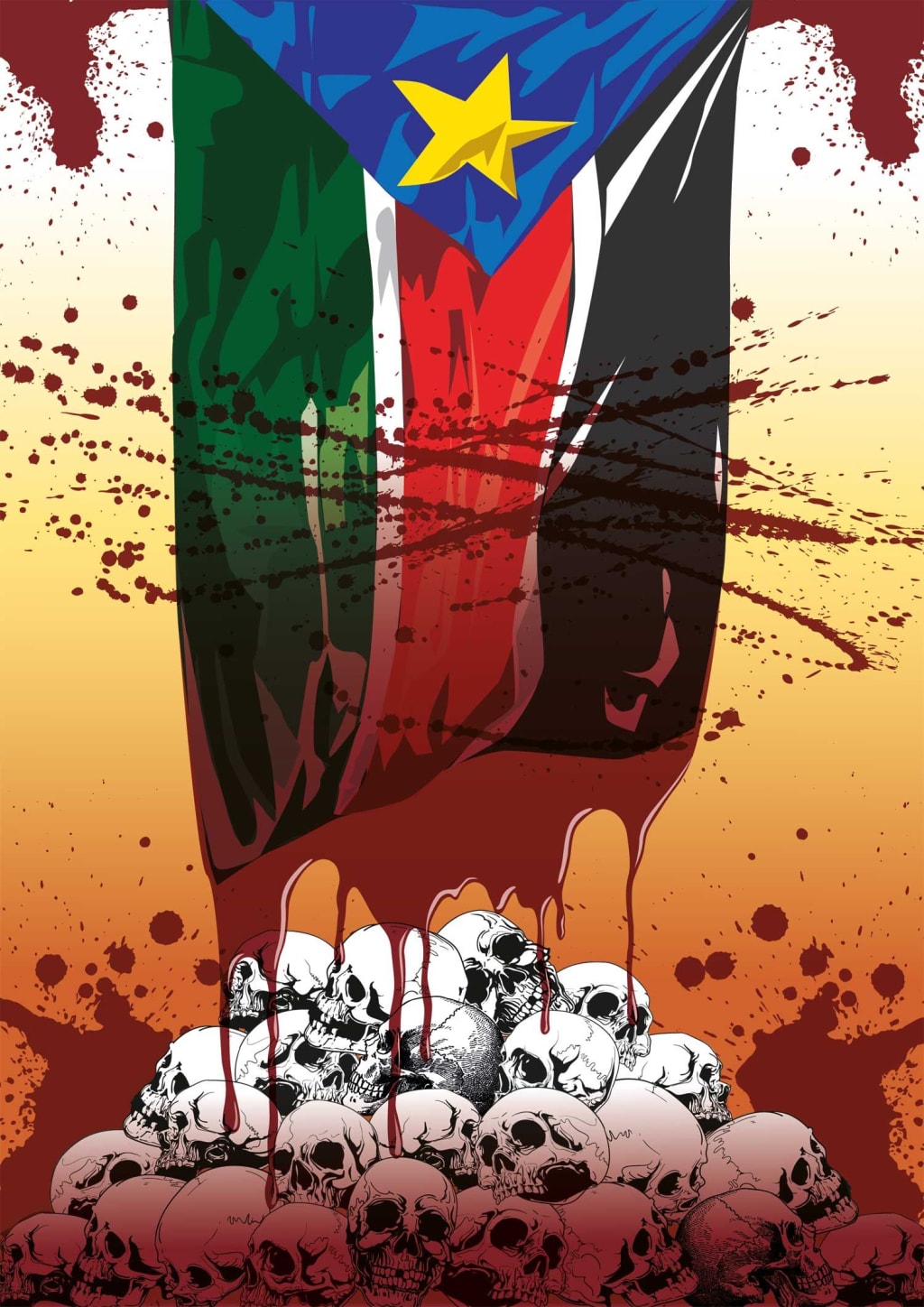
Tracing the Journey from Hopeful Uprising to Devastating Discord
In December 2018, a fervent revolution ignited a transformative wave across Sudan, signaling a hopeful transition from decades of oppressive rule under President Omar Bashir's military regime. Fueled by the aspirations for democracy, the resilient civilians of Sudan dared to challenge their authoritarian oppressors. However, within a few short years, this beacon of hope has spiraled into a tragic tale of internal strife, leaving Sudan fractured and hundreds of innocent lives lost. The trajectory of Sudan's evolution from a yearning for change to a state of conflict raises pressing questions: How did this rapid transformation unfold, and how did two once-powerful allies become bitter adversaries?
Sudan's history has been marked by a series of coups, a pattern of military intervention that has shaped the nation's leadership. The Sudanese Armed Forces (SAF), formerly known as the official military, have wielded substantial influence for nearly a century, orchestrating coups that ushered in various leaders. The chain of coups began in 1958 when Abdullah Kalil, a retired military officer and sitting prime minister, orchestrated a coup to supplant a civilian government, thrusting Sudan into military rule. Colonel Jaafar Nimeiry continued this tradition with another successful coup in the 1960s, derailing a brief democratic experiment.
In the mid-1980s, the landscape shifted as Nimeiry was ousted by a fellow military officer, sparking a semblance of democratic governance. However, this period of relative stability was short-lived, as Colonel Omar Bashir assumed power in 1989 through yet another military coup. Bashir's regime was characterized by distinct strategies, chief among them "coup proofing," an intricate web of alliances and power dynamics designed to safeguard his rule.
Bashir fortified his position by nurturing a close relationship with the SAF, effectively relying on their might to quell dissent and perpetuate his authority. This symbiotic partnership enabled the suppression of a civil war in southern Sudan and the brutal crackdown on the Darfur region, using the Janjaweed militias to further his interests. The Darfur conflict revealed the extent to which Bashir would exploit various factions to consolidate power, with the Janjaweed leader Mohamed Hamdan Dagalo, also known as Hemeti, emerging as a trusted ally.
The secession of South Sudan in 2011 left Bashir economically weakened, prompting him to bolster Hemeti's power by elevating the Rapid Support Forces (RSF) – previously aligned with the National Intelligence and Security Service (NISS) – to an official paramilitary force. Bashir's calculated strategy of empowering both the SAF and the RSF solidified his grip on power, while civilians endured the repercussions of economic downturn.
The tipping point came in 2018 when the Sudanese people, weary of economic hardships and longing for democratic change, took to the streets in protest. Bashir's elaborate protection scheme faced its greatest challenge yet as widespread demonstrations demanded an end to his regime. Although Bashir's loyalist forces initially cracked down on the protesters, the sheer persistence of the demonstrators led to an unexpected outcome – the ousting of Bashir in a coup orchestrated by the SAF and the RSF on April 11, 2019.
Yet, the aspirations of the Sudanese people for democratic governance were short-lived. The interim period that followed revealed a widening chasm between the two military leaders who had once worked in tandem. General Abdel Fattah al-Burhan, who assumed control after Bashir's removal, and Hemeti, his trusted ally, found themselves on divergent paths. Despite international pressure and agreements to establish a civilian-led transitional government, the disparity in their ambitions eventually culminated in a devastating conflict that pitted their forces against each other.
As the conflict escalated, the international community's efforts to mediate and restore order have been met with limited success. Ceasefires have faltered, and the two military factions remain entrenched, leaving a trail of destruction and despair in their wake. The once-hopeful revolution has been overshadowed by the violent discord between erstwhile allies, causing irreparable harm to Sudan's social fabric and stability.
The tragic trajectory of Sudan serves as a stark reminder of the complexities and challenges that accompany transitions from authoritarian rule to democratic governance. The people of Sudan, who yearned for a better future, now find themselves caught in a crossfire fueled by the ambitions and rivalries of the very leaders they once hoped would lead them to change. The tale of Sudan underscores the delicate balance required to navigate the transition from oppression to liberation and serves as a testament to the enduring struggle for justice, democracy, and stability.
About the Creator
Keep reading
More stories from Wish Torriah and writers in FYI and other communities.
Powering Tomorrow: Revolutionizing Battery Technology Through 3D Printing and Solid-State Innovations
In the quest for advanced battery technology, a groundbreaking innovation is poised to reshape the landscape of rechargeable batteries. Offering tantalizing prospects of increased power, enhanced safety, rapid charging, extended lifespan, and customizable shapes, the future of energy storage holds remarkable potential. As private companies and research laboratories strive to outpace the ubiquitous lithium-ion battery, one trailblazing enterprise has set its sights on pushing the boundaries of battery design by leveraging the capabilities of 3D printing. This groundbreaking technology promises not only to alter the inner workings of batteries but also redefine their very appearance.
By Wish Torriah3 years ago in FYI
A Planetary Alignment will coincide with Mercury Retrograde
Double phenomena in the heavens Some people say in jest that the planets have aligned in their favor when life works the way they desire. Were you aware that there are seasons when things do line up in the heavens? There will be a planetary alignment AKA a planet parade, on February 28, 2026.
By Cheryl E Preston19 days ago in FYI




Comments
There are no comments for this story
Be the first to respond and start the conversation.