
Deja Vu
Deja vu is a French term that means "already seen." It is a phenomenon that occurs when an individual feels as if they have already experienced the present moment before. The sensation of deja vu can last anywhere from a few seconds to several minutes and can be accompanied by feelings of familiarity, surprise, and confusion.

Deja vu is a French term that means "already seen." It is a phenomenon that occurs when an individual feels as if they have already experienced the present moment before. The sensation of deja vu can last anywhere from a few seconds to several minutes and can be accompanied by feelings of familiarity, surprise, and confusion.
The exact cause of deja vu is not well understood, but there are several theories that attempt to explain it. One of the most widely accepted theories is that deja vu occurs when the gap between the memory of a similar event and the current experience is shortened. According to this theory, the brain mistakenly interprets the memory as a present experience, leading to the sensation of deja vu.
Another theory suggests that deja vu is caused by a temporary malfunction in the way the brain processes information. According to this theory, the brain processes the current experience before it processes the memory of a similar experience, leading to the sensation of deja vu.
A third theory proposes that deja vu is the result of a brain-body connection. According to this theory, the physical sensations associated with a previous experience can trigger feelings of familiarity and deja vu.
Deja vu is a common experience and is reported by up to two-thirds of people at some point in their lives. It is most common in young adults and is less frequently reported by older individuals. There is no evidence that deja vu is harmful and it generally does not have any negative consequences.
However, in some individuals, deja vu may be a symptom of a more serious underlying condition, such as epilepsy, migraines, or temporal lobe dysfunction. If an individual experiences frequent or intense episodes of deja vu, they should consult a doctor to rule out any underlying medical conditions.
A strong sense of familiarity with the current situation
A feeling of having previously lived through the moment
A sense of "remembering" details about the situation, even though it's new
A brief, but intense feeling of déjà vu
A feeling of unease or disorientation
It's important to note that Deja Vu is a common and usually harmless experience, but in rare cases, it can be a symptom of a more serious underlying condition, such as epilepsy or temporal lobe dysfunction. If you experience frequent and intense Deja Vu, it's best to consult with a doctor.
In conclusion, deja vu is a phenomenon that occurs when an individual feels as if they have already experienced the present moment before. The exact cause of deja vu is not well understood, but there are several theories that attempt to explain it. Deja vu is a common experience and is generally not harmful, but if an individual experiences frequent or intense episodes of deja vu, they should consult a doctor.
There is no specific solution for deja vu as it is a normal part of the human experience. However, some causes of deja vu may include sleep deprivation, epilepsy, or a side effect of certain medications. If the feeling is persistent or accompanied by other symptoms, it may be helpful to consult with a doctor or mental health professional for an evaluation.
Deja vu dreams refer to the experience of having a dream that feels familiar, as if it's been experienced before. This feeling can be similar to the feeling of deja vu that people experience in waking life. Deja vu dreams can be unsettling, but they are not typically a cause for concern. They can be caused by various factors, such as stress, fatigue, or a vivid imagination. In some cases, they may be related to past experiences or memories that have been unconsciously incorporated into the dream. If you find that deja vu dreams are disrupting your sleep or causing significant distress, it may be helpful to speak with a doctor or mental health professional
About the Creator
A Planetary Alignment will coincide with Mercury Retrograde
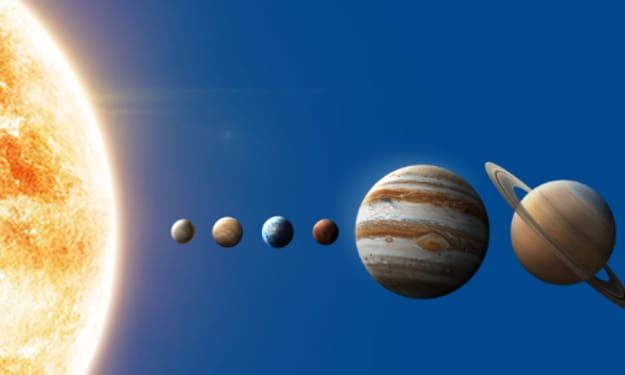
Double phenomena in the heavens Some people say in jest that the planets have aligned in their favor when life works the way they desire. Were you aware that there are seasons when things do line up in the heavens? There will be a planetary alignment AKA a planet parade, on February 28, 2026.
By Cheryl E Preston7 days ago in FYI
Review of 'Man on the Run'
My wife and I saw Man on the Run, a nearly 2-hour documentary on Amazon Prime, about Wings, Paul McCartney's group that flew around the world from shortly after The Beatles broke up in early 1970 to shortly after John Lennon was murdered at the end of 1980, making a Beatles reunion forever impossible.
By Paul Levinson4 days ago in Beat



Comments
There are no comments for this story
Be the first to respond and start the conversation.