
Damp Proofing vs Waterproofing: What’s the Difference?
Which Method Does Your Home Need?

Moisture creeping into walls or seeping through your basement floor isn’t just inconvenient, it’s a warning sign. It might start with a musty odor or a flaking wall surface. But left untreated, it can lead to serious structural damage, costly repairs, and even health hazards. If you're a homeowner in Cheshire, you’ve likely come across both terms, damp proofing and waterproofing, while searching for solutions. But are they the same thing? Not quite.
Understanding the key differences between these two methods is essential if you’re planning a home renovation, buying an older property, or dealing with persistent moisture issues. So, let’s break it down.
What Is Waterproofing?
When your home needs total protection from external water sources
Waterproofing, on the other hand, goes a step further. It’s designed to stop both surface and groundwater from entering a structure. That means it protects against lateral water pressure from outside walls, water penetration from rain, and leaks from poor drainage systems.
If you’ve got a leaky basement or live in a flood-prone area, waterproofing isn’t just recommended, it’s essential.
Main Characteristics of Waterproofing:
- Creates a full barrier against water intrusion
- Commonly applied to basements, cellars, and foundations
- Involves tanking systems, sealants, sump pumps, or waterproof membranes
- More comprehensive than damp proofing
Many Cheshire damp proofing specialists also offer waterproofing, particularly in newer developments or refurbished heritage homes near the River Dee or low-lying regions prone to groundwater pressure.
Damp Proofing vs Waterproofing: Side-by-Side Comparison
To make things even clearer, here’s a direct comparison of the two based on specific criteria:
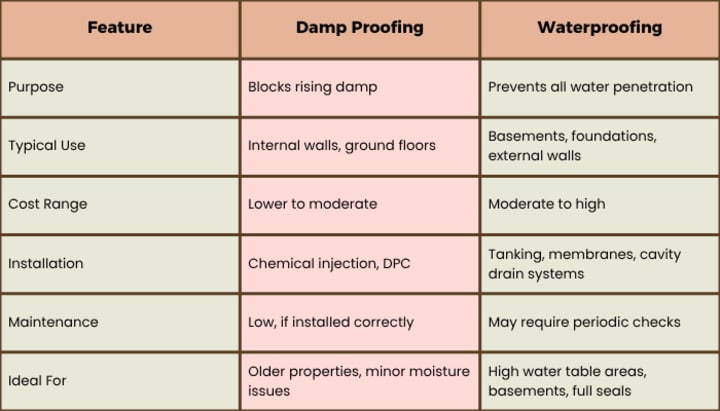
Let’s face it, there’s no one-size-fits-all approach. You’ll need to evaluate your specific moisture problem and location to determine the best course of action.
When Do You Need Damp Proofing?
Spot the signs early to save on future repairs
If your walls feel cold and damp to the touch or if you notice peeling paint, crumbling plaster, or white salt deposits (efflorescence), you might be dealing with rising damp. This is where damp proofing is usually the answer.
Common Signs of Rising Damp:
- Stained or discolored patches on lower walls
- Musty smells, especially after rain
- Decaying skirting boards or flooring
- Salt deposits or blistered paint
If you’re living in a Victorian or Edwardian home, common throughout Cheshire, these signs are especially relevant. Many of these homes were built without a damp-proof course or with one that has since deteriorated.
A well-executed Cheshire damp proofing job often includes both chemical treatment and proper ventilation to avoid recurrence.
When Waterproofing Is the Better Option
Some moisture problems go deeper, literally
Waterproofing becomes necessary when you're dealing with hydrostatic pressure or external water intrusion. If you’ve ever walked into a basement that feels like a cave, complete with puddles on the floor, waterproofing is what you need, not just damp proofing.
Scenarios That Call for Waterproofing:
- Flood-prone areas or high rainfall zones
- Below-ground structures like basements or parking garages
- Cracked foundations or retaining walls
- Persistent leaks despite interior damp treatments
In these situations, Cheshire damp proofing companies often combine waterproofing with external drainage solutions to protect the structure thoroughly.
Which Is More Cost-Effective?
The cost depends on the severity and type of moisture issue.
- Damp proofing costs in Cheshire range from £500 to £2,500 depending on the area treated and method used.
- Waterproofing, especially in basements, can range from £3,000 to over £10,000, particularly if sump pumps or full tanking systems are required.
Though damp proofing is generally more affordable, cutting corners on waterproofing when it’s clearly needed can lead to long-term damage and much higher repair bills.
Tips for Choosing the Right Contractor
A great result often comes down to the right people. Choosing a reliable contractor ensures your money is well spent and your home stays dry.
Here’s what to look for:
- PCA-accredited specialists
- Guarantees of at least 10 years
- Detailed moisture surveys
- Transparent pricing with no hidden fees
Local expertise, especially important for Cheshire damp proofing due to soil and climate variations
I’ve been there, frustrated by poor workmanship that barely scratched the surface of the problem. Don’t just go with the cheapest quote. Quality matters.
Final Thoughts
If you’re dealing with minor internal dampness from rising moisture, damp proofing is often sufficient. But if you’re noticing structural leaks or live in a basement-level home, waterproofing might be the better long-term solution.
The good news? Many professionals in the Cheshire damp proofing sector offer consultations to help assess which method is right for you. They consider not just symptoms, but property history, drainage patterns, and your future plans for the space.
Both options are important tools in the fight against moisture, knowing when to use which can save you time, stress, and a lot of money.
About the Creator
Ananya Singh
With years of hands-on experience in the field, I am Ananya Singh, a dedicated Damp Proofing Expert based in the UK. I specialise in identifying, treating, and preventing damp-related issues in residential and commercial properties.
Keep reading
More stories from Ananya Singh and writers in FYI and other communities.
Damp Problems in Stafford? Here’s How to Fix Them
If you’ve noticed a musty smell in your home or mysterious patches creeping along your walls, you’re not alone. Damp problems in Stafford are more common than many realize-especially in older homes or poorly ventilated buildings. Stafford’s unique mix of traditional housing and unpredictable UK weather means that excess moisture can sneak in more easily than you'd expect.
By Ananya Singh6 months ago in FYI
A Failed Artist, A Disillusioned Poet, An Underpaid Game Show Host
I took my son and niece to Gori, a small town in Georgia where Joseph Stalin was born. They talked me into visiting the Stalin's Museum, the largest in the post-Soviet space. I had resisted going there because I just can't stand the monster and know enough about him, or so I thought.
By Lana V Lynx23 days ago in FYI
How Safe Are AI Companion Apps? What You Need to Know
AI companion apps have exploded in popularity faster than you can say “Hey Siri, where’s my emotional support?” From supportive chat buddies to steamy romance simulators, these apps promise connection, entertainment, and sometimes… adventure.
By jagraj singh6 days ago in FYI


Comments
There are no comments for this story
Be the first to respond and start the conversation.