
Cracking the Code of Sample Size Calculation
Your Essential Guide !
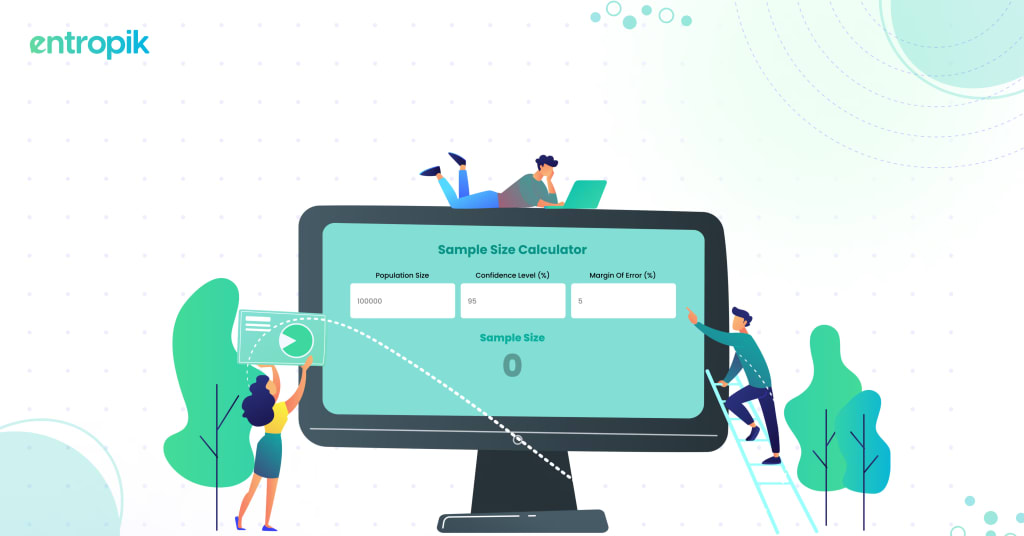
Ever wondered how many people you need to survey to get trustworthy results? Whether you're launching a new product, conducting a social experiment, or running a market survey, getting the sample size right is like hitting the bullseye in darts. Too few participants, and your data is shaky; too many, and you're just wasting time and resources. That's where the Sample Size Calculator swoops in to save the day, making the complex math behind sample size simple and accessible.
Why Sample Size Matters
Imagine trying to predict an election result by asking just ten people who they’ll vote for. The chances are, you’ll end up with a wildly inaccurate forecast. But, survey a few thousand, and your prediction suddenly carries weight. That’s the magic of the right sample size—it gives your findings the power to reflect the larger population accurately. A well-chosen sample size means your results are more likely to be true for the whole population you’re studying. Get it wrong, and you risk either missing the mark completely (too small) or making more out of the data than is reasonable (too large).
The Magic Ingredients of Sample Size
So, what’s the secret sauce for calculating the perfect sample size? Here are the key ingredients:
Population Size: This is the total number of people you could potentially survey. If you're researching coffee drinkers in a city of 1 million, that's your population size. But if you're looking at something broader, like coffee drinkers nationwide, your population size could be in the tens of millions.
Confidence Level: This is all about how sure you want to be about your results. A 95% confidence level is the sweet spot for most studies—it means you're 95% certain your sample reflects the whole population.
Margin of Error: This is the wiggle room you’re okay with. A 5% margin of error is common, meaning your results could be 5% off in either direction from the real population figures.
Population Variability: How diverse is the population? The more variety, the bigger your sample size needs to be to capture that diversity accurately.
Expected Response Rate: Not everyone will answer your survey. If you think only half of the people you contact will respond, you’ll need to double your initial sample size to get enough data.
Using the Sample Size Calculator
Ready to calculate? The Sample Size Calculator is your go-to tool for nailing down the numbers. Here’s how to work it like a pro:
Input Population Size: Start with how many people are in your target group. Got a big number? No problem—just plug it in.
Pick Your Confidence Level: Most people stick with 95%, but if you want to be super sure, go for 99%.
Set Your Margin of Error: How much leeway do you need? A 5% margin of error is the standard, but you can tighten or loosen this depending on your study.
Hit Calculate: The calculator does the heavy lifting, giving you the minimum sample size needed to get solid, reliable results.
What the Numbers Mean
Once you’ve got your sample size, you’re ready to roll—but don’t forget to think about the context. If your calculator suggests 300 participants, and you’re expecting only half to respond, you might need to start with 600. And remember, this is all based on the assumption that your sampling is random—any bias in your selection process can throw off the results.
Real-World Applications Here’s where it gets fun. Picture this:
Launching a New Product: Want to know if your new energy drink is going to be a hit? Use the calculator to figure out how many taste testers you need.
Healthcare Research: Planning a clinical trial? Calculate the right number of participants to ensure your findings hold up.
Social Media Trends: Curious about what people really think of the latest meme? Determine how many Twitter users to poll for a reliable snapshot.
In every scenario, the right sample size is your ticket to data you can trust.
The Bottom Line
Getting the sample size right is like having a secret weapon in research. The Sample Size Calculator makes this process quick and painless, so you can focus on what really matters—getting insights that are accurate, actionable, and worth your time. Whether you’re a seasoned researcher or a curious beginner, mastering sample size is the first step towards data-driven success. Now go forth and survey with confidence.
About the Creator
Emily Browne
I'm Emily Browne, a web content enthusiast. I am working as a content writer for three years and I like to contribute articles on different niches to explore knowledge.
Keep reading
More stories from Emily Browne and writers in FYI and other communities.
Beyond Likes: How Instagram Ads Transform Engagement into Action
In social media advertising, Instagram has emerged as a powerhouse for businesses looking to engage and drive real action from their audience. Beyond the allure of likes and comments, Instagram Ads have revolutionized how brands connect and convert, turning engagement into tangible results.
By Emily Browne2 years ago in 01
A Failed Artist, A Disillusioned Poet, An Underpaid Game Show Host
I took my son and niece to Gori, a small town in Georgia where Joseph Stalin was born. They talked me into visiting the Stalin's Museum, the largest in the post-Soviet space. I had resisted going there because I just can't stand the monster and know enough about him, or so I thought.
By Lana V Lynx8 days ago in FYI
What Is MICE Travel? A Complete Guide for Corporate Decision-Makers
Corporate travel has changed. Businesses no longer plan meetings and events as isolated activities. Instead, they rely on structured systems that combine logistics, travel, planning, and execution. This is where MICE travel plays a critical role.
By All 4 Seasona day ago in FYI
Bruce Lee and The God of War: Kuan Ti
It starts with love.. The Power to the God Of War and Wealth Walk into a Chinese restaurant (even in Oklahoma, USA), a Chinese police station, a kung fu martial arts studio or even a Chinese temple and you often see a red faced warrior holding a heavy quan-do (spear like weapon).
By WILD WAYNE : The Dragon King7 days ago in Chapters



Comments
There are no comments for this story
Be the first to respond and start the conversation.