
Clever Little Buggers – Viruses, the Ultimate Survival Machines
Part II A Good Virus Always Changes Its Spots

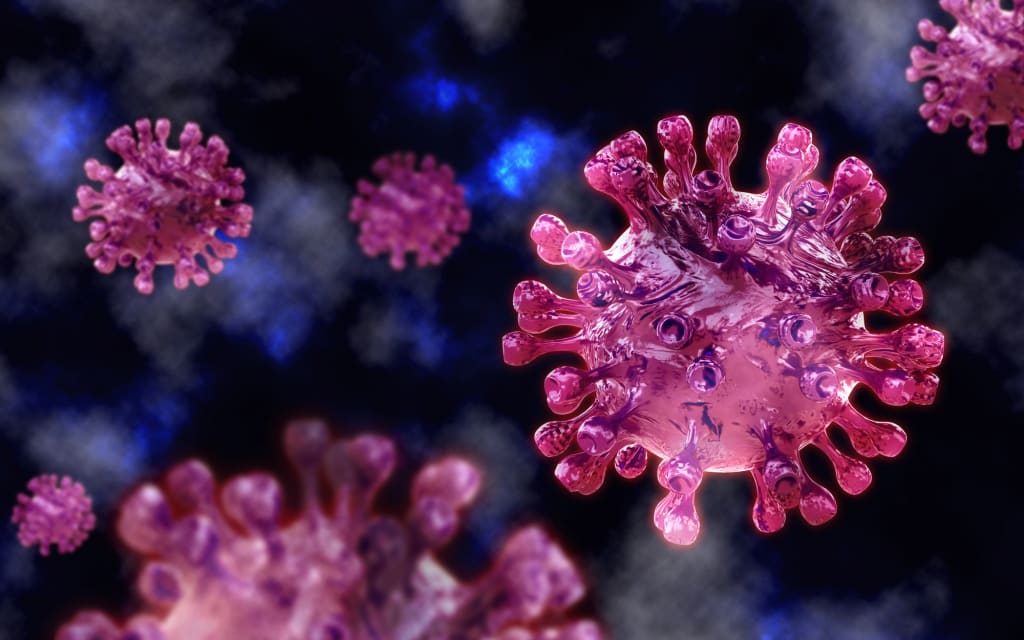
In the first part of this series, I explored how viruses transfer themselves and hide in non-human hosts. This is epitomized in the bat. Many viruses (including the COVID virus) infect bats and use them as a host. Bats because of their unique immune system, do not show symptoms of the infection.
How does a virus get from bats to humans?
It is mainly about the way bats live. They form very dense colonies with thousands in a small space. So that's ideal for transmitting infections from one individual to another. (Social distancing is not big in bat colonies!).
They enjoy living near humans in many cities and countries. They roost in ceilings and eat fruit from trees. They share their space with us. More importantly, they regularly come into contact with all sorts of animals in the wild.
The ultimate survivors and sex machines.
Viruses are the ultimate survival machine. They have no brain and so no emotion. They don’t care who they infect; they only care about the consequences – making more virus.
They are the ultimate, unbiased sex maniacs that survive on their host’s functions. As multiplication machines, they have no comparison. Social interaction and population growth help these clever little buggers thrive!
To understand how this occurs, we need to revisit the basics of viral replication.
iruses do two main things. They invade living cells and use them to make new viruses. Once inside, they brainwash the infected cell to produce the parts the virus needs. They are not complex beings. The COVID-19 virus has around thirty parts that must be made. They need RNA, the genetic material, and a protein shell to protect it.
The first thing they do is take over the cell’s machinery and, like rampant sex maniacs, copy the virus RNA in bulk. One virus-infected cell can produce hundreds to thousands of viruses. Multiply this by the many millions of cells in the lung, and that’s a lot of viruses!
All this occurs "under the covers" in a special compartment in the cell that keeps the virus hidden.
The ultimate survivors.
Significant viral infections usually persist in our world for many, many years. Why?
Because they are the ultimate survivor. When it gets ‘too hot in the kitchen,' viruses hold up in reservoir hosts. This is not a conscious decision (remember they have no brain); it just happens as part of their normal life cycle. They can survive for extended times in wild animals.
In 2013, a horseshoe bat from Yunnan province, China, was found to be about 96% similar to the SARS virus from 2002. This viral outbreak affected more than 8,000 people in 30 countries. It also led to 774 deaths. The SARS virus was first found in Foshan, China. This hints that the human COVID virus has deep connections to reservoir animals. COVID is similar to the MERS virus from the Middle East in 2012. But COVID spreads more effectively and is more infectious.
It is commonly thought that MERS human infections resulted from a spillover from camels. Viruses from the same family can share genetic material in reservoir hosts, creating new forms of the viruses. COVID-19, for instance, may have been circulating for some time. Swapping bits of genetic material with other viruses became more pathogenic.
Changing their spots
The second key point of their survival is that viruses can change how they look.
COVID might have existed longer than we realize. It could have been hiding in its reservoir hosts, only emerging to infect humans and test its new weapons. If so, it may have been infecting humans for quite some time. The needed changes to create what we see today hadn’t happened. Instead, it just caused mild infections that were mistaken for an unusual flu. This back-and-forth transmission provided a perfect testing ground for viruses to develop.
Viruses like influenza and COVID succeed by making small changes in how they appear to the body. The body lacks defenses if the virus changes from presentation A to B. It needs time to build immunity to type B.
This is why vaccines against the flu, for example, are different each year. When a new, previously unpresented variant of a flu virus appears, we know it is going to be a bad flu season.
The ultimate shyster
On a final note, viruses have the ability to completely fool the body.
When the body meets germs or viruses for the first time, the immune system struggles. This can lead to illness. The first immune response is very rapid and naive.
Immune cells spot the virus as a threat. They then produce substances called “cytokines” to fight it off. Some of these cytokines kill cells to keep the virus from replicating. Cytokines also regulate body temperature, as many viruses die at high temperatures. This is why you develop a fever, a typical symptom of most viral infections.
Your immune system needs training to better fight the virus. This is the basis of vaccination. A deactivated or weakened virus is given to the body in small amounts. This helps the body learn to recognize the virus. Then, it can mount a stronger defense the next time it encounters the virus.
An effective immune system also knows when to switch off. COVID (the clever little bugger) messes with the body’s defenses. It does a few sneaky things to weaken the immune response. It grows in lung cells that produce a soap-like substance. This helps stop air from reaching deep into the lungs.
Millions of immune cells rush into the infected lung tissue to fight the virus, but this attack can cause significant damage to the lungs. Viruses like COVID can also short-circuit the immune system so that it has no “off “button. The immune system goes out of control, and it starts to attack the body and even itself.
COVID also stops the production of alarm proteins. It destroys protein markers in the cell that act as distress signals, shredding any antiviral instructions the cell makes before they can be used.
Who would have guessed that a 'biological stick figure' with no brain could be so smart and dangerous? It’s made of just two parts: genetic material and protein.
In the last part of this series, I will examine how viruses have changed the world.
Part I of this series can be found here:
Till next time,
Calvin
About the Creator
Calvin London
I write fiction, non-fiction and poetry about all things weird and wonderful, past and present. Life is full of different things to spark your imagination. All you have to do is embrace it - join me on my journey.
Keep reading
More stories from Calvin London and writers in FYI and other communities.
Clever Little Buggers – Viruses, the Ultimate Survival Machine
What breeds faster than you can think, hits you like a freight train, and has no mercy? A virus, that’s what. In this series of three stories, I am going to take a look at just how clever these little buggers are.
By Calvin London9 months ago in FYI
A Failed Artist, A Disillusioned Poet, An Underpaid Game Show Host
I took my son and niece to Gori, a small town in Georgia where Joseph Stalin was born. They talked me into visiting the Stalin's Museum, the largest in the post-Soviet space. I had resisted going there because I just can't stand the monster and know enough about him, or so I thought.
By Lana V Lynx11 days ago in FYI


Comments (2)
Very interesting piece♦️♦️♦️♦️
Extremely interesting article, excellent work and as you say viruses just one to make more viruses